Posted on — Leave a comment

The Bedini Gravity Amp Circuit: Davy Oneness at ESTC 2026

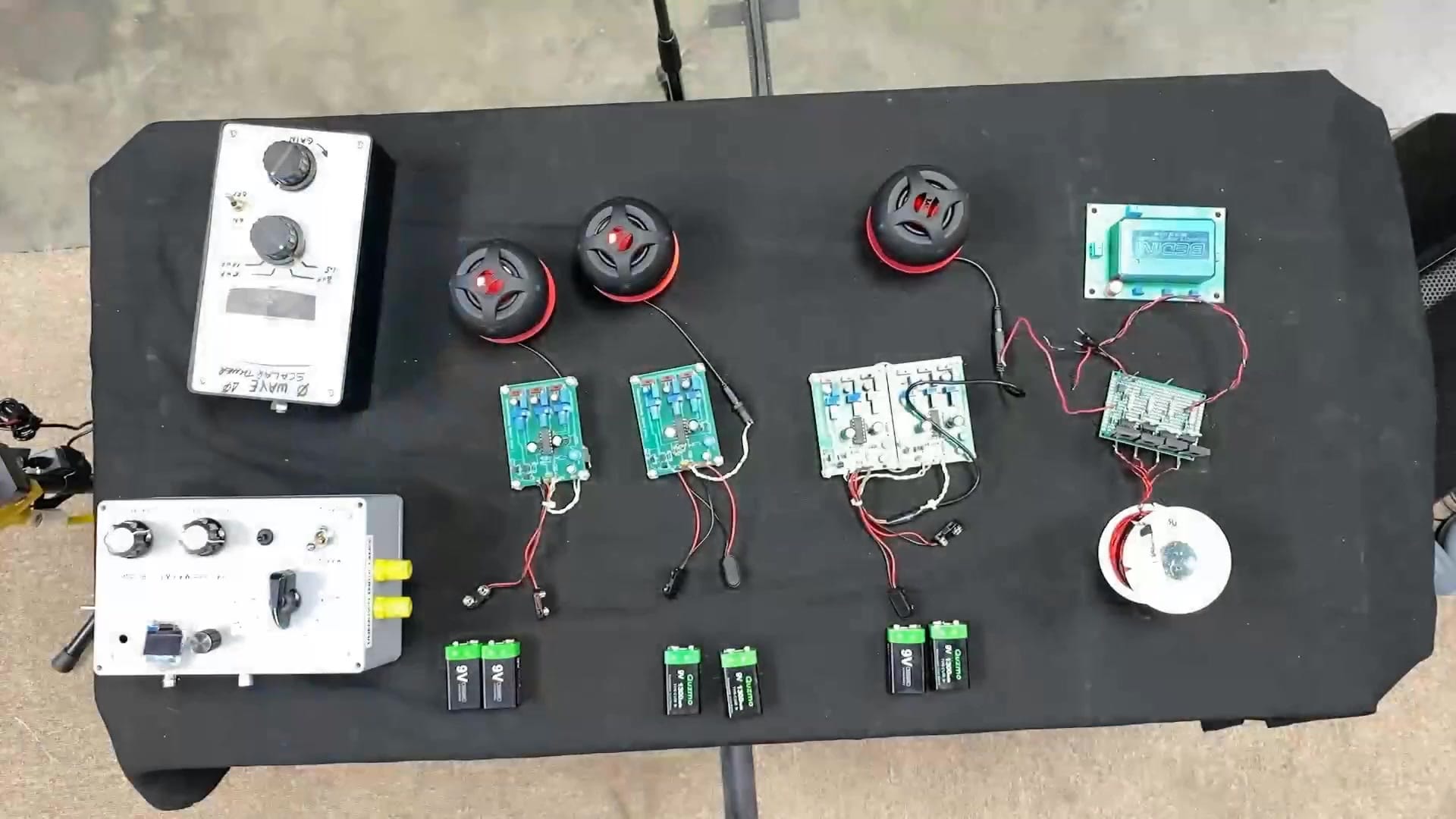
Davy's bench of completed detector builds: tuner, amplifier units, populated boards, speakers and 9-volt supplies

A circuit file named gravity amp in John Bedini’s archive led Davy Oneness to investigate a different way of triggering an SG coil: a detector signal in place of the wheel’s usual self-trigger. “When I realized what it is, it’s a gravity amp trigger.” His 87-minute 2026 ESTC presentation, Unlocking Hidden Forces, is out now as a download.

Davy brings about 30 years of electronics experience, including nuclear instrumentation, and roughly two decades of work in the Bedini SG research community. As he reads John’s circuit, instead of an SG wheel triggering itself, the coil “is being triggered by the surrounding ether field and activity.” He is plain that the coil “is kind of the last step to figure that out.”

John’s tuner, his old hard drives and other pieces of his work were passed down to me by John’s widow years ago, shortly after his untimely death, for safekeeping and to carry on the legacy of some of John’s work. That is where Davy’s photos and the gravity amp file came from.

Get Unlocking Hidden Forces, the full 87-minute presentation

Earlier Tesla hairpin footage: over 120 feet away

Davy’s earlier Tesla hairpin video shows a bulb about 40 feet away, then one “over 120 feet away” on his back hill, fed through wires “as thin as your hair.” In his words, “the bulb’s actually glowing brighter than when it was 40 feet away.” The hairpin carries high voltage, and he says so: “It’s not a good idea to hold.”

Bob Beck, capacitor sensors and detector audio

  • Bob Beck’s ELF detector: read from Beck’s paper, including his reported result that a magnet moved by a heartbeat drove the display “from about 15 feet distance in a magnetically quiet environment.” Davy does not repeat that test on stage.
  • Bedini and Bearden on the radio: a Bill Jenkins radio clip of John Bedini and Tom Bearden on the Bedini ELF detector.
  • Capacitors as sensors: “We want noisy components because the information is in the noise.”
  • A private 1985 video: John recording with a gravitational wave tuner.
  • Coincidence counting: from Davy’s years in nuclear instrumentation, why several detectors logged together can separate a real pattern from local interference.
  • Live sound: the Bill Ramsey cosmic wind detectors he built. “Sounds like the ocean, right?”

Detector modules still in development

Davy also gives a first look at the modules he is building: a gravity amp module where “you can add your own capacitor or whatever sensor,” and the “200 db amplification circuit” as a module, so people can build their own coils “without having to worry about the electronics end of it.” In his words: “That’s the plan, is to get these in everybody’s hands.” The modules are not available yet. When they are, the announcement goes to Energy Times readers first.

The 2026 ESTC releases so far

Hear about each release first

Energy Times readers hear about each ESTC 2026 release as it goes live, along with new books, papers and research from emediapress.com, and they will hear first when Davy’s modules are ready. It is free, and you can leave any time. Get Energy Times.

Get the full 87-minute Unlocking Hidden Forces MP4

Aaron Murakami
Energy Science and Technology Conference · emediapress.com
Posted on — Leave a comment

Regenerative Grazing: Justin Miller at ESTC 2026

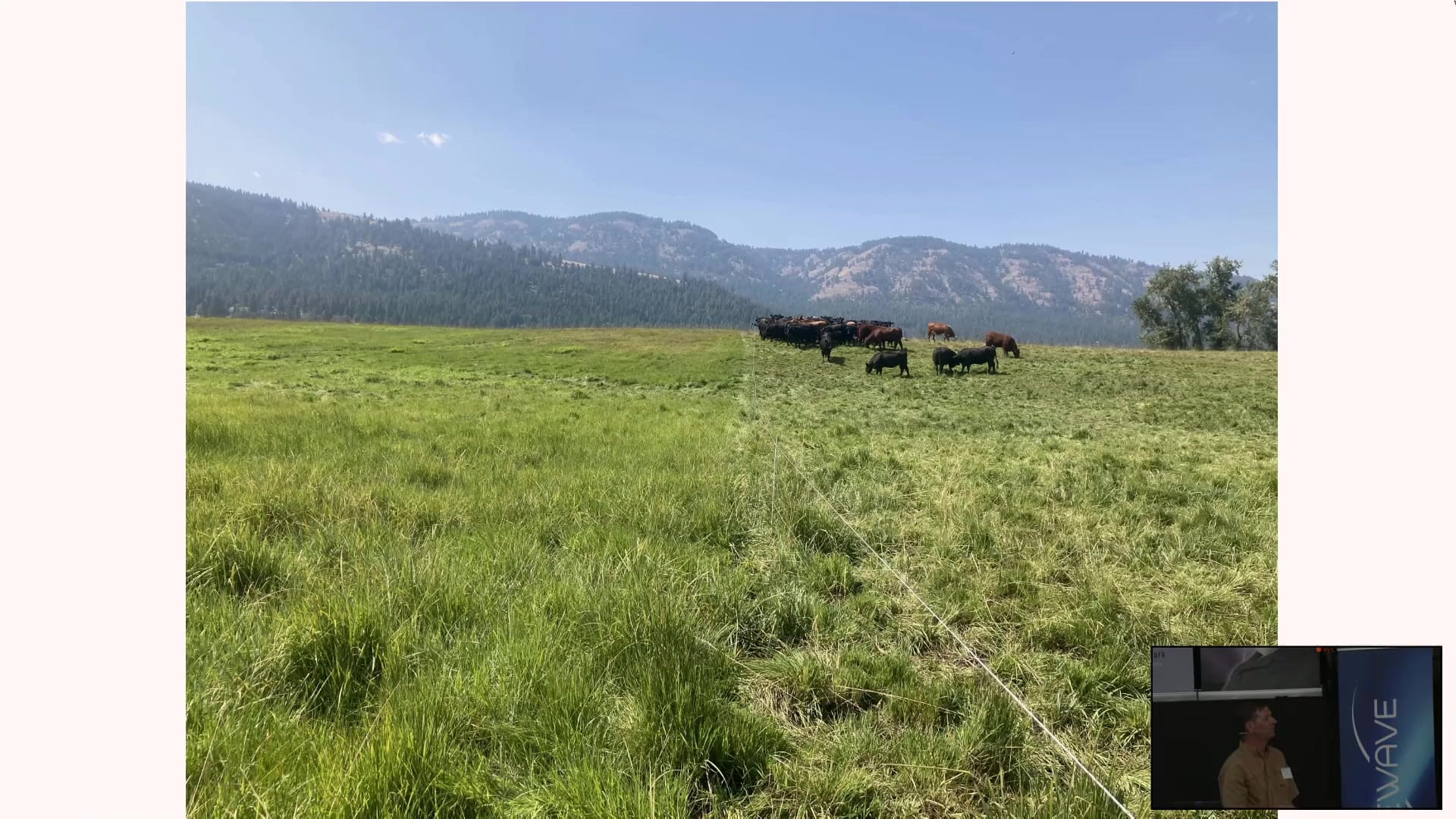
Cattle grazing behind a single polywire fence, with the grazed and ungrazed sides of the paddock visible

In his 64-minute ESTC 2026 presentation, first-generation rancher Justin Miller shows footage of himself moving upwards of a hundred head of cattle on foot, without a horse or dogs. The cattle come to him because, in his words, “these cows are coming to me because they’ve been trained to do that.”

From 2012 he managed a 1,100-acre preserve whose owners had banned livestock and torn out the cross fences, where the management was “a hundred percent mechanical” and the mower was his office. A 2014 conference introduced him to stockmanship and to the idea that “as beef producers, we’re actually grass farmers.”

Get Regenerative Grazing, the full 64-minute presentation

Same mowing, different regrowth

At a 30,000-acre preserve in Southern California, both sides of a road get the same mowing. On the side whose owner refuses grazing, the cut material lies there dry and not decomposing. The grazed side has regrowth, “totally due to the grazing.” “So that was a big eye-opener for me.”

Paddock timing, fencing and low-stress handling

  • One or two days, then rest: how long he leaves a herd in a paddock, 60 to 90 days of recovery on the California coast, and why in northeast Oregon he “could return in 30 days.”
  • Single-wire paddocks: poly wire on reels and fiberglass posts, hard fencing only on the perimeter, and why “Goats don’t respect it.”
  • Handling without pressure: “I don’t have to go chase these guys around.”
  • Machines against cattle: a crawler pulling an open disc over brush “looked a lot like having a large herd of cattle come through,” without the nutrient cycling.
  • What it costs: “the wire and the posts. It’s not cheap,” daily fence checks, and water as “one of the biggest challenges.”

Field observations and unanswered questions

Overgrazed and understocked at the same time. The stock density slide he credits to Understanding Ag. A cold wire run into a poison oak thicket the cows had “no interest at all to go into.” Footage of him “right in the midst of them, one man on the ground, no dogs.” And a Q and A on water, fencing and soil, where he describes water infiltration and brix tests without giving readings. His own line on the whole subject: “Somebody said to me at one point, why do we want to sustain a broken system?”

The 2026 ESTC releases so far

Hear about each release first

Energy Times readers hear about each ESTC 2026 release as it goes live, along with new books, papers and research from emediapress.com. It is free, and you can leave any time. Get Energy Times.

Get the full 64-minute Regenerative Grazing video

Aaron Murakami
Energy Science and Technology Conference · emediapress.com
Posted on — Leave a comment

EPD Telluric Transmitter: Hakasays and Justin Miller at ESTC 2026

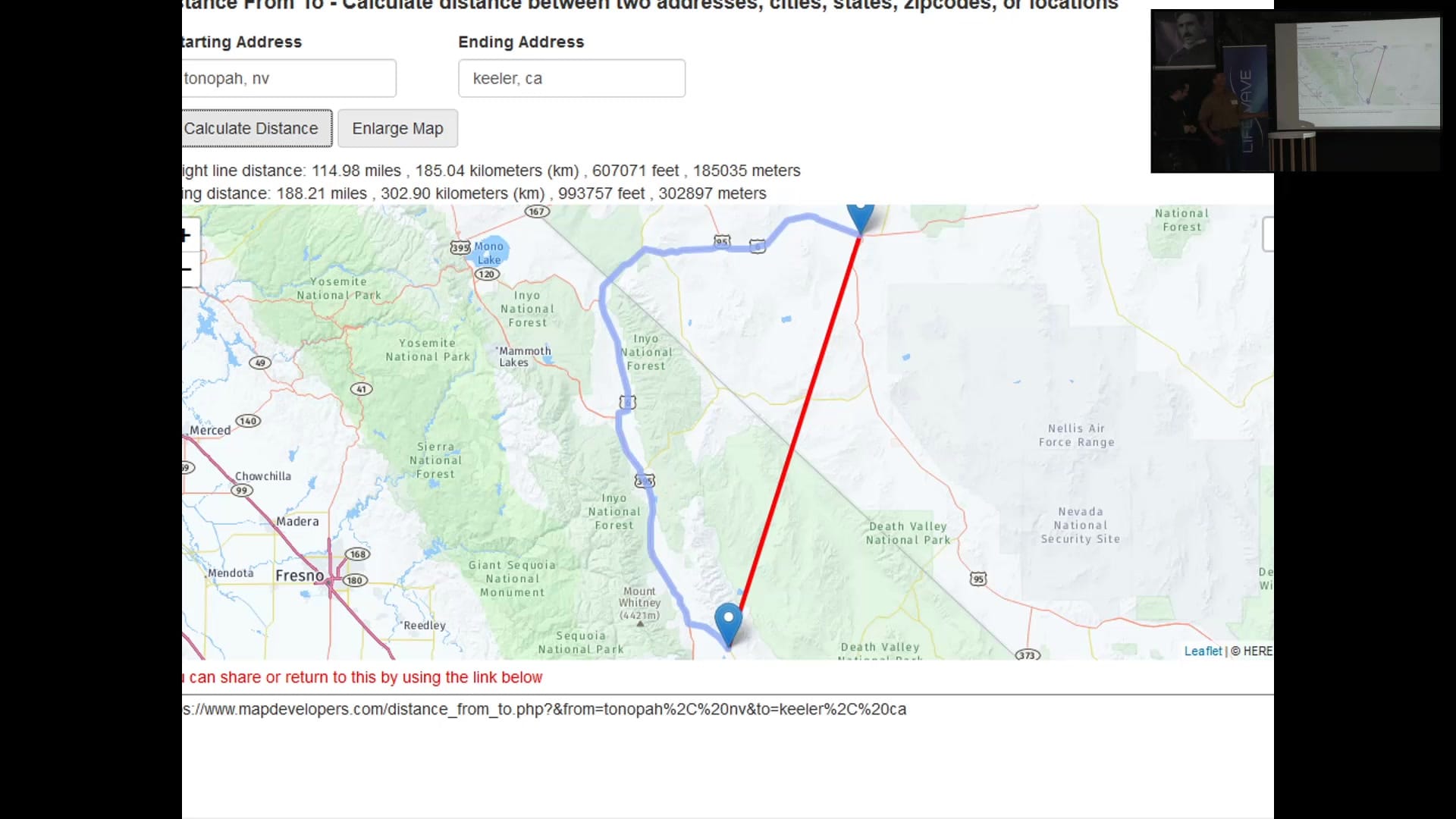
Distance calculation from Tonopah, Nevada to Keeler, California: 114.98 miles straight line

At 5 watts, the EPD Laboratories transmitter in Tonopah was still heard 115 miles away in Keeler, according to the presenters. Steve McGreevy received the signal on a radio receiver, not a matched coil. Hakasays and Justin Miller document the apparatus, measurements and range tests in their 111-minute ESTC 2026 presentation.

The project follows Tesla’s Colorado Springs research into earth-coupled transmission. The team has not yet measured propagation speed or separated the radio and telluric contributions to the received signal: “we can’t measure the speed of propagation at the moment.”

Get EPD Telluric Transmitter, the full 111-minute presentation

Buried-tank ground electrode system

The site’s electrode is “a pair of 10,000 gallon buried water tanks.” Justin Miller shows the digging, sealing, welding and backfilling it took to make them usable: “So again, huge amount of work to excavate these tanks, secure them.” With about 100 watts and careful tuning, Hakasays measured “about 2.4, 2.5 amps of RF current going into the earth.”

Current measurements, range tests and beacon hardware

  • 2019 wired scale model: Eric Dollard’s 2019 20-to-1 model of the Colorado Springs system, where “this one wire is powering up 500 watts,” through a wire, not the earth.
  • Ten feet that mattered: moving the coil from the deck into the shop took the impedance from about 10 ohms to about 18.
  • Light bulbs as test loads: automotive turn signal bulbs as an impedance check when the vector network analyzer “wasn’t giving us the right info.”
  • Below 5 watts: with the radio at its minimum, they detuned the system and estimate reception in Keeler fell away “somewhere between, we think, about 1 and 2 watts.”
  • A daytime drive: two eight-foot CB whip antennas on Eric’s car, to a minimum discernible signal about 56 miles out.
  • CW beacon hardware: an Arduino CW keyer built around a mercury-wetted relay, so surges from the transmitter would not “smoke the electronics.”

What the 115-mile reception does not establish

“We know it has a radio component to it, we know it has a telluric component to it,” Hakasays says. To separate the two, he proposes a time-of-flight test with GPS-disciplined oscillators at each end. It has not been run yet: “And we just don’t know until we do deeper measurements.”

Supporting Eric Dollard’s research

EPD Laboratories, Inc. is a 501(c)(3) nonprofit research organization carrying Eric Dollard’s work forward at its Tonopah, Nevada field site, where this transmitter stands. Donations are tax-deductible. Donate to EPD Laboratories.

The 2026 ESTC releases so far

Hear about each release first

Energy Times readers hear about each ESTC 2026 release as it goes live, along with new books, papers and research from emediapress.com. It is free, and you can leave any time. Get Energy Times.

Get the EPD Telluric Transmitter MP4 (111 minutes)

Aaron Murakami
Energy Science and Technology Conference · emediapress.com
Posted on — Leave a comment

Efficient Wind Catching Tech: Lindemann and McMenomy at ESTC 2026

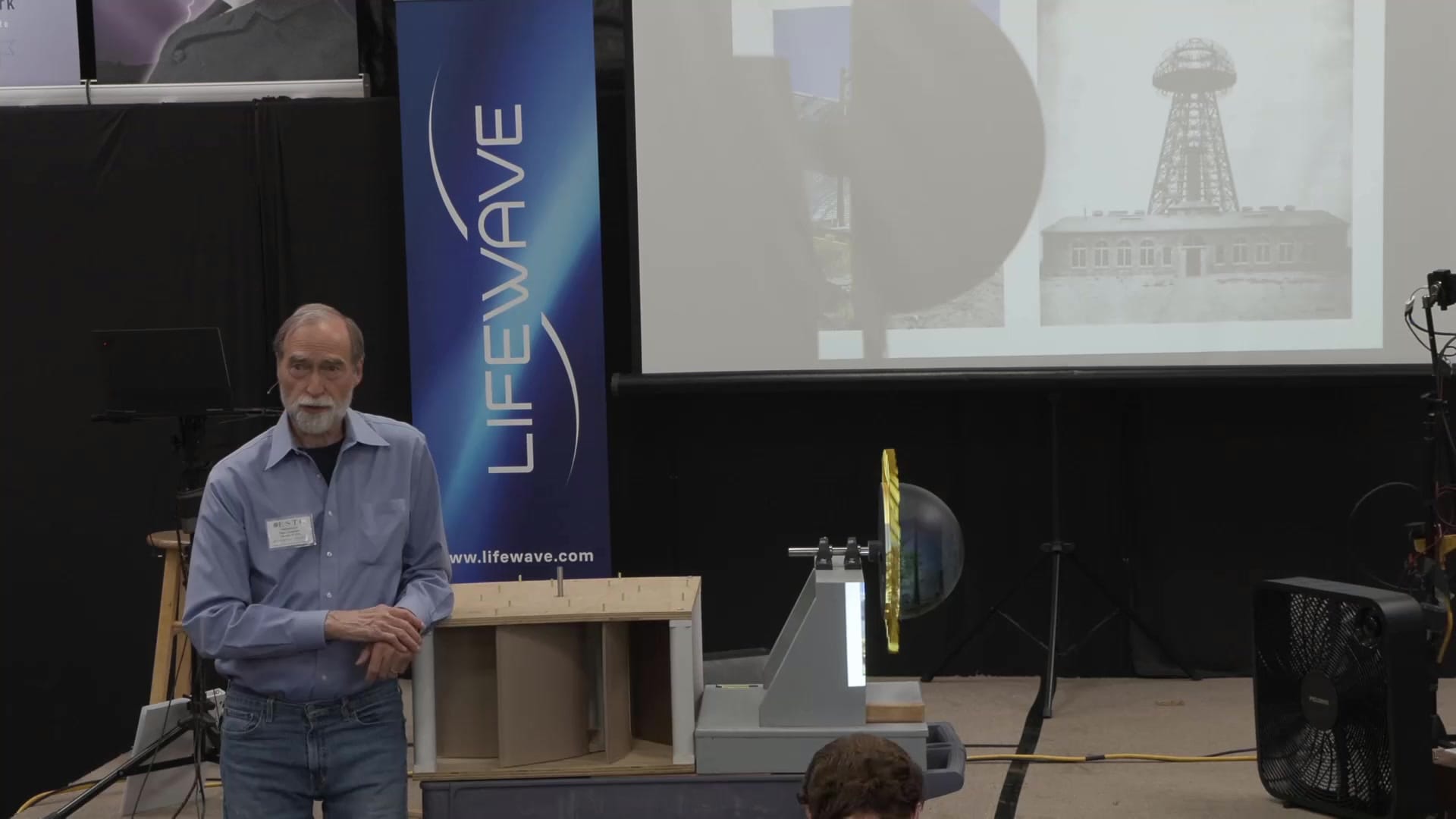
Peter Lindemann on stage with the wind-catcher models and box fan used for the live demonstration

Terry McMenomy’s unfinished wind catcher turns in his field video as his wind meter reads 5.6, then 9.8. He calls the wind “less than 10” and says “10 miles an hour is a daily thing” where he lives. His 82-minute Efficient Wind Catching Tech presentation with Peter Lindemann, from ESTC 2026, is now available to download.

Lindemann co-founded this conference with John Bedini and has spent decades on motors, batteries and energy research. Here he turns to inexpensive wind-catching concepts for home builders, showing how the ideas performed in the shop and what remains to be tested.

Get Efficient Wind Catching Tech, the full 82-minute presentation

The separate conventional windmill that faults in gusts

McMenomy then shows the conventional windmill they already own, 50 feet off the ground. It runs at 20 to 40 miles an hour. When a gust spikes past 40, “it sends it into fault,” and “it takes it five minutes to reset itself, and by the time it’s reset, the wind is gone.”

Cross-flow versus Savonius: speed and torque

  • Drag versus lift: cup anemometers, Savonius rotors and Darrieus machines, the basic vertical axis wind turbine shapes, against propellers, and why, unlike aircraft, “wind turbines can use drag to increase efficiency.”
  • A fan on a variac: “so we could vary the speed and see how well the different rotors that we built worked.”
  • Speed against torque: “The cross-flow fan turned the fastest, and the multi-bladed Savonius had the most torque.”
  • A design that hit a limit: a deeper-cup version that, “even if we threw twice the wind at it, it wouldn’t go faster.”
  • The first shop spin: McMenomy’s leaf-blower test of the larger rotor, a spin he timed at two minutes, before it went outside.

Windmill history, Waters’ calculation and open questions

The community of windmills at Nashtafan, Iran, that ground grain on a prevailing wind. A grid-tied machine about a mile from Lindemann’s house, installed in 2011, whose owner, Lindemann says, “wouldn’t do it again.”

Mike Waters’ prototype against a six-foot propeller, with the hundred-fold figure Lindemann gives as Waters’ calculation, not a measurement. Diverters that close around the rotor “in about five minutes” when the forecast says high winds. And the online question on mass flow and back pressure: “Those ideas may have validity, and my basic philosophy is everything should be tried.”

The 2026 ESTC releases so far

Hear about each release first

Energy Times readers hear about each ESTC 2026 release as it goes live, along with new books, papers and research from emediapress.com. It is free, and you can leave any time. Get Energy Times.

Download Efficient Wind Catching Tech, the complete 82-minute MP4

Aaron Murakami
Energy Science and Technology Conference · emediapress.com
Posted on — Leave a comment

Build A Better Tesla Coil: Hakasays at ESTC 2026

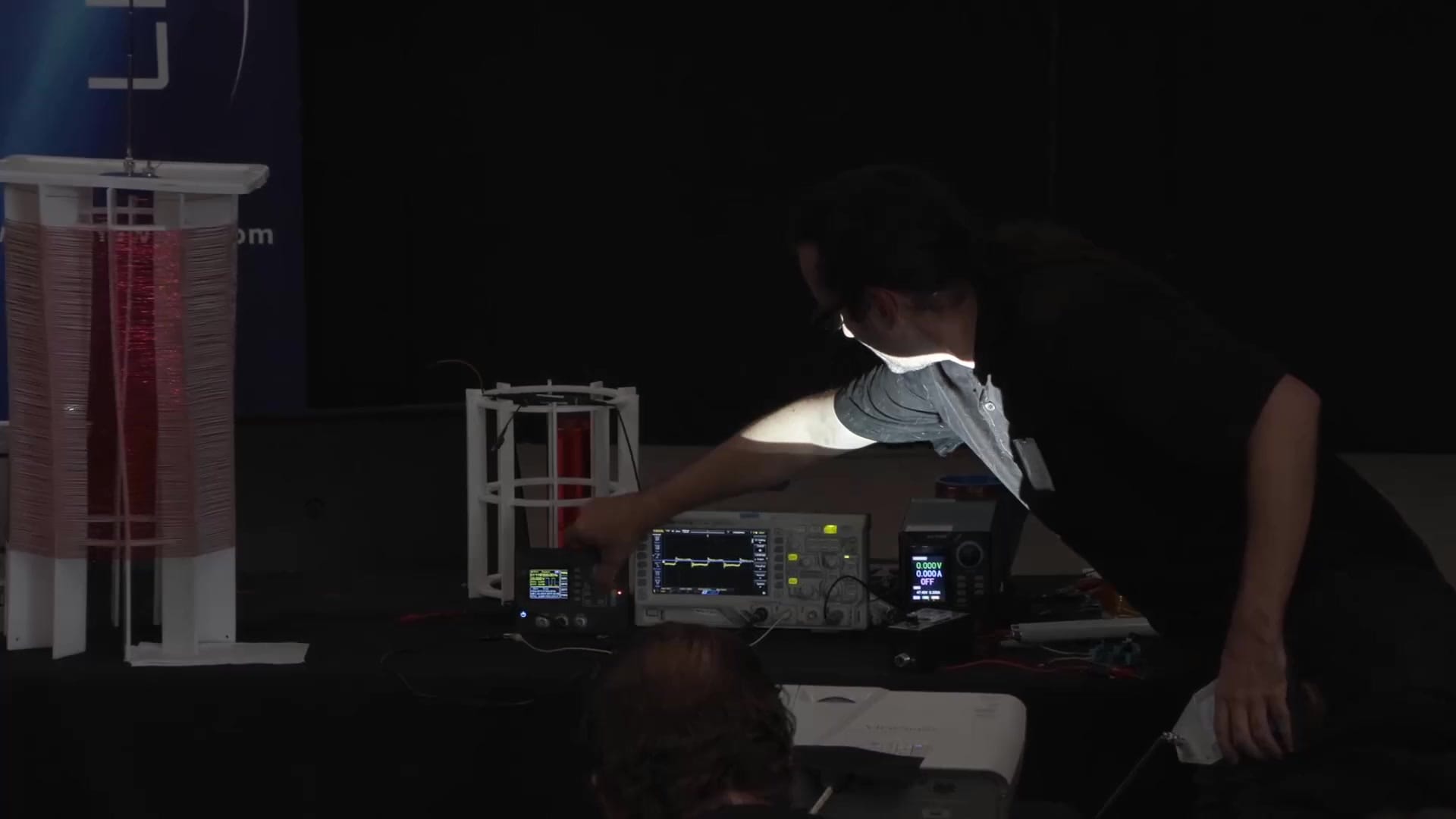
Hakasays at the bench with signal generator and oscilloscope, characterizing the coil wound during the conference

Hakasays lights a bulb using the self-oscillating exciter circuit most people buy online, drawing about seven watts. Then he removes the feedback winding, the primary and the driver circuit, one at a time. On a hobby signal generator putting out a quarter to a third of a watt, the bulb stays lit. “So I think we’ve made a better Tesla coil. We’ve done the same output with almost no power.” His 2026 ESTC presentation, Build A Better Tesla Coil, 137 minutes, is out now as a download.

The two-coil spark gap machine everyone calls a Tesla coil is not the three-coil arrangement Tesla ran at Colorado Springs. Hakasays has been building coils alongside the EPD Laboratories work, including the telluric transmission platform, ever since the 2019 conference showed a 20-to-1 replica of the Colorado Springs system built by Eric Dollard and Bruce Gavin.

Get Build A Better Tesla Coil, the full 137-minute presentation

Measured, not judged by the sparks

The coil on his bench was wound at the conference itself, in the first day and a half. He finds its resonance live with a signal generator, a scope and a field strength meter. Then he works the quality factor of an earlier coil on screen: 1470 and 1463 kilocycles, 7 kilocycles of bandwidth, “we divide that, the 1466 by 7, and we get a 209 quality factor.” He compares that 209 with the 30 to 60 he reports for faithful spark gap replicas. “And you can see for yourself. You don’t have to trust me for this.”

For builders

  • Frame material, ranked by loss: “The PVC is one of the worst materials that you could use to wind a Tesla coil on.” And: “You’d be better off winding a coil around a tree.”
  • 3D printing: why dark filaments are a trap (the pigment is usually carbon) and what to print with instead.
  • Wire and spacing: gauge, cost and weight, and why turn spacing changes what the coil is.
  • What killed a telluric coil: unpolished copper tubing oxidized in the air, and the fix.
  • Matching the drive: Bruce Gavin’s method for letting a 50-ohm ham radio see a match, “set it and forget it.”

Inside the 137 minutes

Three demonstrations on stage. The striations in the lit tube, which he attributes to “where the fields have nodes.” The field strength meter walked backward across the room, 50, 40, 15, down to about 5, “nowhere near the coil.” Why Tesla ran between 50 and 100 kilocycles. One three-coil system lighting 400 watts on another through a single wire. And his closing line: “Go forth and build.”

The 2026 ESTC releases so far

Gangrene Energy and The Alexanderson Antenna, Eric Dollard. Onan and Dynamotor Tech, Al Francoeur. A Foundation for True Science and the free The coMra Effect, Adrian Marsh PhD. Orgone Energy, Tom DiFerdinando. The free 2026 Panel Discussion. And today, Build A Better Tesla Coil, Hakasays.

Hear about each release first

Energy Times readers hear about each ESTC 2026 release as it goes live, along with new books, papers and research from emediapress.com. It is free, and you can leave any time. Get Energy Times.

Get Build A Better Tesla Coil

Aaron Murakami
Energy Science and Technology Conference · emediapress.com
Posted on — Leave a comment

2026 ESTC Panel Discussion: Free Download

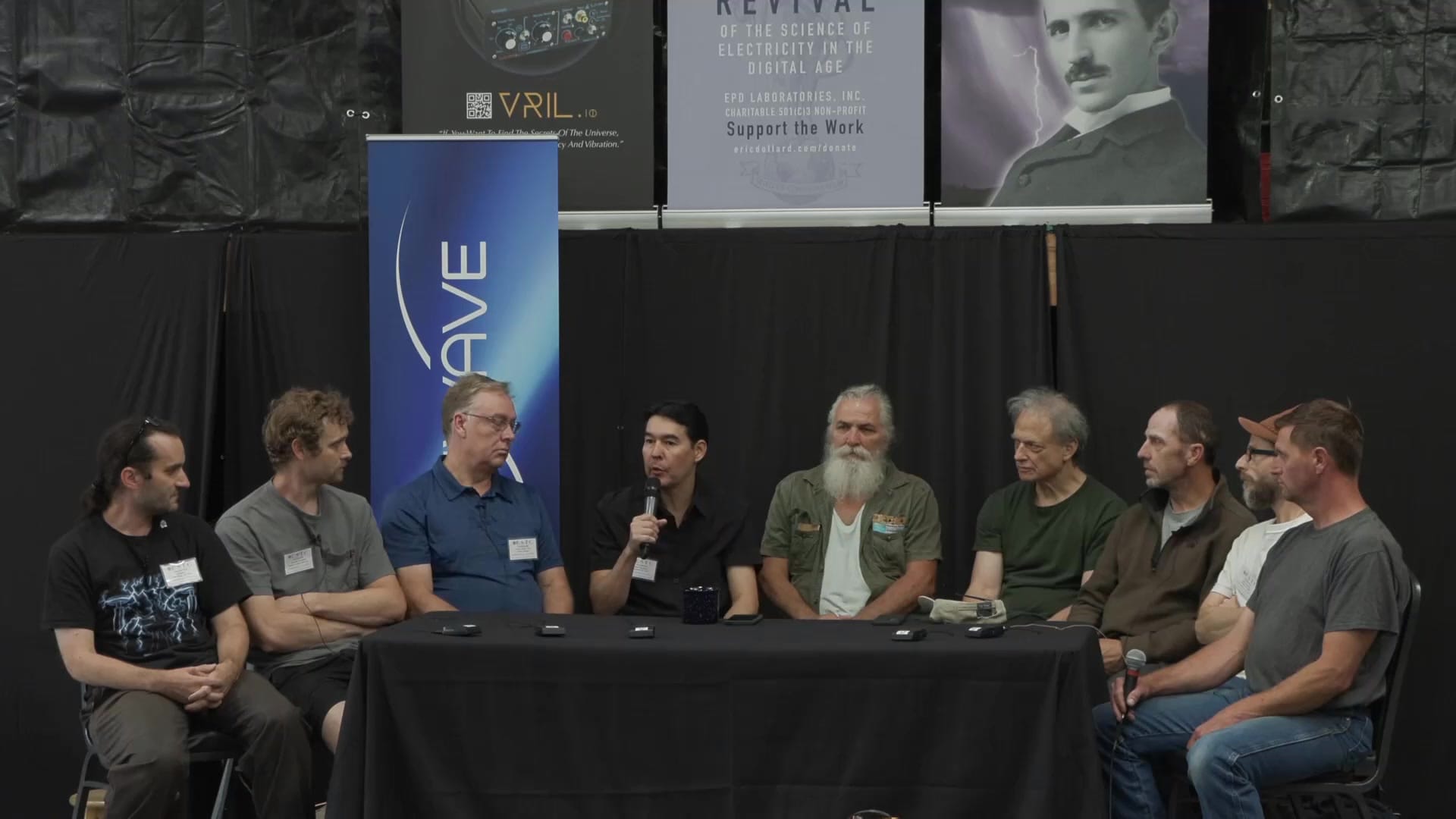
The 2026 ESTC presenters seated on stage for the closing open Q and A, moderated by Aaron Murakami

Someone watching online asked what to do when you understand the theory but do not have the tools. The answer came straight back from the stage: “Kitchen table. Seriously. Work in your living room.” That is the closing panel of the 2026 Energy Science and Technology Conference in one exchange. The full 130 minutes is out now, free to download and keep.

Aaron Murakami moderates Hakasays, Jeremiah Ferwerda, Adrian Marsh, Al Francoeur, Tom DiFerdinando, Terry McMenomy, Davy Oneness and Justin Miller. After a week of prepared talks they sit in a row and take questions from the floor and the online stream, with no slides and no script.

Get the 2026 Panel Discussion free

What you will hear

  • The coil in the luggage: Hakasays on building his demonstration coil two to four days before the conference, winding it on site, and knowing from geometry, wire and frame that it would perform before he measured it.
  • Nine pumps: Jeremiah Ferwerda on six years of prototyping, the shop, and the disk-spacing question he turns down: “we have had people try to copy and take our work.”
  • Half a mile of dead line: Justin Miller on the only cut he ever made on the 12 kV side of a transformer, how he confirmed the line was dead, and how badly his hands shook anyway.
  • Every band snowed: Al Francoeur firing his Mobius coil and finding UHF, VHF, television, AM and FM all turned to buzz.
  • Eight years off the grid: Al on the fridges, freezers, trailer and RV his system has run for over eight years, and the smart meter he refused.
  • The ether argument: Marsh and DiFerdinando on how to polarize more ether, then the real disagreement between them, which is not about the ether at all. Marsh: “The spirit is unknowable.” DiFerdinando: “If the spirit is real, it’s a part of reality.”

Where each presenter’s own talk picks up

Most of the panelists have a full 2026 presentation of their own, alone or with a partner. The panel is where you hear them argue about each other’s work; the talks are where each one shows his own. Tom DiFerdinando’s Orgone Energy came out yesterday, and Hakasays’ Build A Better Tesla Coil is out tomorrow.

The 2026 ESTC releases so far

Gangrene Energy and The Alexanderson Antenna, Eric Dollard. Onan and Dynamotor Tech, Al Francoeur. A Foundation for True Science and the free The coMra Effect, Adrian Marsh PhD. Orgone Energy, Tom DiFerdinando. And today, free, the 2026 Panel Discussion.

Hear about each release first

Energy Times readers hear about each ESTC 2026 release as it goes live, along with new books, papers and research from emediapress.com. It is free, and you can leave any time. Get Energy Times.

Get the 2026 Panel Discussion free

Aaron Murakami
Energy Science and Technology Conference · emediapress.com
Posted on — Leave a comment

Orgone Energy: DeMeo’s Tests on the Instruments

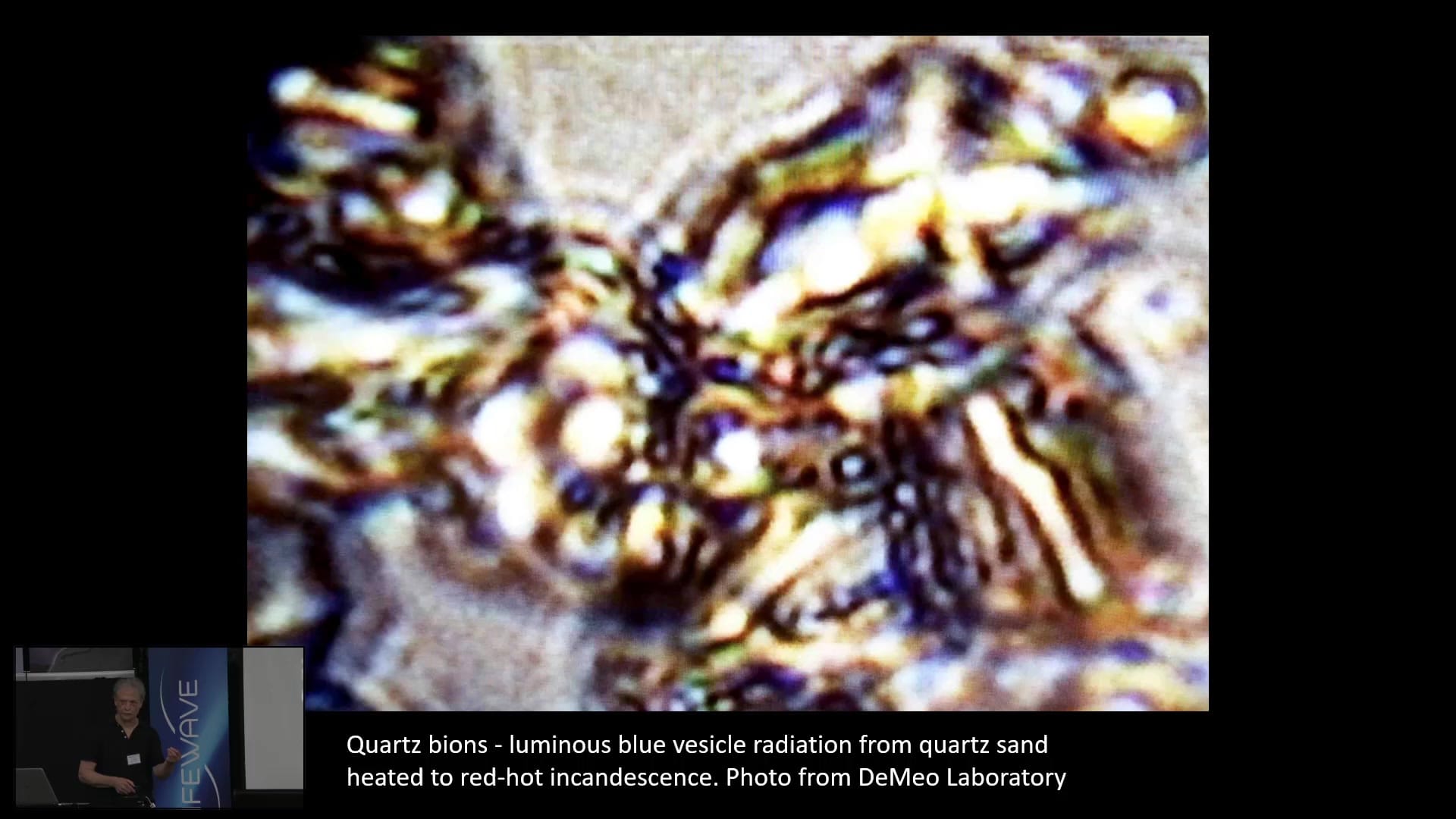
Quartz bions: luminous blue vesicle radiation from quartz sand heated to incandescence, photo from the DeMeo Laboratory

James DeMeo put distilled water in an open glass dish inside an orgone accumulator, nothing added, nothing touching it. The water then showed UV absorption at 240 to 280 nanometers and fluorescence at 300 to 500 nanometers. The UV signature was not there in the untreated distilled water. Tom DiFerdinando’s 2026 ESTC presentation, Orgone Energy, 137 minutes, is out now as a download.

DiFerdinando is director and president of the Orgone Biophysical Research Laboratory, worked beside DeMeo about a month a year for over 20 years, and now keeps DeMeo’s books in print and is making his archives available to scholars. He opens with how Wilhelm Reich’s story ended: he died in prison, his books and journals destroyed by FDA order. “You know your stuff is really on target if they arrest you, put you in jail, and burn your books.” Then he lays out the theory and turns to the part of Reich’s work that was instruments, photographs and repeat measurements.

Get Orgone Energy, the full 137-minute presentation

An experiment anybody can do

Reich’s bion experiment is grass in water under a microscope, watched for days, and the blue pulsating vesicles that form at the edges. DiFerdinando shows the time-lapse footage and explains why he says the motion is not Brownian: heating or cooling the water does not change it the way Brownian motion should. “Anybody can do this. This isn’t like magic or anything.”

Instrument readings and comparisons

  • Thermistor: DeMeo’s 24-hour runs, accumulator against control on a rotating mount in a shielded shed, and the low-humidity August 2004 day when the peak relative to the control came at noon, not four in the afternoon.
  • Seed sprouts: four years of matched mung bean trials at workshops, with the accumulator sprouts “like nearly doubled.”
  • Life energy meter, live: Dave Marett’s solid-state version of Reich’s field meter. A magnet, heat, static and light move nothing. A hand moves the needle without touching the plate. A crystal reads about 8%, a lemon far higher.
  • Spectrograph: DeMeo’s accumulator water against untreated water, and against exclusion zone water, storm water, snow melt and DNA.
  • Sidereal time: Dayton Miller’s interferometer on Mount Wilson, hundreds of thousands of readings that look like noise by civil time and form a pattern by sidereal time. “You don’t get any better than that.”

The second hour

DeMeo’s gravitor turning on archival video from Green Springs, Oregon. The World Behavior Map built from more than a thousand cultures. And the Q&A on why the accumulator is always a box: DeMeo tried 10 or 12 shapes, and “it wasn’t dramatically different.” DiFerdinando’s own summary: “The orgone’s been physically objectified and demonstrated. You can see it, feel it, measure it, photograph. All those things have been done.”

The 2026 ESTC releases so far

Gangrene Energy and The Alexanderson Antenna, Eric Dollard. Onan and Dynamotor Tech, Al Francoeur. A Foundation for True Science and the free The coMra Effect, Adrian Marsh PhD. And today, Orgone Energy, Tom DiFerdinando.

Hear about each release first

Energy Times readers hear about each ESTC 2026 release as it goes live, along with new books, papers and research from emediapress.com. It is free, and you can leave any time. Get Energy Times.

Get Orgone Energy

Aaron Murakami
Energy Science and Technology Conference · emediapress.com
Posted on — Leave a comment

Adrian Marsh’s coMra Effect Talk, Free Download: What Coherence Looks Like on Camera

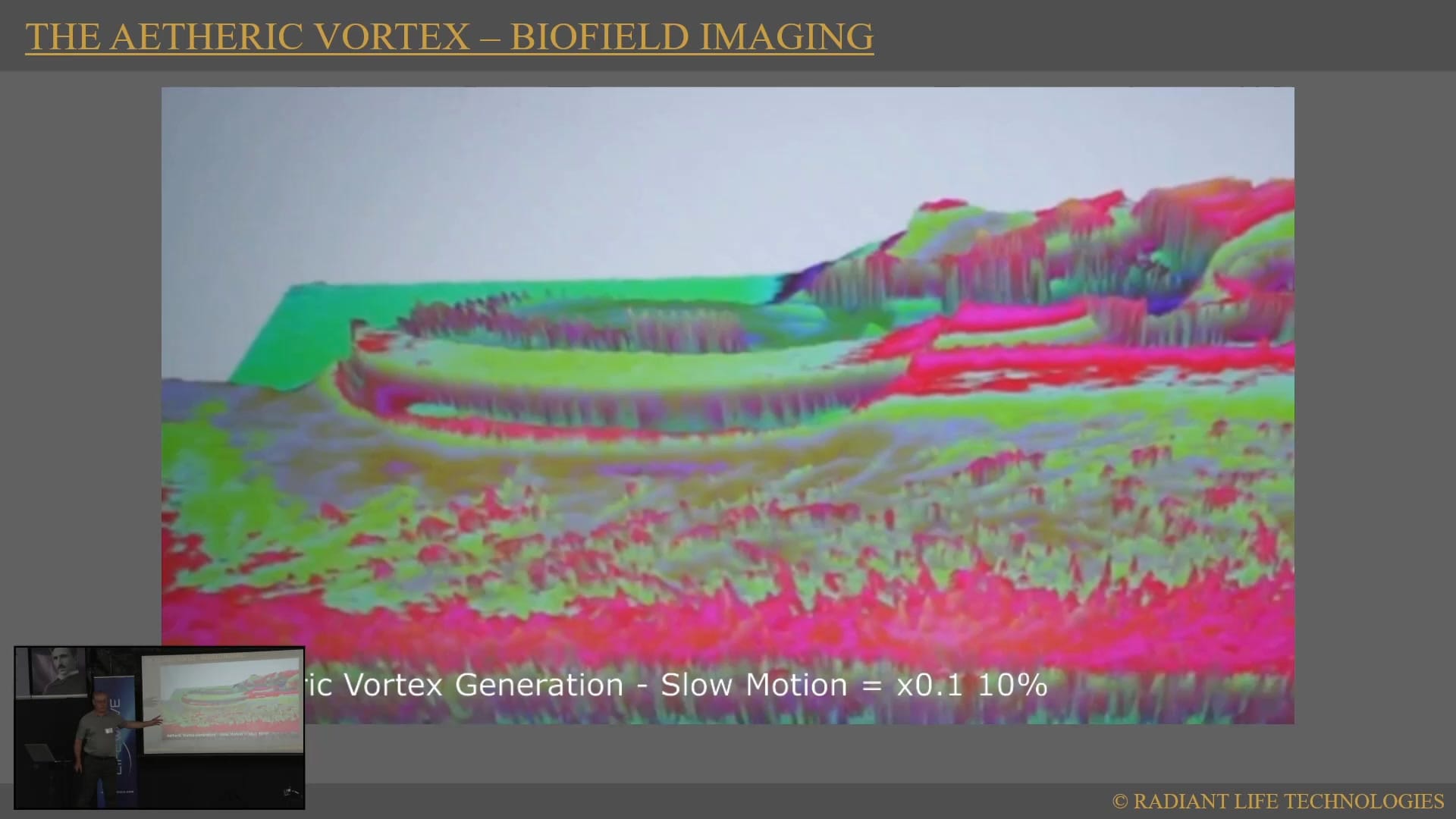
Etheric vortex biofield imaging: vortex generation shown in slow motion

Adrian Marsh’s other 2026 ESTC presentation, The coMra Effect, is out today as a free download: the full 131 minutes, yours to keep. It is the first half of a two-part argument. The second half is A Foundation for True Science, released this morning as well, and Marsh built that talk on the framework he lays out in this one.

coMra stands for Coherence Achieved Through Modulation of Radiances. Marsh, who took his PhD in physics at the Cavendish Laboratory, Cambridge, working on superconducting coherent quantum effect devices, says the three words have to be understood together: a laser, LEDs, permanent magnets and ultrasound, combined with “specific geometry, timing, and modulation,” do something as a set that none of them does alone. He spends the talk showing what he means by that, on the device and on camera.

Get The coMra Effect, the full 131-minute presentation, free

The vortex on camera

The moment to watch for is the biofield imaging footage, run at one tenth of normal speed. An early coMra device sits on the bench by itself; then it is placed on a person, and a rotating pattern Marsh calls the etheric vortex forms where the two meet. Then he says what the imaging shows when one input is taken away.

  • No LEDs, no vortex. “If you take away the LEDs, you don’t see the vortex.”
  • No magnet, no vortex. “You take away the magnetic field, you don’t see the vortex either. This is what I mean by coherence.”
  • The laser at the center. Marsh assigns each input a role: the coherent laser sets the message, the three colored LED triangles carry it, the permanent magnets contain the vortex, the ultrasound works on the physical side.
  • The geometry behind it. Three rotating triangles forming a nine-pointed star in his Toltec framework, then the same figure drawn onto the device with the laser in the middle.

Two kinds of image, kept apart

Marsh also shows a BioWell before-and-after from a coMra Pro 905 session, ten minutes apart, and he is careful to say what it is: a Kirlian-type fingertip instrument whose proprietary software renders the readings as a chakra-based picture. You see the two images, you hear how they were produced, and you hear his reading of them in the same minute of the recording. The biofield video and the BioWell graphic are different things and he treats them that way.

Where he draws the line

Near the end an audience member asks the medical question: have there been controlled trials on heart rate variability, blood pressure, physiological parameters? Marsh answers that he is not a medical doctor, that a colleague works in a clinical environment with doctors who do measure, and that the group publishes from time to time. Then: “We are not making medical claims.” What the devices are used for, and what he and others say about using them, is in the recording in their own words; this post stays on the physics and the images.

For the Tesla crowd

Coherence, Marsh says, is what he has been chasing for 30 years: in Cooper pairs moving with a lattice at Cambridge, in Tesla apparatus, and here. His matching-network analogy comes straight off the coil bench: without one, the power bounces back to the generator, and he says the same thing happens between a vibration and a being. And his line on over-unity: “True over-unity is actually inspiration. And if you want to build an over-unity machine on the bench, then model inspiration.”

Inside the 131 minutes

The Toltec framework: tree of life as the etheric spectrum, the 21 jewels of awareness, numerology as his tool for reading the device’s numbers (905, 980, 520, 375 nanometers). The slow-motion imaging. The coMra Pro in hand, its two controls and the infrared laser you can only see through a phone camera. The manual and the protocols he says were worked out empirically over 15 years of production. The Q and A: how his group developed the system, the year it took to make the first prototype, the seed-in-the-mouth question on coherence, and the medical question above.

The 2026 ESTC releases so far

Gangrene Energy, Eric Dollard, on the dirty electricity in the utility system. The Alexanderson Antenna, Eric Dollard, from the Bolinas blueprints to a radio telescope pointed into the Earth. Onan and Dynamotor Tech, Al Francoeur, a motor-generator that ran from April 17 to the solstice. And out this morning with this one, A Foundation for True Science, Marsh’s second talk, with his etheric resonator on the analyzer.

Hear about each release first

Energy Times readers hear about each ESTC 2026 release as it goes live, along with new books, papers and research from emediapress.com. It is free, and you can leave any time. Get Energy Times.

Get The coMra Effect free

Aaron Murakami
Energy Science and Technology Conference · emediapress.com
Posted on — Leave a comment

Adrian Marsh’s Etheric Resonator: 49 dB Test at ESTC 2026

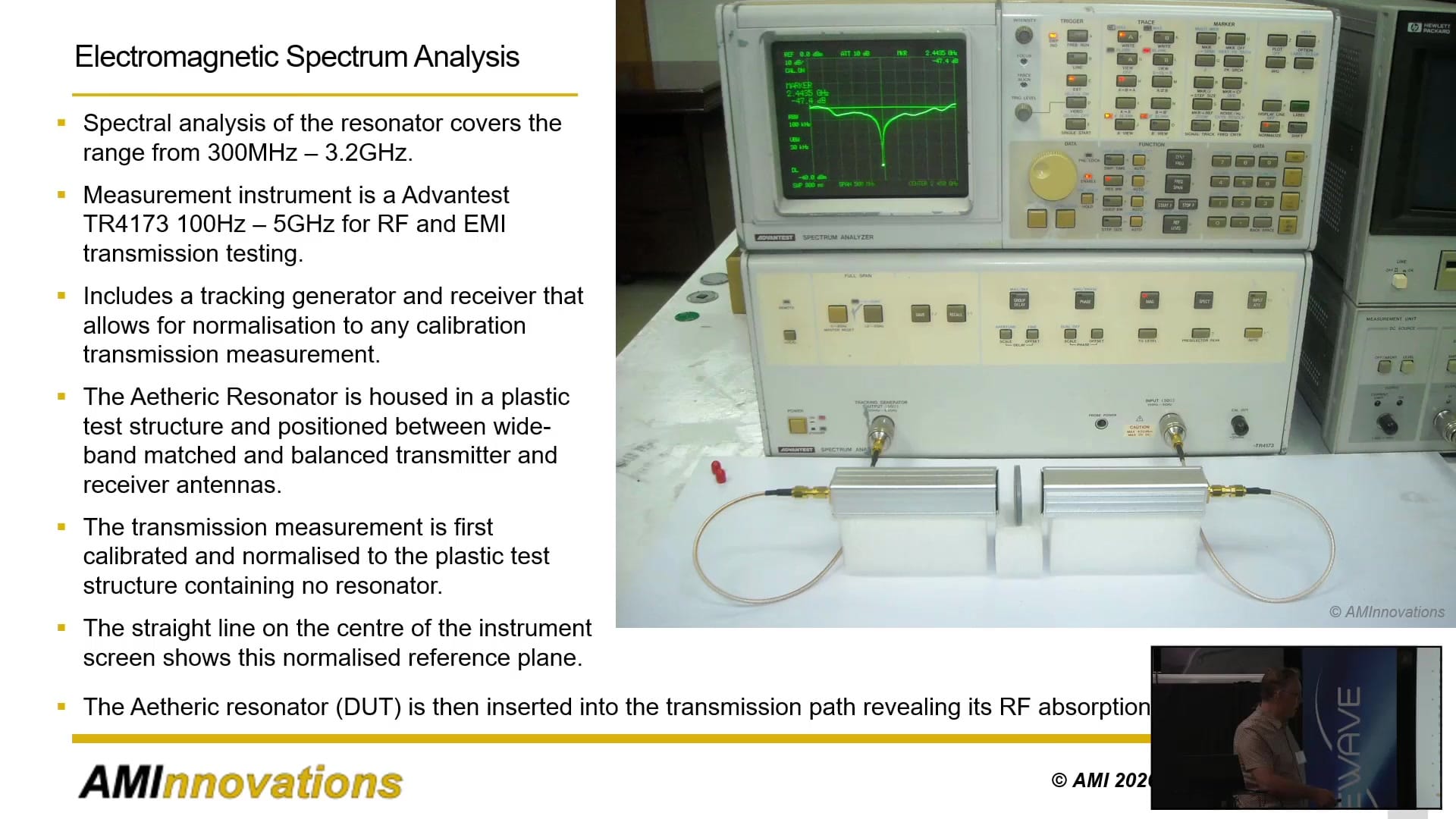
Electromagnetic spectrum analysis bench: the Advantest TR4173 analyzer with the resonator test structure between matched antennas

In his 2026 ESTC presentation, Adrian Marsh asks why over-unity experiments remain so difficult to replicate. He then discloses his etheric resonator for the first time and presents measurements from an Advantest TR4173 analyzer, a phone EMI test and oxygen-17 NMR water comparisons. A Foundation for True Science, 141 minutes, is out now as a download.

He opened the last morning of the conference with a poll. Who in the room has witnessed an over-unity machine working? Who has seen the plans? Who has replicated one? Then the question the whole talk answers: “So why does free energy in over-unity remain so elusive? We have experience, we’ve seen it, but why is it still so elusive?” Marsh holds a PhD in Physics from the Cavendish Laboratory at Cambridge, has been part of the ESTC research team since 2019, and has spent 30 years on this.

Get A Foundation for True Science, the full 141-minute presentation

coMra Wave: From Resonance Research to Everyday Application

From Radiant Life Technologies:

Following Dr Adrian Marsh’s presentations at ESTC 2026, Radiant Life Technologies has published a new article exploring coMra Wave, its underlying resonant technology, and some of the experimental work presented at the conference.

The article covers NMR and dissolved-oxygen measurements, observations from plant-growth experiments, and how the coMra Wave Coaster, Cell and Pendant bring the same resonant principle into everyday biosupport. Research continues, with new applications of the coMra Effect already in development.

Read the full article: coMra Wave: From Resonance Research to Everyday Application

Marsh’s approach to the replication problem

Marsh’s answer to his own question is not a missing component value. “If you want to replicate someone’s over-unity machine, you need to align the same intent. Because when you align the same intent, it’s going to work.” He traces his own path: when he found Eric Dollard’s work he set out to replicate Dollard’s experiments as accurately as he could, “because if I did that, and I did it as accurately as I could, then I would actually get a sense of his intent, of what he was trying to explore about Tesla.” The first hour develops that argument, drawing on conventional experiment and on his framework of esoteric science, and he says plainly which is which.

RF transmission test: 49 dB at 2.45 gigacycles

Marsh announces “a first-time disclosure” of what he calls an etheric resonator, a device he says resonates in both the electromagnetic spectrum and the etheric one. The full design is shown in the presentation. Then he puts it between two matched antennas on an Advantest TR4173 and sweeps it from 300 megacycles to 3.2 gigacycles.

  • Calibrated first. The empty plastic test structure is measured and normalized flat before the resonator goes in.
  • 2.45 gigacycles. The upper spectrum shows a major component there. “You might recognize that frequency.”
  • 49 dB. The transmission attenuation at that component against the calibration without a resonator. Marsh explains why it is absorption and not reflection: “It’s not being reflected back to the generator. It’s a matched condition.”
  • The rest of the spectrum. Major components at 1.3 and 1.4 gigacycles, which he places at the OH band and the hydrogen line, a minor at 1.54, and lower components at 375.6 and 780.
  • On a phone. Mounted on a cell phone in an EMI test receiver setup, the resonator takes 33.5% off the two measured peaks. The phone’s 906 GSM frequency sits next to the resonator’s 920 minor resonance. “We didn’t design this.”

Oxygen-17 NMR: 68 Hz control, 59 Hz samples

Marsh reads the RF attenuation as absorption rather than reflection. He then turns to water to see whether exposure goes with other measurable changes. Two resonators go into ordinary tap water from the research facility and the samples go through oxygen-17 NMR, where the half-width is his measure of cluster size. The control reads 68 Hz, inside the 65 to 75 he gives as typical for tap water. Both resonator samples read 59 Hz, inside the 50 to 60 he gives for spring and natural water. The run takes about four hours and he states 2 to 3 Hz of drift over that time as the margin of error. A 9 Hz shift, he says, “shows a significant change in the structure of water and a reduction in the cluster size.” Dissolved oxygen follows, rising from about 54 to 65 after 15 minutes on the resonator and 67 at 30 minutes without agitation, and then a twelve-day plant comparison, repeated with cress.

He also says what is not settled. “Many aspects of the etheric resonator remain as yet unknown and unexplored. It is a research in itself.”

Inside the 141 minutes

The poll and the replication question. The two journeys, scientific and esoteric, and how he proposes bringing them together. The first-time disclosure and the equivalent circuit. The full sweep, the phone test, the NMR, the dissolved oxygen, the plants. And a Q and A on whether linear sine waves, sideband heterodyning and disruptive discharge are equal (the second and third, he says, produce a much stronger effect, “particularly the non-linear”), a follow-up on displacement current, and his capacitor-discharge explanation, demonstrable “with high voltages, with capacitors, inductors, and disruptive circuits. So spark gaps.”

The 2026 ESTC releases so far

Gangrene Energy, Eric Dollard, on the dirty electricity in the utility system. The Alexanderson Antenna, Eric Dollard, from the Bolinas blueprints to a radio telescope pointed into the Earth. Onan and Dynamotor Tech, Al Francoeur, a motor-generator that ran from April 17 to the solstice. And out this morning with this one, free, The coMra Effect, Marsh’s other 2026 talk and the first half of this argument. The free 2026 Panel Discussion, nine presenters with no script and no slides, follows on Tuesday.

Hear about each release first

Energy Times readers hear about each ESTC 2026 release as it goes live, along with new books, papers and research from emediapress.com. It is free, and you can leave any time. Get Energy Times.

Get A Foundation for True Science

Aaron Murakami
Energy Science and Technology Conference · emediapress.com
Posted on — Leave a comment

Al Francoeur’s Dynamotor Ran From April 17 to the Solstice

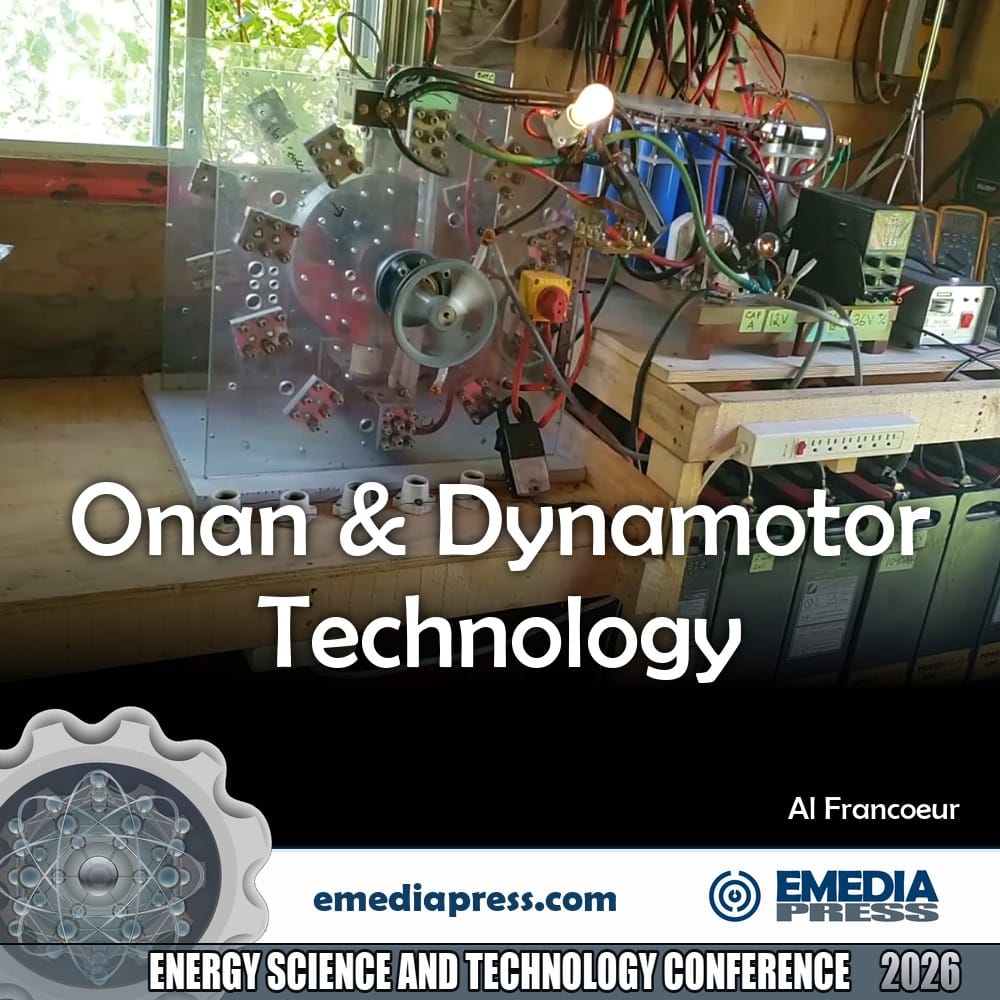
Onan And Dynamotor Tech cover - 2026 Energy Science & Technology Conference

Al Francoeur switched on Dynamo No. 1 in his rebuilt power shop on April 17. He did not switch it off until June 21, the solstice, and only because he was leaving for the conference and will not leave it running unattended. Day and night at about 700 rpm, with two squirts of bearing grease once a month. “And it run flawless. Perfect.”

His 125-minute presentation from the 2026 Energy Science and Technology Conference is the bench report on that machine and the ones around it. He has been off-grid for eight years, since he refused a smart meter and the utility cut him off. He winds every coil by hand. Three dynamos are built, and a fourth is 90 percent complete.

Get Onan and Dynamotor Tech, the full 125-minute presentation

He will not claim over-unity

Francoeur draws one line at the start and holds it: “pending third-party independent verification of all energy systems, I will refrain from stating over unity or efficiencies in these energy systems.” What he shows instead is the apparatus, the wiring, the run times, the scope traces and the burned bulbs, in enough detail to build the same thing. “Well, this is my fourth machine now. And again, it’s working. Again and again. It’s repeatable.”

A motor and a generator at the same time

The dynamo is a brushless permanent-magnet motor-generator that Francoeur calls a magnetic paddle wheel. Battery A drives the pulses. Battery B charges from the generator coils. Battery C catches the spike when the coils collapse, and the harder he loads the rotor, the bigger the spike into C. In his words, “the EVs aren’t doing that.”

The build is plain and visible. Ten-and-a-quarter-inch phenolic rotors carry neodymium magnets around a steel keeper ring, twelve poles on the rotor and ten coil positions at 36 degrees on the stator, Lexan and phenolic throughout, stainless axles. “It’s like a continuous horseshoe magnetic field around and around the rotor.”

It does not need speed. At about 180 rpm, the 35-pound rotor barely turning, it lights a bank of incandescent bulbs at full brightness. “It doesn’t need to go fast to produce power. Full power.” Off the solar panels it runs at 1,400 rpm, dipping and recovering as clouds cross the sun. “I don’t use LED lights at all. I want lights that load the system down.”

Two coils caught fire, so he rewound everything

The pulse coils on the early machine ran hot while the generator coils stayed cool, and one morning two of them burned, smoke in the room. He marked the hot side of each core with red tape and redesigned the windings. The classical coil took 59 feet of magnet wire; his double-helix mirror-image coil takes 10 feet a side, on hollow amorphous ribbon cores, and runs cooler. The switching is as simple as he could make it: one 1-megohm resistor, one hall sensor and one MOSFET on a removable module, terminal studs instead of a circuit board. Dynamo No. 3 adds X-vertex crossover wiring, and No. 4 moves the generator coils nearest the rotor.

One night the 35-pound rotor slowed to a stop and spun back up the other way, witnessed by two people. He suspects vibration shifted a hall sensor, and says that is a suspicion, not a finding.

The Onan that burns the bulbs

The second half of the talk is old iron. Francoeur tracked down five 1964 Onan LK light plants from fire stations and classified ads and converted four. The Onan LK is a 2.5-kilowatt light plant with AC slip rings and a DC commutator on the same rotor, and he sets his restored units beside the Onan in Robert Alexander’s patent to show the same machine design. Run on 24 volts through a 5-ohm potentiometer, a twist of the knob trades axle torque for AC output and back.

Then close the series field switch with the rotor at speed. The rotor slams to a stop while twelve 100-watt bulbs flash like a camera, with half-inch forked arcs inside the glass, and some of the bulbs burn out. The faster it stops, the bigger the burst. He scales up from there to three vintage 10-kilowatt Kohler generators, one from a junkyard with 2,100 hours on it.

What is inside the full 125 minutes

  • The three-battery system and the meter readings he reports on battery B and C.
  • The coils, the cores and the switching module, with every part number.
  • The closed loop: battery B through an inverter and a bench supply into six 1-farad capacitors, the rotor still at 700 rpm under load.
  • The dual-rotor Dynamo No. 2 and the iron flux gate between its rotors.
  • The waveform he asks the room about, seen on a digital scope and again on a vacuum-tube scope. “What do you call that? Is it real or not, or is it an error? Both scopes showed it.”
  • The Q&A: ignitrons versus MOSFETs, GaN switches, short coils versus long, and putting a Kohler in a Volkswagen as an analog EV that motors and generates at the same time.

You do not need to be an engineer. The talk is photographs and video from the shop, and the circuit is simple enough that he shows every part number. The video gives you what a post cannot: every coil, every meter reading and every demonstration, from a builder who has kept four machines running.

Get Onan and Dynamotor Tech, the full 125-minute presentation

More from the 2026 conference

Eric Dollard’s Gangrene Energy is his master class on dirty electricity, and his Alexanderson Antenna goes from the Bolinas blueprints to a radio telescope pointed into the Earth.

Energy Times announces each 2026 conference release as it comes out. It is free, and you can leave any time. Get Energy Times.

Aaron Murakami
Energy Science and Technology Conference · emediapress.com