
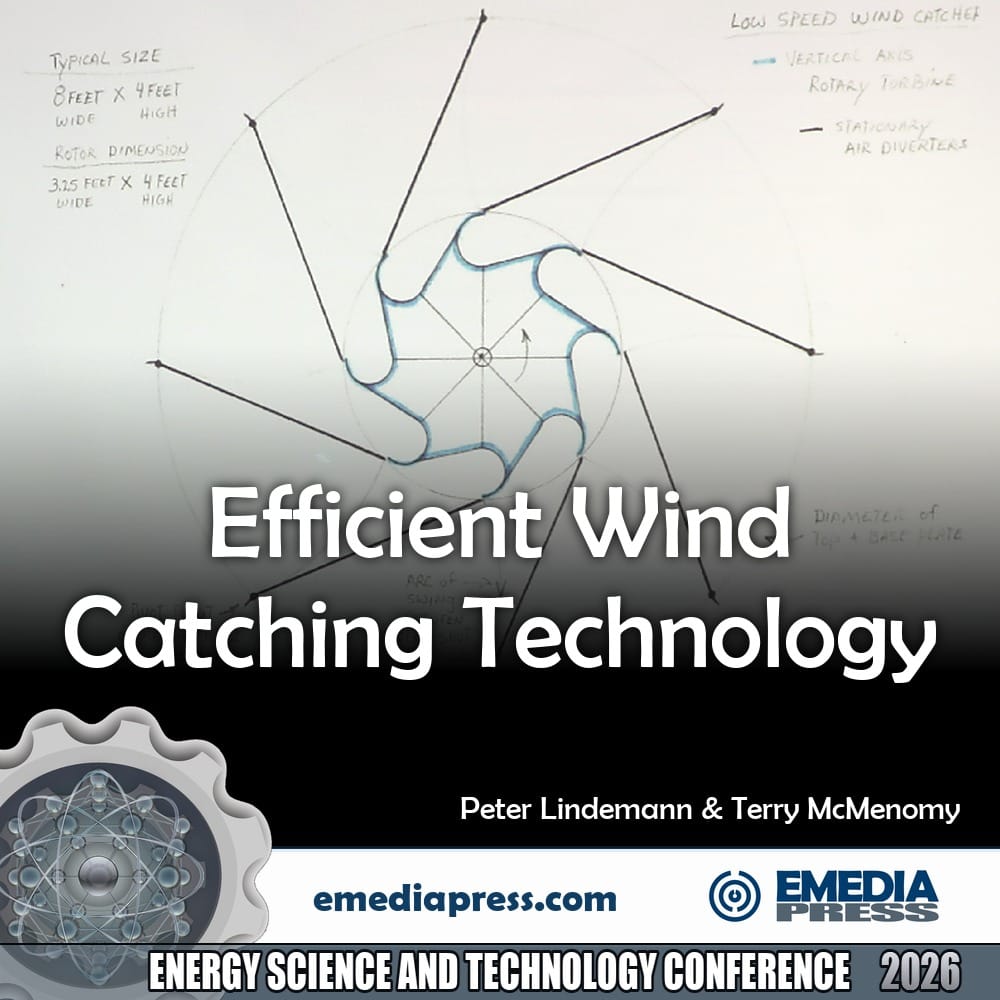
Description
The wind catcher kept turning while the meter stayed below 10.
Peter Lindemann, DSc, and Terry McMenomy present the full 82-minute Efficient Wind Catching Technology presentation, recorded live at the 2026 Energy Science & Technology Conference. Download the MP4 and keep your copy.
At McMenomy’s off-grid property near Harrison, Idaho, an unfinished wind catcher was turning as his wind meter moved from 5.6 to 9.8. “So it’s up and down, but less than 10.” Then: “So 10 miles an hour. In the area that I live, 10 miles an hour is a daily thing.” He gives no rotor speed and no electrical output for the test. Then he shows their conventional windmill, 50 feet off the ground, in footage he describes as 10 mile an hour winds.
Lindemann has spent decades researching, building and teaching energy technologies, including work with John Bedini, with whom he co-founded this conference. Here he concentrates on a builder’s problem: catching wind from any direction without costly fabrication. McMenomy supplies the workshop and field evidence. He built the larger prototype himself, tried it with a leaf blower, then moved it outside and recorded what happened.
“I don’t know what speed that thing’s going at, but it doesn’t show any signs of stopping.”
Terry McMenomy, ESTC 2026
McMenomy is explicit that the build is not finished. The top and other components still need to be added. The talk does not present a verified output curve for this rotor or a finished commercial machine. It gives you the observations, the comparisons and the unanswered questions.
What you get: the full 82-minute presentation as a downloadable MP4, recorded live at the 2026 Energy Science & Technology Conference. The downloaded video is yours to keep and revisit while you work.
Regular price $27. Introductory price $20.25. 25% off at the introductory price through November 6, 2026. No coupon required. The discount is already applied on this page.
What you will see in the full presentation
- The everyday wind problem: McMenomy’s new rotor turns in his field video while his wind meter records 5.6 and then 9.8, with gusts below 10. He explains why that matters where he lives.
- The windmill that faults: their conventional windmill runs at 20 to 40 miles an hour and goes into fault when gusts spike past 40. McMenomy says its five-minute reset can outlast the gust, and shows footage of that different machine 50 feet off the ground.
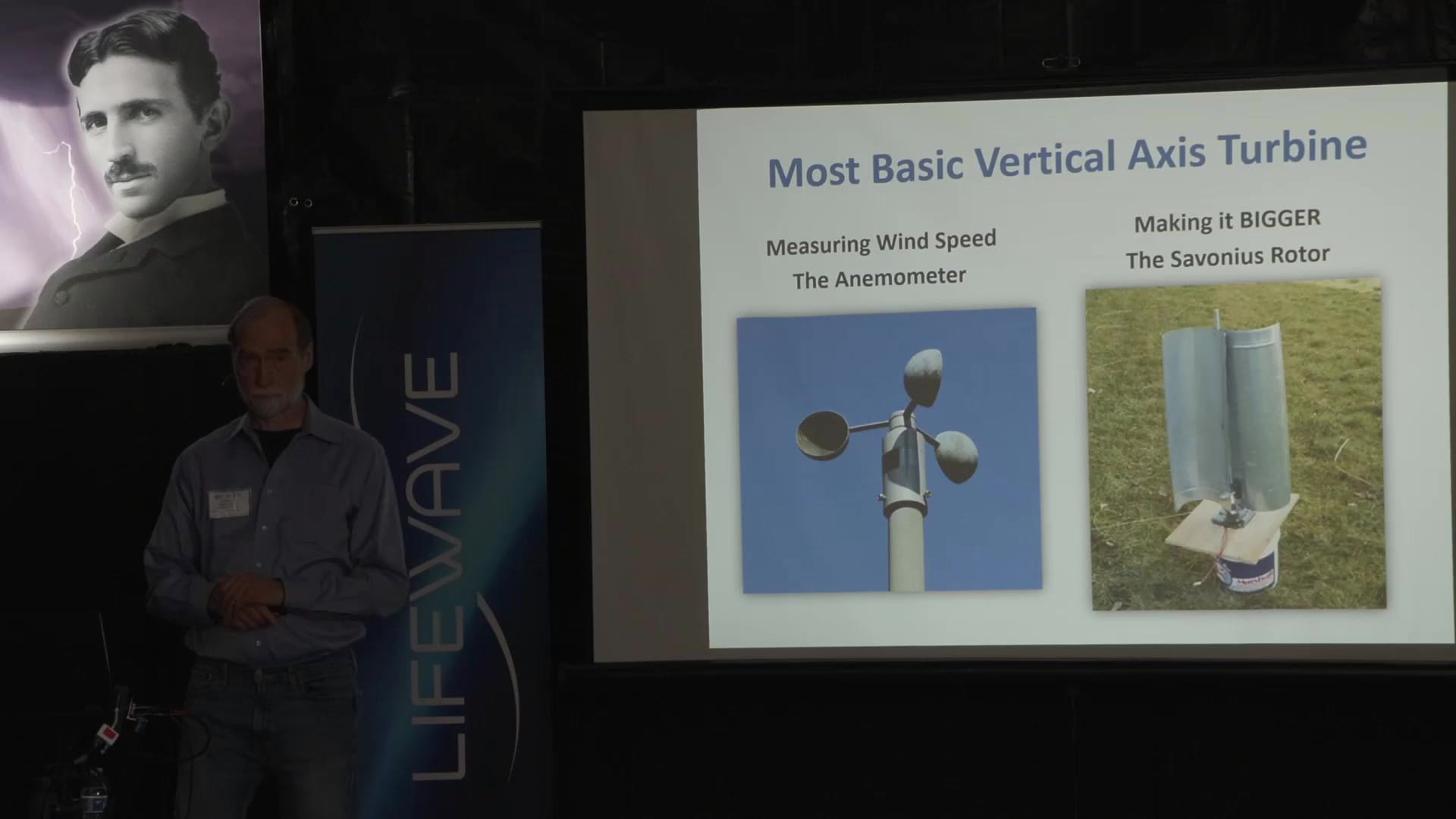
- Drag versus lift: Lindemann compares cup anemometers, Savonius rotors, Darrieus machines and propellers to explain why capturing wind is not the same problem as making an aircraft.
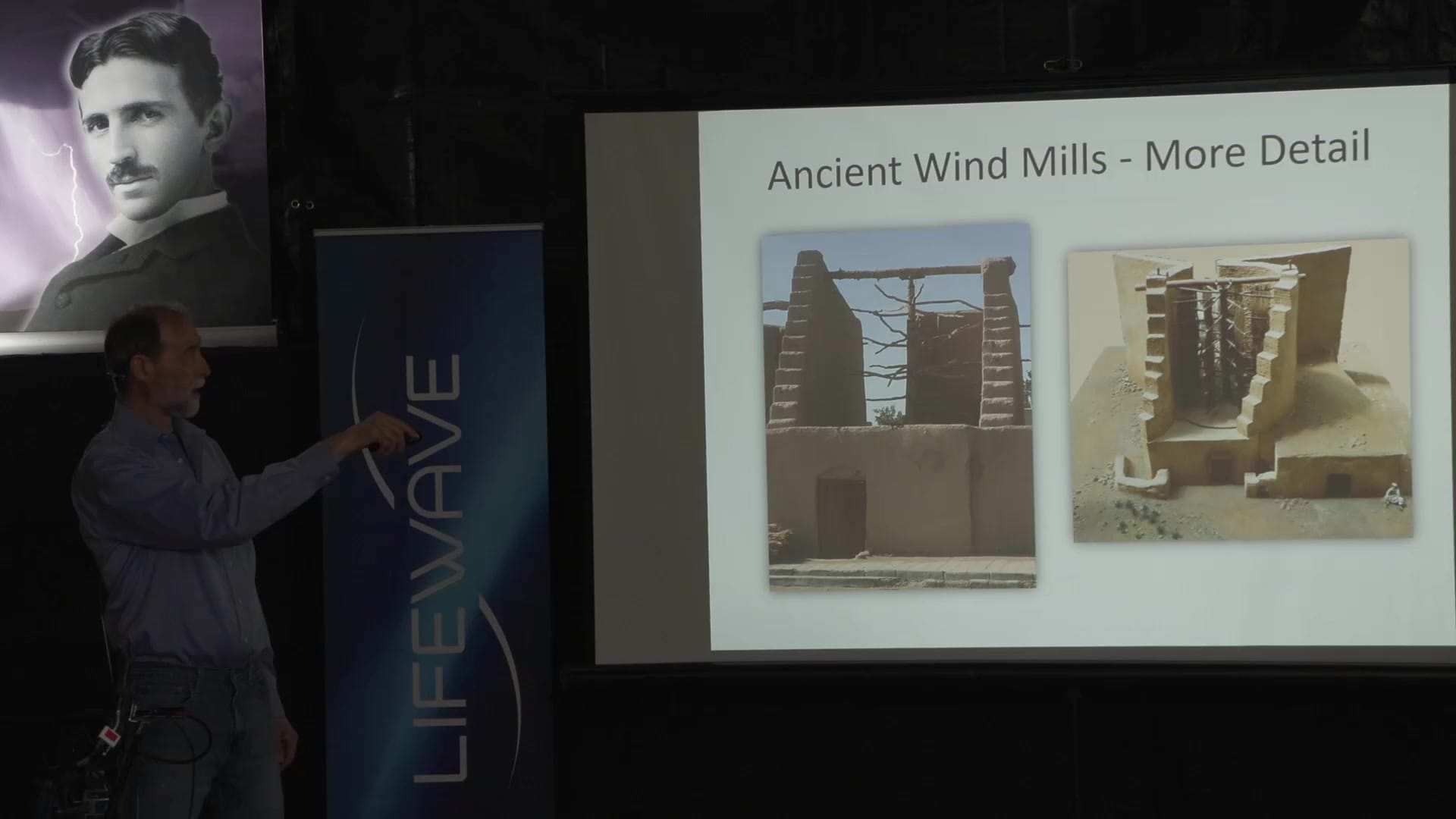
- An old solution to directing airflow: the historic windmills at Nashtafan, Iran, show how stationary shielding and a prevailing wind were used to drive grain mills long before modern generators.
- A commercial installation with tradeoffs: Lindemann recounts what the owner of a grid-connected wind machine near his home told him about output, utility-credit changes and damage during high wind.
- Mike Waters’ comparison: Lindemann reviews Waters’ earlier prototype and his reported side-by-side tests against a propeller. A much larger output figure is presented as Waters’ calculation, not as a measured result from Terry’s machine.
- Multiple shop models: look at the cross-flow and Savonius variations Lindemann and his collaborators tried, including variations they expected to work better that did not.
- The variable-speed fan tests: Lindemann explains how they used a fan powered through a variac to compare how their small rotors responded as airflow changed.
- The first shop spin: McMenomy describes testing his larger rotor with a leaf blower, then timing a spin that lasted two minutes, before taking it outside.
- The limits of the current design: Lindemann shows why a deeper-cup variation developed back pressure and stopped gaining speed, then distinguishes the faster-turning cross-flow fan from the Savonius model that produced greater torque.
- The next tests: watch the small models demonstrated for the conference audience and hear the online question about changing mass flow and back pressure. Lindemann does not claim the optimum has been found.
For builders: what the tests teach
The useful lesson is not a single drawing to copy blindly. It is the sequence of questions the presenters ask of each version: will it start, will it keep turning, does more wind make it faster, and what happens when drag or back pressure becomes the limit?
- What was compared: propeller and vertical-axis approaches, cross-flow and Savonius variants, and an unfinished larger field rotor alongside a separate conventional installation.
- What was tested: adjustable airflow at the model bench, a timed leaf-blower spin in the workshop, and field movement with wind-meter readings.
- What was learned: some changes restricted airflow; the fastest-spinning rotor was not the one Lindemann identified as having the most torque.
- What remains open: rotor output, improvements to the unfinished field assembly and the effect of proposed changes to mass flow and back pressure.
An unfinished wind catcher turning in wind below 10
McMenomy’s field footage shows the rotor already moving as his meter reaches a high reading of 9.8. He calls the wind less than 10 and describes 10 miles an hour as common locally. He makes no claim of measured electrical power from this test.
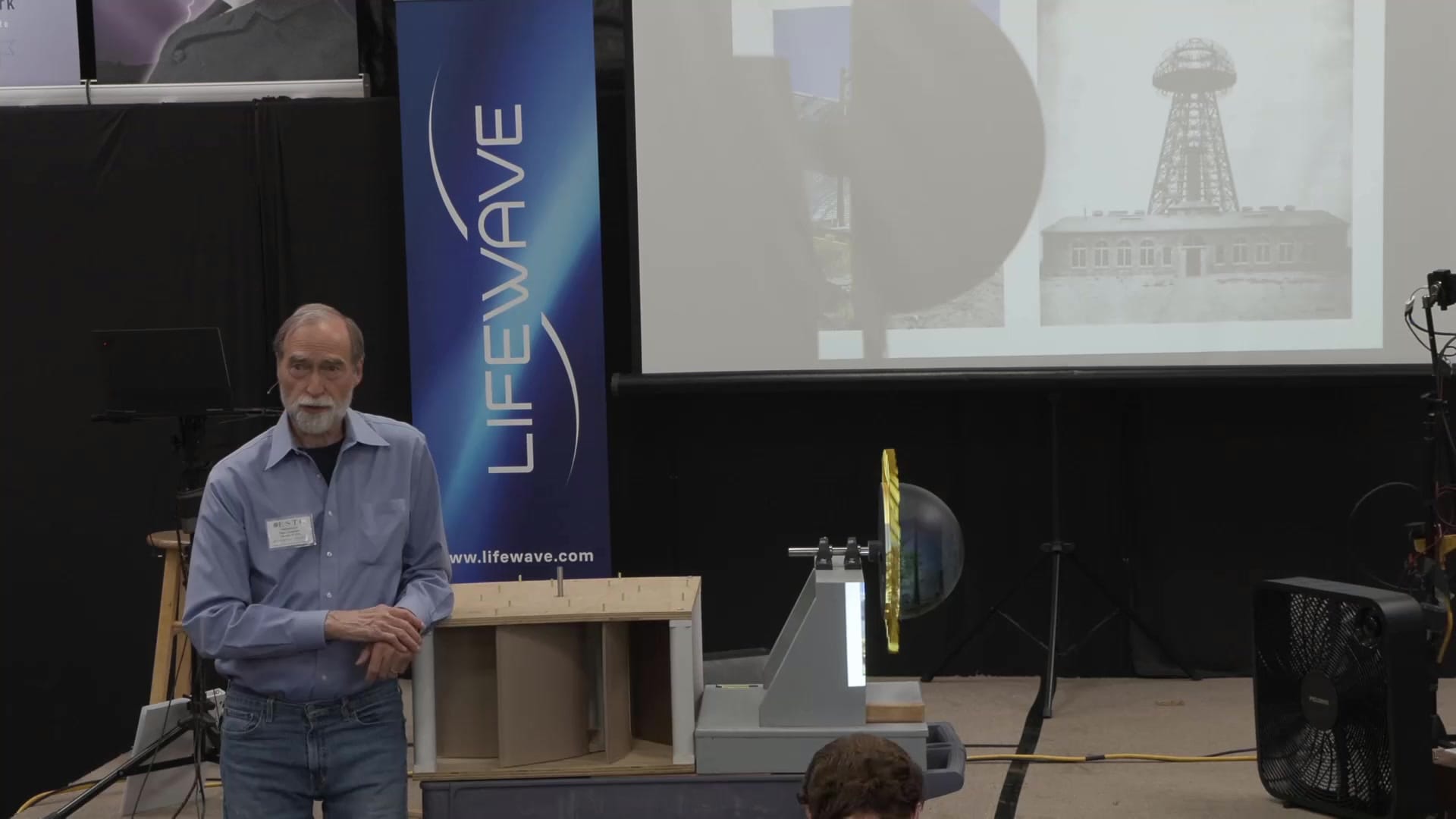
“The cross-flow fan turned the fastest, and the multi-bladed Savonius had the most torque.”
Peter Lindemann, ESTC 2026
The fastest rotor was not the one with the most torque. And one version hit an airflow limit: “even if we threw twice the wind at it, it wouldn’t go faster.” Lindemann presents the results as the start of a research project and asks other builders to try variations, not as a final specification.
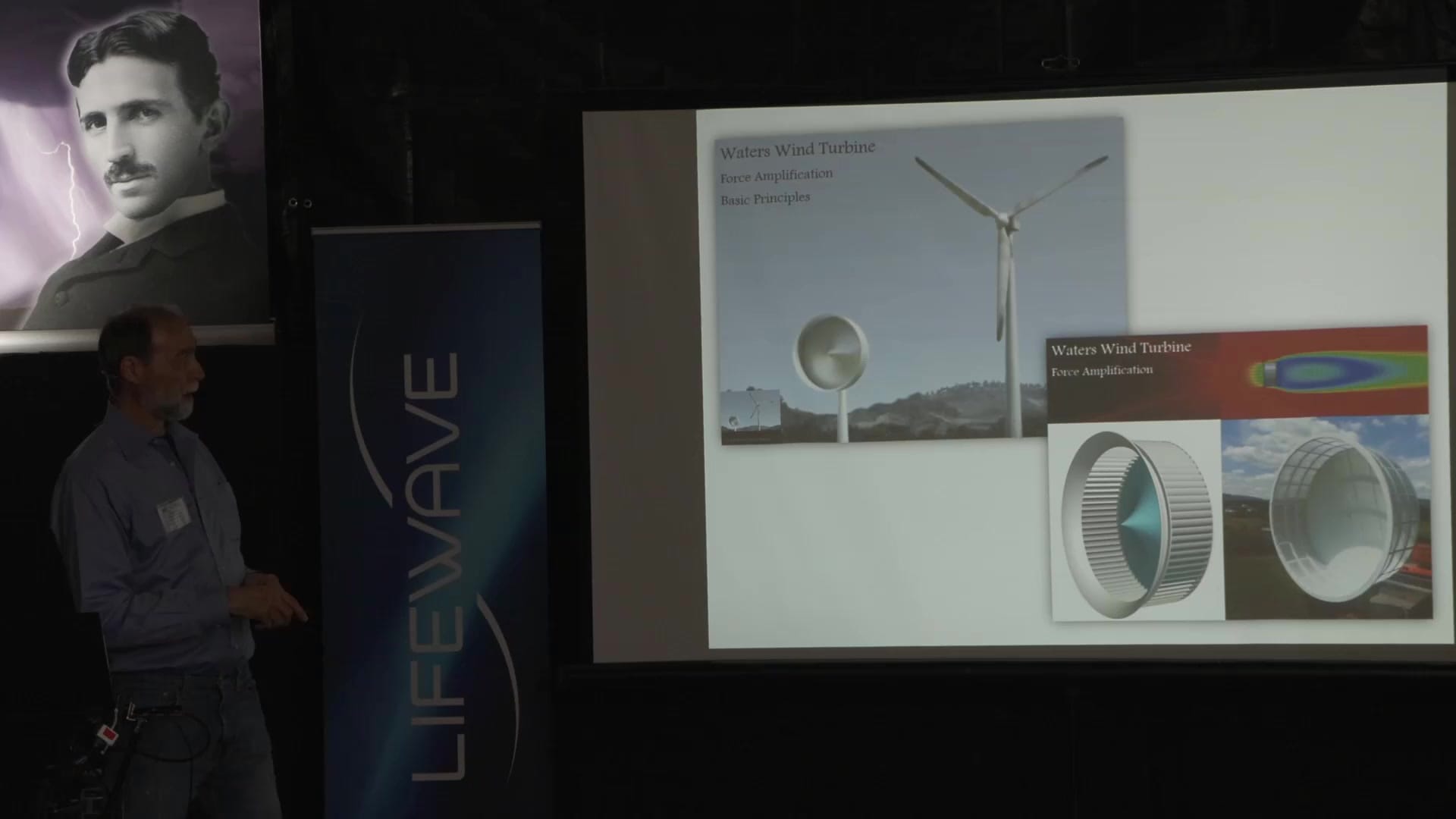
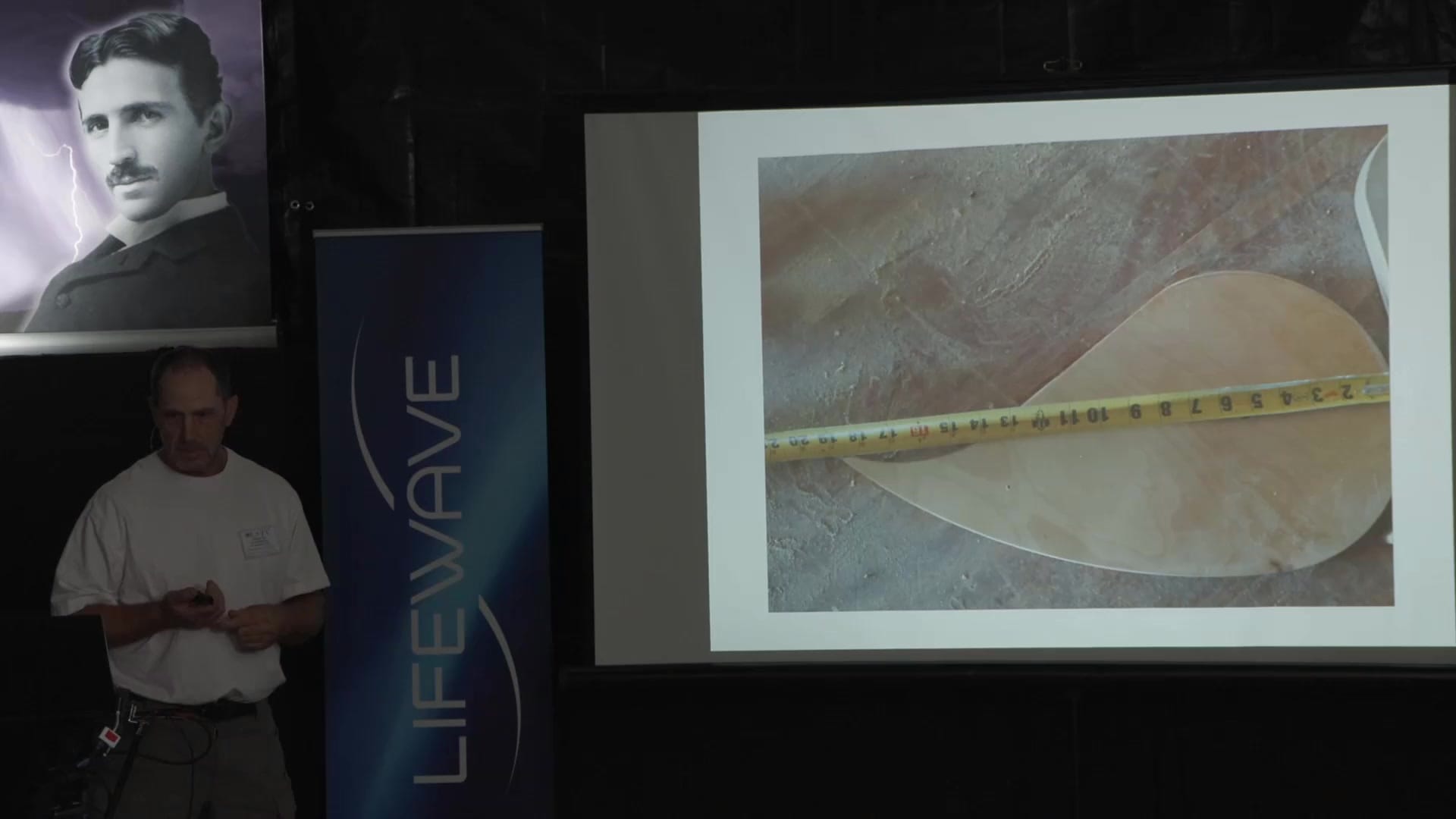
McMenomy says he has about $300 invested in his incomplete unit so far. That is a report of his own build costs, not a price for a tested turnkey generator. Lindemann’s objective is to reduce the barrier to experimentation. He also shows an idea for a horizontal-axis alternative and discusses how a wind catcher might be protected in unusually high winds.
“Those ideas may have validity, and my basic philosophy is everything should be tried.”
Peter Lindemann, ESTC 2026
Who this is for
You have an off-grid windmill that often sits motionless while the breeze is plainly there. You have been considering a small wind project but want to watch tests before committing money. You have a garage or workshop, enjoy experimenting with rotating machinery and want to know which observations matter. Or you have followed Lindemann’s and Bedini’s mechanical-energy work and want to see how that investigative approach is being applied to wind.
You do not have to be an engineer to follow the discussion. Lindemann starts with familiar wind devices, walks through photographed examples and moves to bench models and McMenomy’s field footage. The 82 minutes allow time for the historical comparison, the unsuccessful trials, the shop and outdoor tests, the live demonstration and the questions that follow. The downloadable MP4 is yours to keep, so you can revisit the footage while planning your own tests.
“Wind is a viable source in a lot of areas. It’s not everywhere.”
Peter Lindemann, ESTC 2026
Watch the complete 82-minute presentation and keep the MP4.
Regular price $27. Introductory price $20.25. 25% off at the introductory price through November 6, 2026. No coupon required. The discount is already applied on this page.
After watching, you will understand what Lindemann and McMenomy actually compared, what the light-wind footage shows, why some rotor variations disappointed them, and what still needs testing.



Reviews
There are no reviews yet.