
Description
John Bedini’s Gravity Amp was a trigger, not just a detector.
Davy Oneness’s full 87-minute presentation on experimental field detectors, recorded live at the 2026 Energy Science & Technology Conference. Download the MP4 and keep your copy.
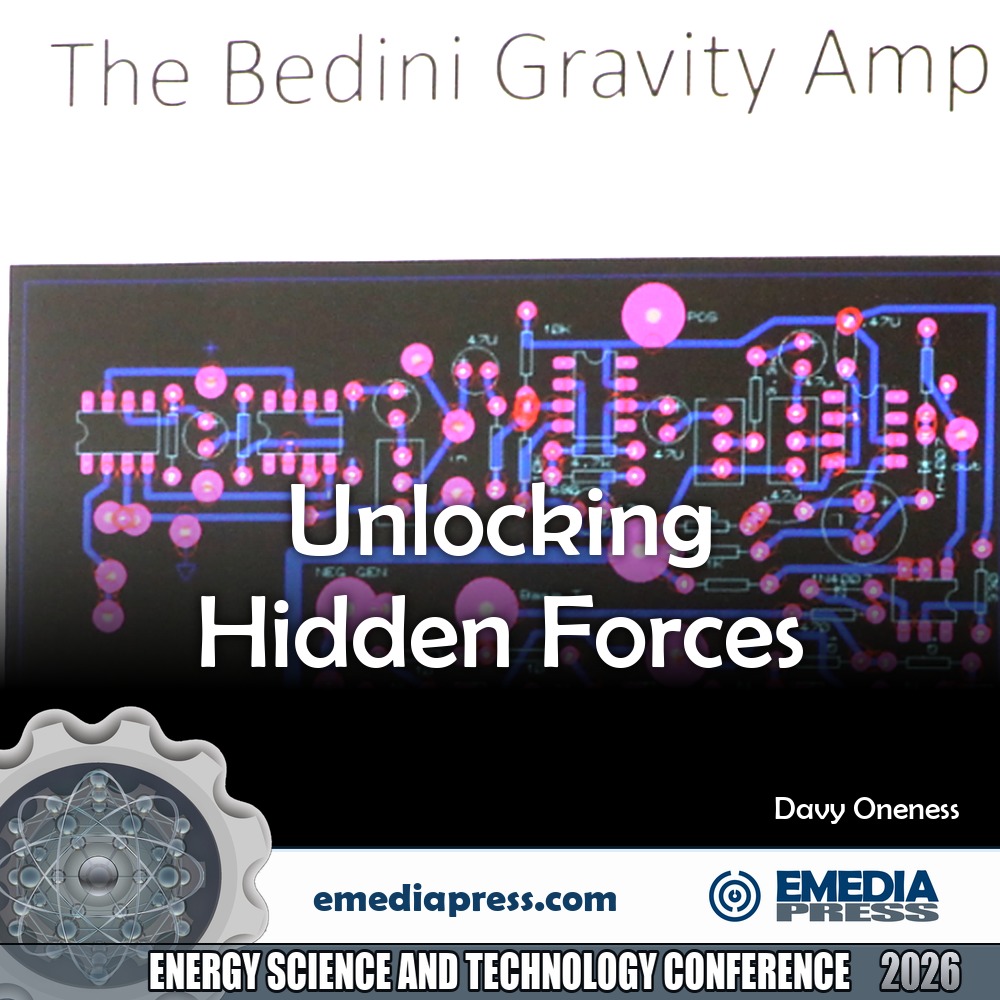
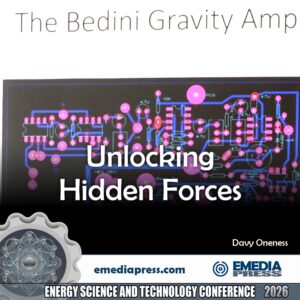
Davy Oneness shows material from John Bedini’s archive, including a circuit file named gravity amp. After studying the circuit and photographs, he identifies what he believes to be a detector-trigger arrangement: signals from the detector trigger a coil instead of an SG wheel triggering itself. The full presentation explains his interpretation, the parts he has studied and what he still needs to measure.
Davy has worked for about 30 years as an electronics technician, including nuclear instrumentation. He connects his earlier Bedini SG work to Bob Beck’s ELF detectors, Gregory Hodowanec’s capacitor sensors and John Bedini’s archive. His question: how do you make a detector’s output measurable and learn what it responds to?
There is also Davy’s earlier hairpin experiment: a bulb about 40 feet from the apparatus, then a bulb over 120 feet away on a hill connected by wires as thin as hair. He reports that the more distant bulb glowed brighter.
What you get: the full 87-minute presentation as a downloadable MP4, recorded live at the 2026 Energy Science & Technology Conference. You can download the video and keep it for repeat viewing.
Regular price $37. Introductory price $27.75. 25% off at the introductory price through November 6, 2026. No coupon required. The discount is already applied on this page.
What you will see
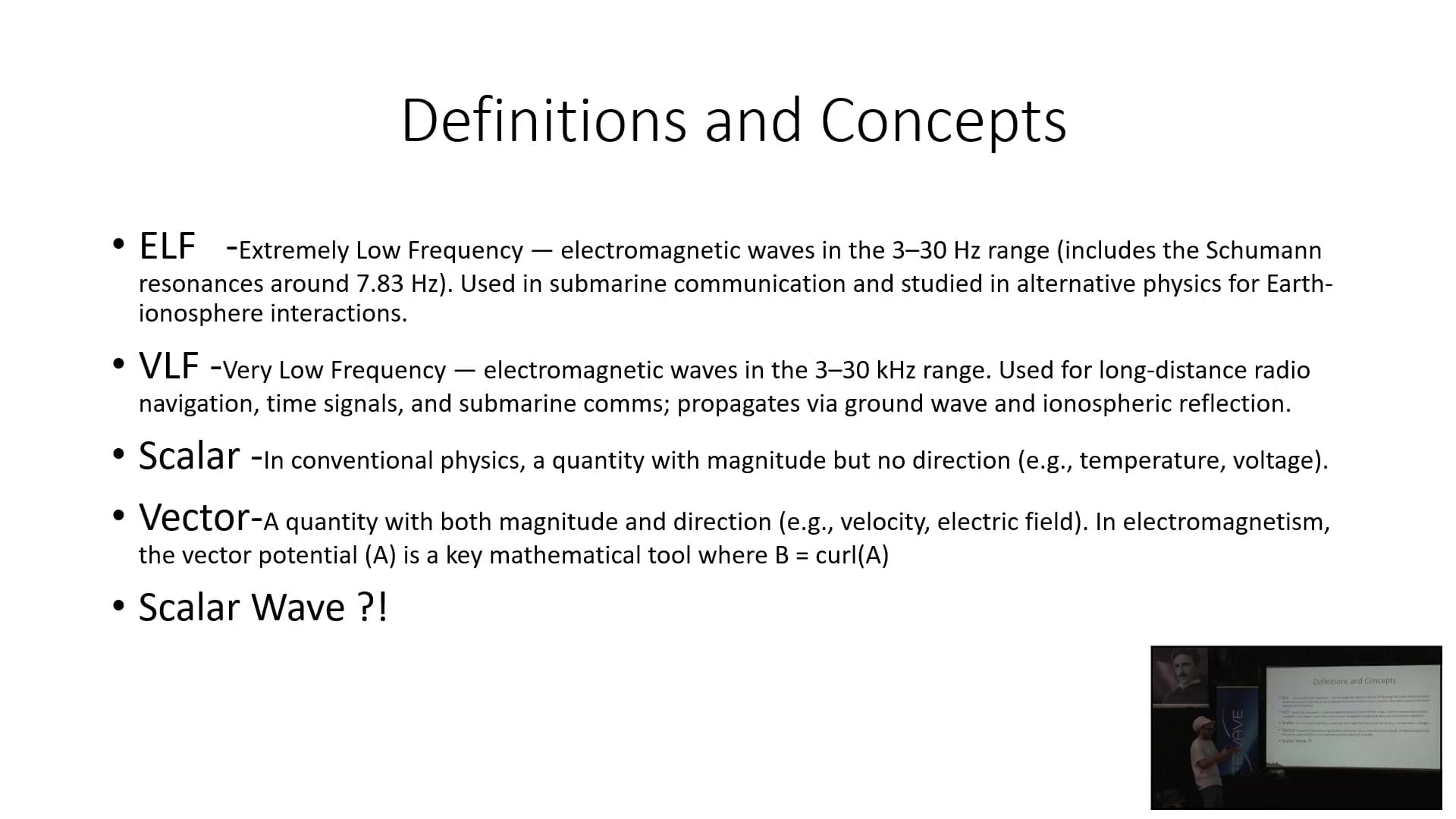
- The problem with the word scalar: Davy starts with ELF and VLF, then separates a scalar quantity from a vector and explains why he associates the term scalar wave with longitudinal phenomena.
- The old SG Group work: he revisits his Bedini wheel and a reported load test from his early experiments.
- The Tesla hairpin videos: a fluorescent tube is shown operating in series with other lamps. Then come the distant incandescent bulbs, first about 40 feet away and later over 120 feet away through extremely thin wires. These experiments were recorded earlier.
“And the bulb’s actually glowing brighter than when it was 40 feet away.”
Davy Oneness, ESTC 2026
From Beck’s papers to the Bedini archive
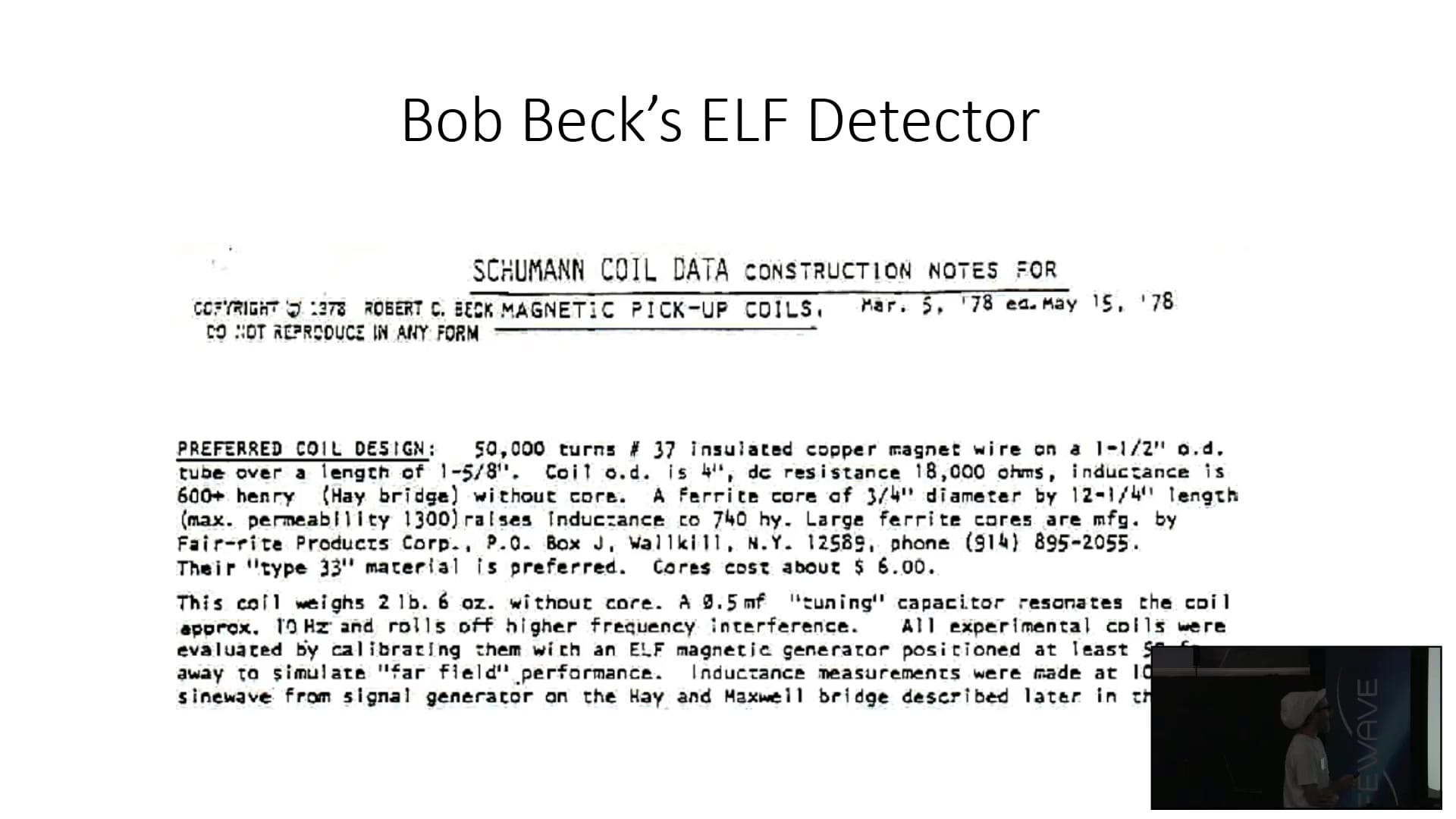
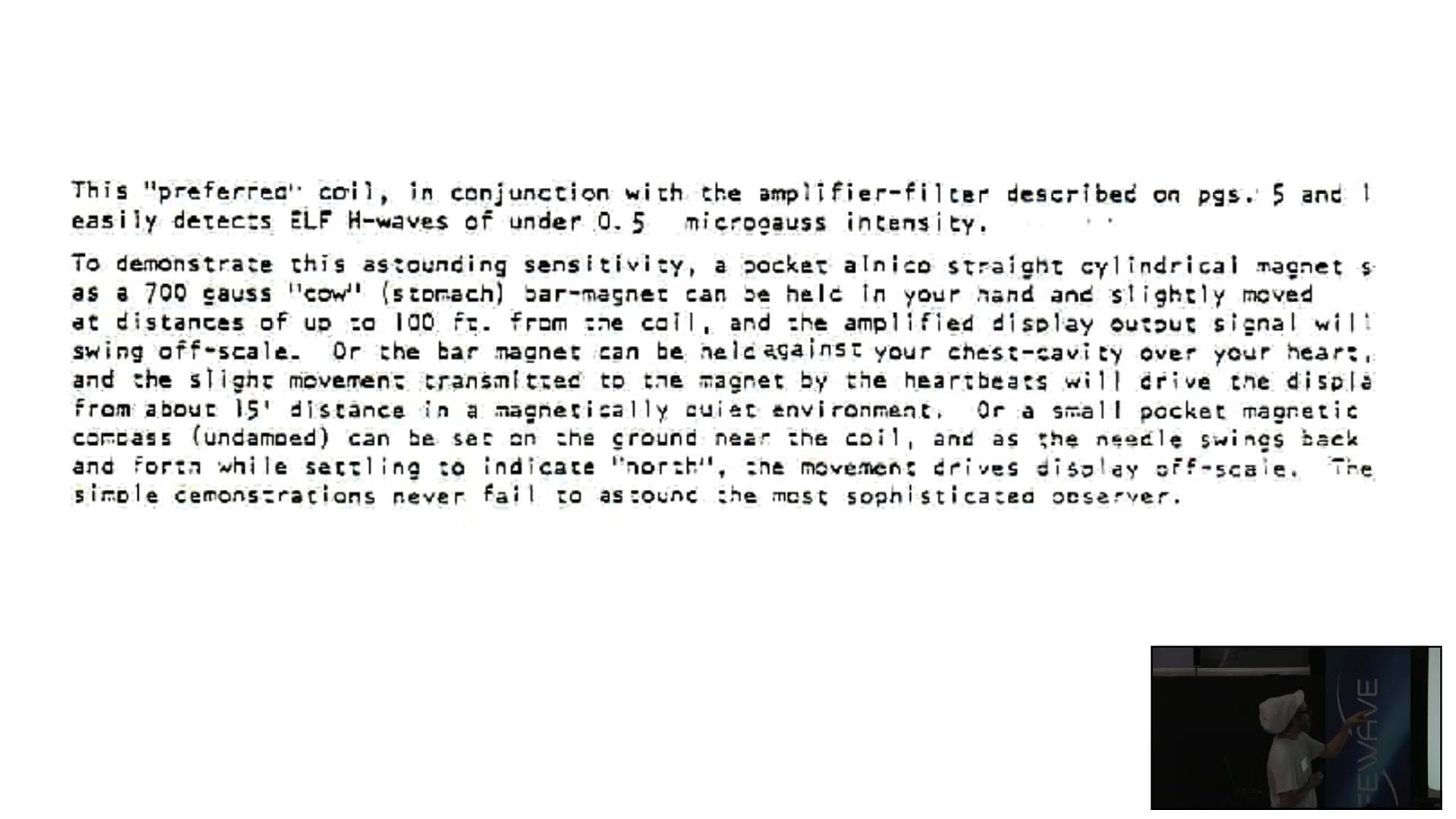
- Bob Beck’s ELF detector: Davy reads from Beck’s original account of a resonant coil, amplifier and filter, including Beck’s reported demonstration in which the motion of a magnet moved by a heartbeat drove a display from about 15 feet away in a magnetically quiet environment. Davy does not reproduce Beck’s result.
- The Hay and Maxwell bridge: Davy explains why coil inductance matters to the Beck experiment, shows a bridge he made for measurements and brings his own bridge to the event.
- Bedini and Bearden on the radio: an old Bill Jenkins interview lets you hear John Bedini and Tom Bearden discussing the Bedini ELF detector and what they believed was happening below ordinary instrument noise.
Over 120 feet, brighter than at 40
Davy’s earlier video shows a distant incandescent bulb supplied through hair-thin wires from his hairpin setup. He says the bulb was brighter at the longer distance. It is a striking observation, but the talk does not include an independent efficiency measurement of that setup. In the later discussion, Davy says he did not measure the hairpin’s voltage and current and agrees that the high-voltage apparatus should not be held.
Noise is the starting point
One of the most useful distinctions in the presentation is between noise to reject and noise to investigate. Davy discusses Gregory Hodowanec’s work with capacitors as sensing elements. He walks through historical observations and his own test in which a detector inside a shielded box registered the changing pattern of a pulsed red LED device, visible in software-defined-radio software.
“We want noisy components because the information is in the noise.”
Davy Oneness, ESTC 2026
- Hodowanec’s paper trail: capacitor noise, changes in recorded output over time, and the cosmology notes that Davy uses to frame new experiments.
- A private Bedini recording: Davy plays an archival video from 1985 of a gravitational wave tuner and its sound.
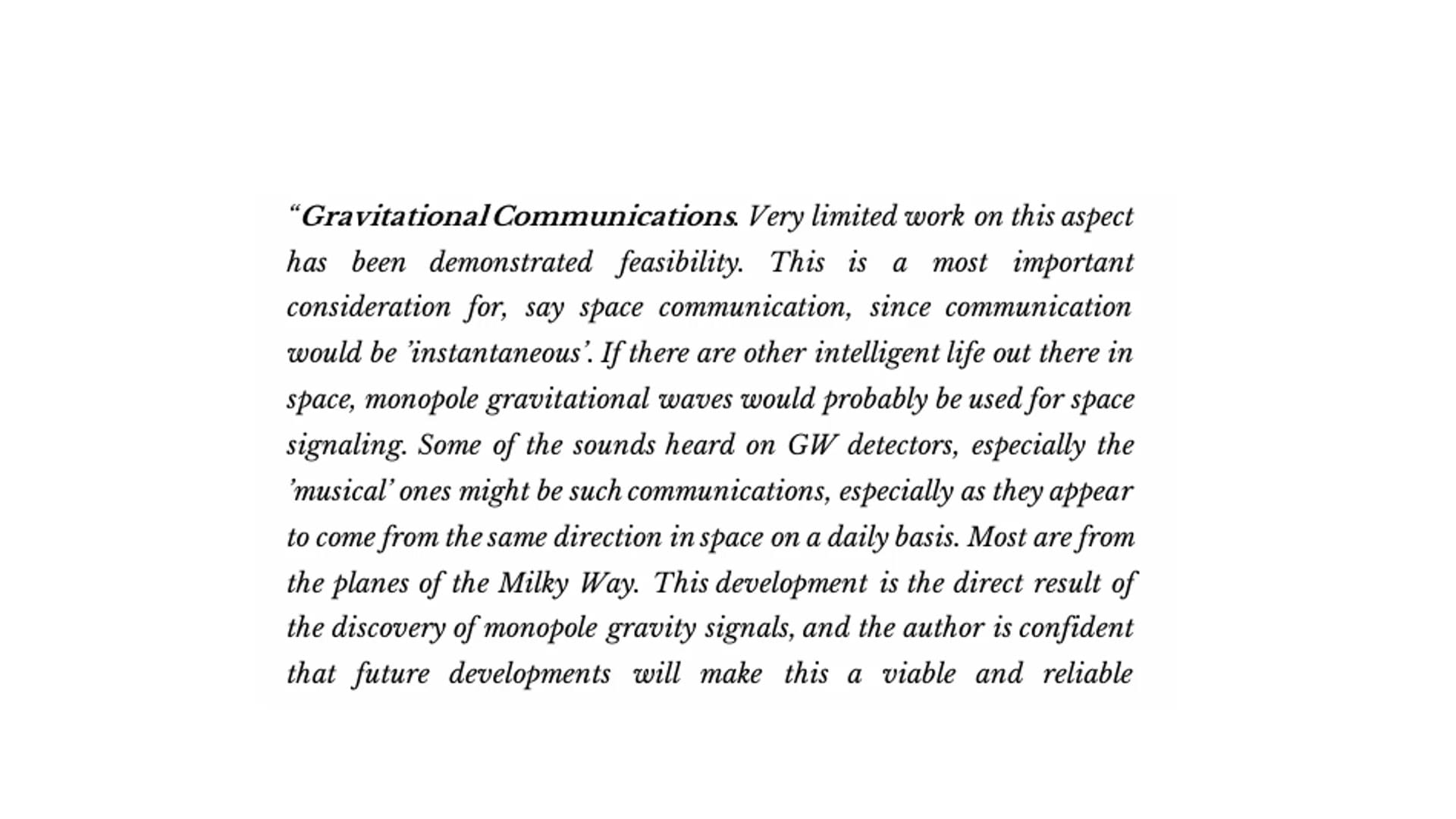
- Gravitational communication proposals: Davy reads historical material about proposed space signaling and discusses the interpretations attached to it. He does not demonstrate space communication.
- Logging and coincidence counting: drawing on his instrumentation work, Davy explains why multiple detectors, time alignment, software displays and comparisons of arrival times could help decide whether a pattern is repeatable or merely local interference.
John Bedini’s Gravity Amp
This is one of the subjects reserved for the full talk rather than the short preview. Davy describes receiving photographs and an old circuit file from John’s archive, which I gave him. John’s tuner, his old hard drives and other pieces of his work were passed down to me by John’s widow years ago, shortly after his untimely death, for safekeeping and to carry on the legacy of some of John’s work. The file was named gravity amp. Working backward through what he could see, Davy concluded that this was not simply another display detector. In his interpretation, the sensing stage could be used to trigger a Bedini-style coil in response to fluctuations in the signal under investigation. He explains the uncertainties and his measurement plan.
“When I realized what it is, it’s a gravity amp trigger.”
Davy Oneness, ESTC 2026
The modules
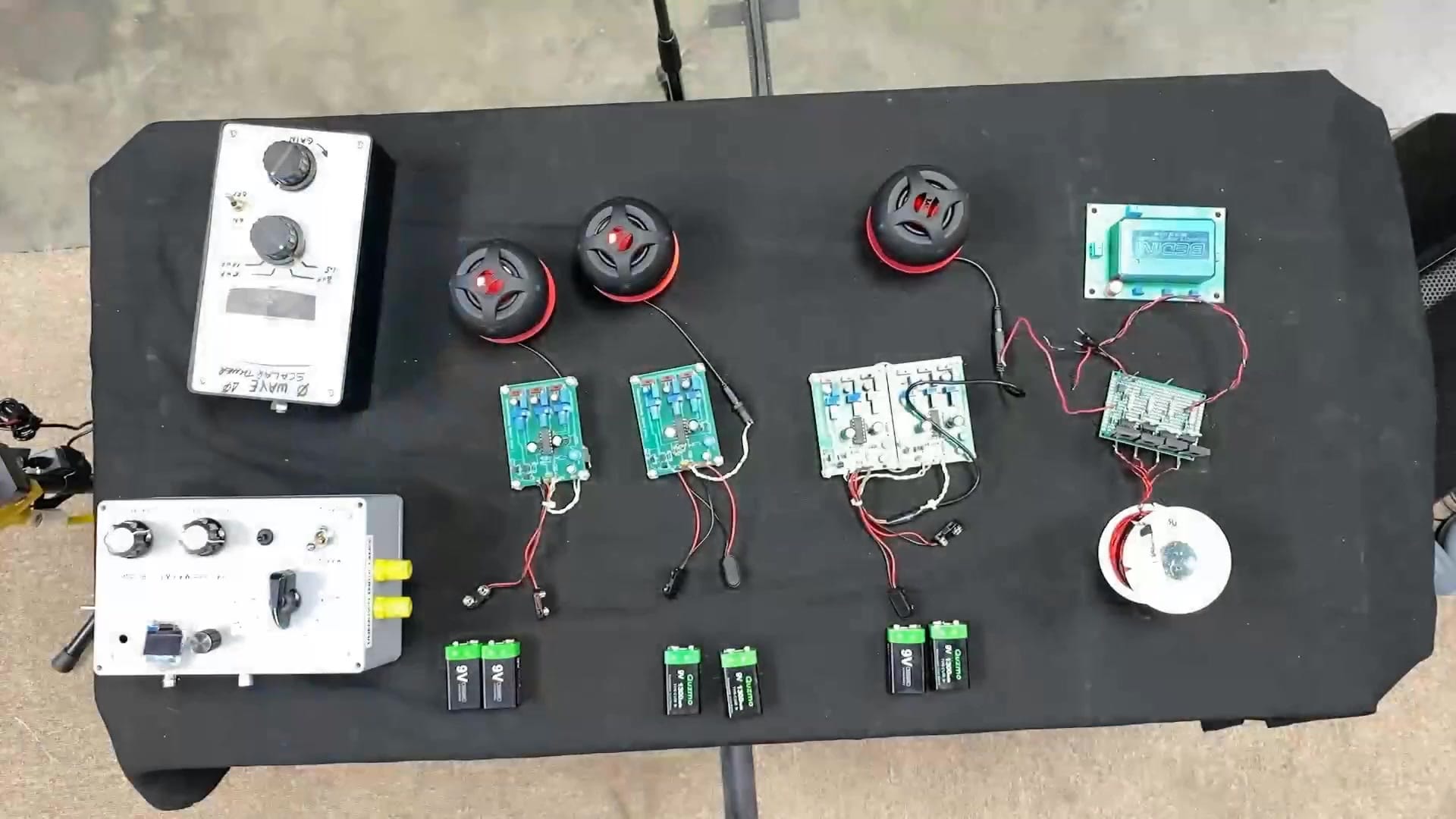
At ESTC, Davy gives the audience a first public look at an example of the gravity amp module he is developing. He shows the example hardware on stage and describes the intended arrangement: a gravity amp module that accepts the experimenter’s own capacitor or other sensor, with an output intended for an SG setup. The hardware is shown as work in progress, not as a finished device with published performance specifications.
He also describes offering the “200 db amplification circuit” as a separate module, so experimenters can try their own coils “without having to worry about the electronics end of it.” Davy says the example he brought did not cooperate well enough for the working demonstration he had wanted. That limitation stays in the story. The point of the proposed modules is to let different people try sensors, compare recordings and report what happens.
The modules are not available yet. When they are, the announcement goes to Energy Times readers first.
The demonstrations and the questions afterward
The live audio portion uses Bill Ramsey cosmic wind detector units Davy built. He plays their output through a speaker and compares their changing sound to the ocean or a seashell. The talk also includes show-and-tell hardware, including his bridge and the gravity amp module example. Davy says openly that the gravity amp test he wanted to run did not cooperate on the day.
Questions from the audience move straight into the issues a builder would face: whether a response changes with sensor orientation, whether multiple channels can be compared, what might influence a capacitor’s output, and whether logging could reveal time-correlated signals. When asked if he has completed long-term measurements against celestial cycles, Davy says he has not reached that stage.
“That’s the plan, is to get these in everybody’s hands. That way, we can all learn and explore with them.”
Davy Oneness, ESTC 2026
Who this is for
You may have built an SG wheel and now want to understand the detector circuit that John Bedini experimented with. You may have Beck’s paper but need to see someone relate the coil, bridge and amplifier to an actual measurement problem. You may have noticed a pattern in a sensor trace and want to compare it with a second instrument, not immediately label it a new field. Or you may simply want to hear the archival recordings and see the hardware Davy has collected and built.
You do not need a professional engineering background to follow the tour. Davy explains the instrument families and shows the equipment as he goes. The 87 minutes are there because the ideas do not end with a single bulb or detector: the recording moves from terminology and older work through his experiments, prototype hardware, live audio and detailed audience questions. The MP4 is yours to keep.
Download the full 87-minute presentation.
Regular price $37. Introductory price $27.75. 25% off at the introductory price through November 6, 2026. No coupon required. The discount is already applied on this page.
After watching, you will understand which claims come from earlier researchers, which tests Davy ran himself, what his present detector hardware can and cannot show, and how he proposes to investigate signals that ordinary noise rejection would discard.


Reviews
There are no reviews yet.