
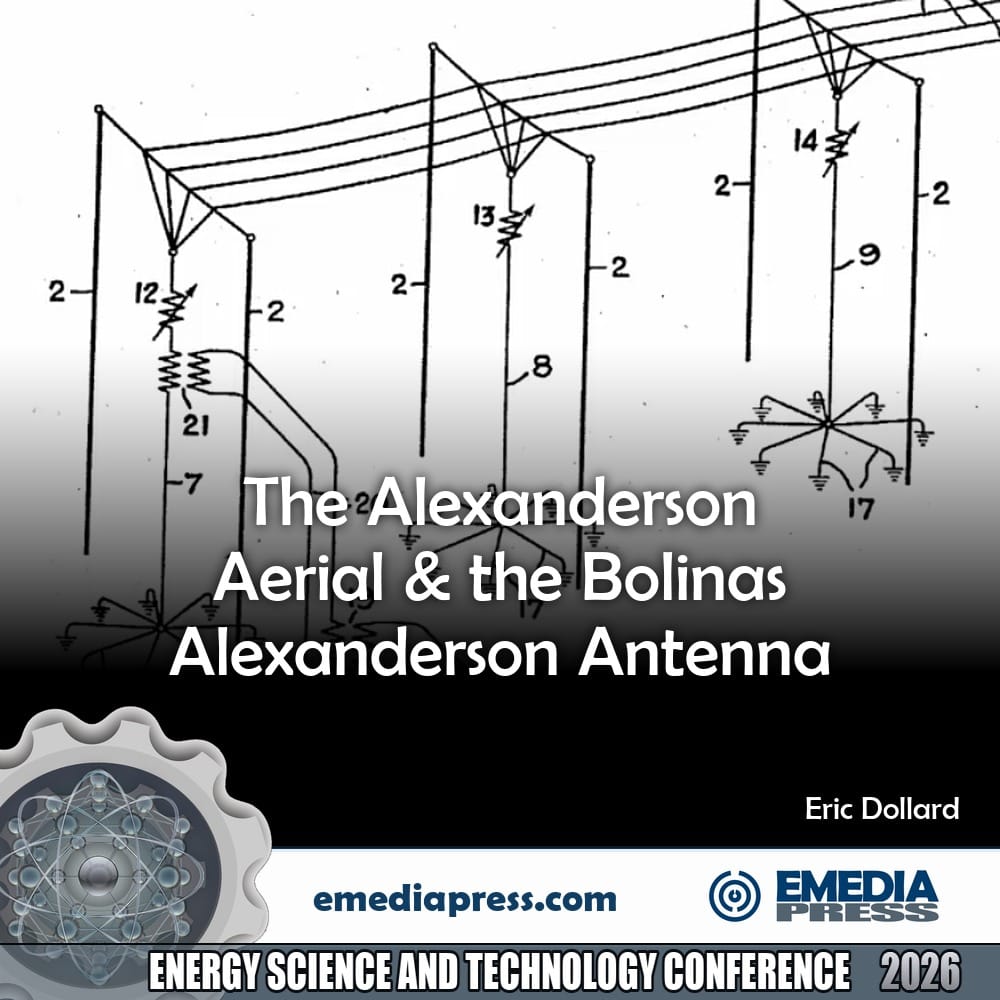
Description
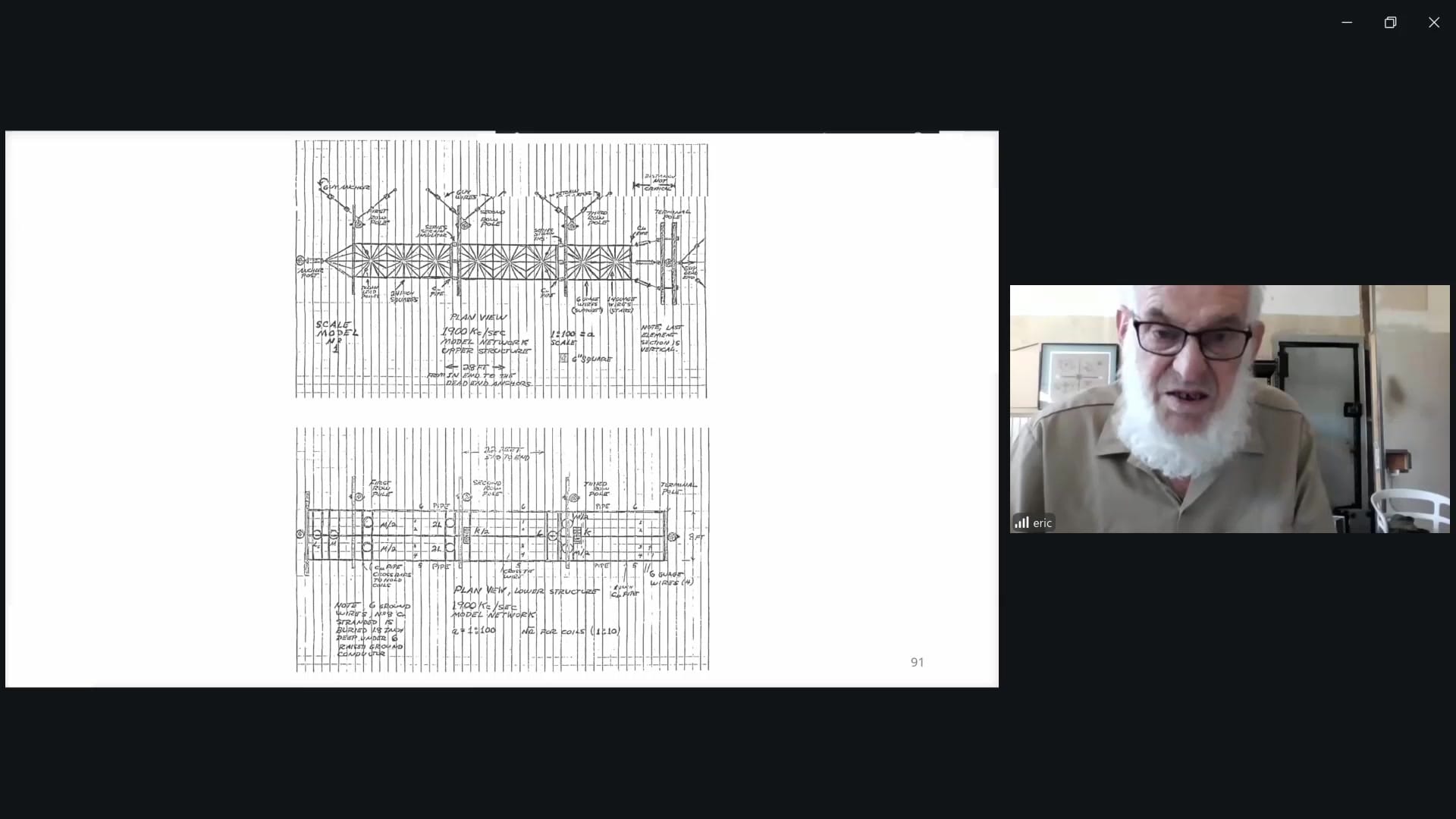
The present Tonopah installation uses 54 poles over approximately 2.1 miles, while Dollard traces the system back to original Marconi blueprints he says he held in his hands as a high-school student.
Eric Dollard says he had complete access to the Bolinas facility, handled the original Marconi blueprints and later inherited station records and diagrams. He also describes 10 years of Landers research with a specially built receiving structure before the present EPD Laboratories installation in Tonopah.
What you get
- Full 223-minute presentation
- MP4 video download
- Recorded live at the 2026 Energy Science & Technology Conference
- Download the video and keep your copy
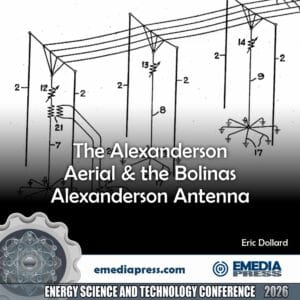
In one 223-minute presentation, The Alexanderson Aerial & the Bolinas Alexanderson Antenna connects that first-hand history to the electrical behavior Dollard says makes the Aerial fundamentally different from an ordinary radio antenna.
WHAT YOU’LL SEE IN THE FULL PRESENTATION
- See how Dollard reconstructs the Bolinas system from records, station history and facilities he personally knew rather than from a secondary historical summary.
- Learn why phase invariance is central to his analysis, and what changes when the entire Aerial is treated as operating in unison instead of as a delayed traveling-wave structure.
- Follow the distinction Dollard draws between electrostatic and electromagnetic power flow and why that distinction matters to the older electric-wireless tradition.
- See how the Landers installation became what Dollard calls a radio telescope for listening to the interior of the Earth.
- See the present Tonopah line at full scale, including the 54-pole, approximately 2.1-mile structure and the 4,800-foot completed Aerial section.
- Understand the end goal: a research environment in which Earth signals can be received, compared and eventually rendered as an immersive seismic sound field.
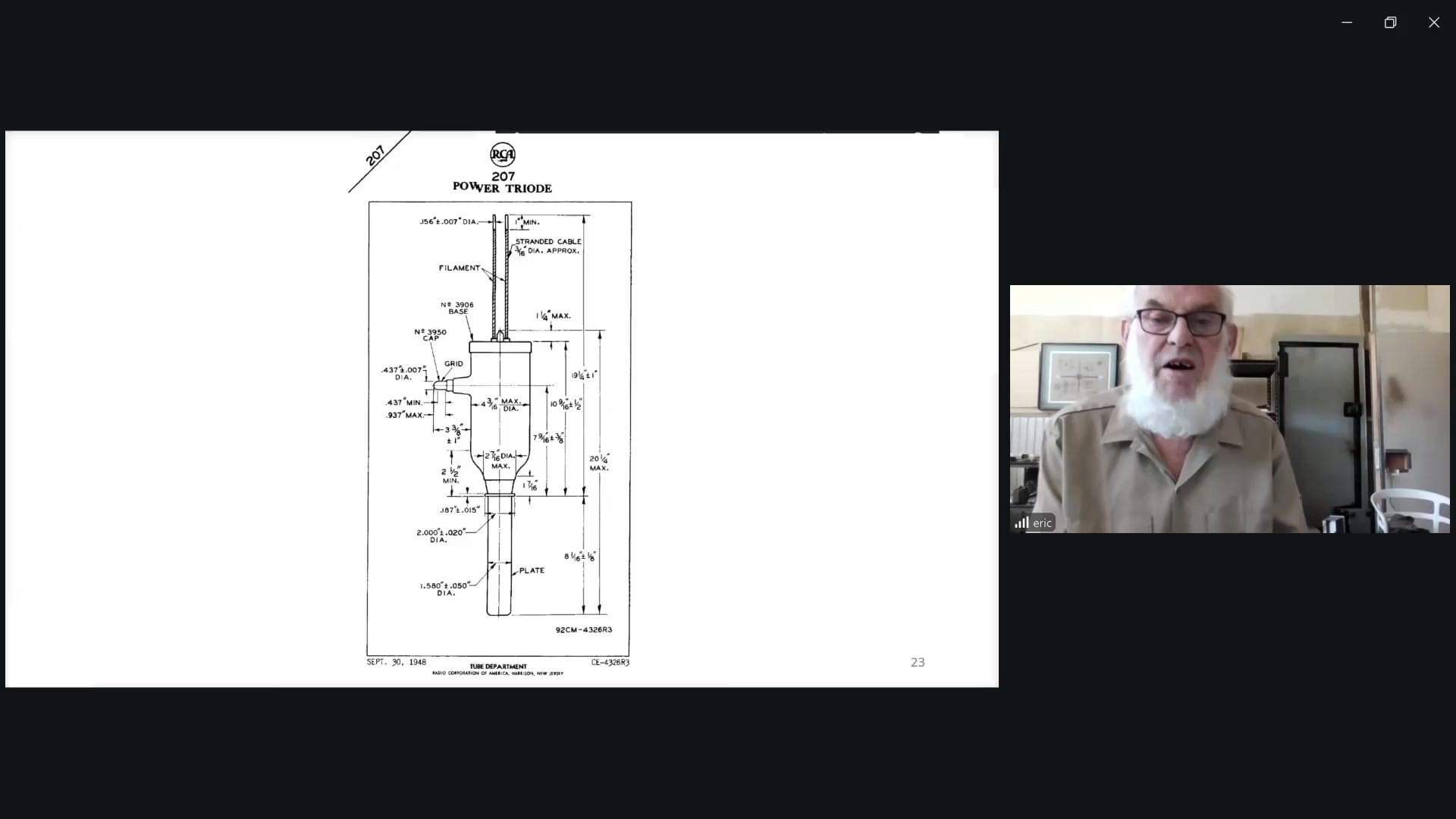
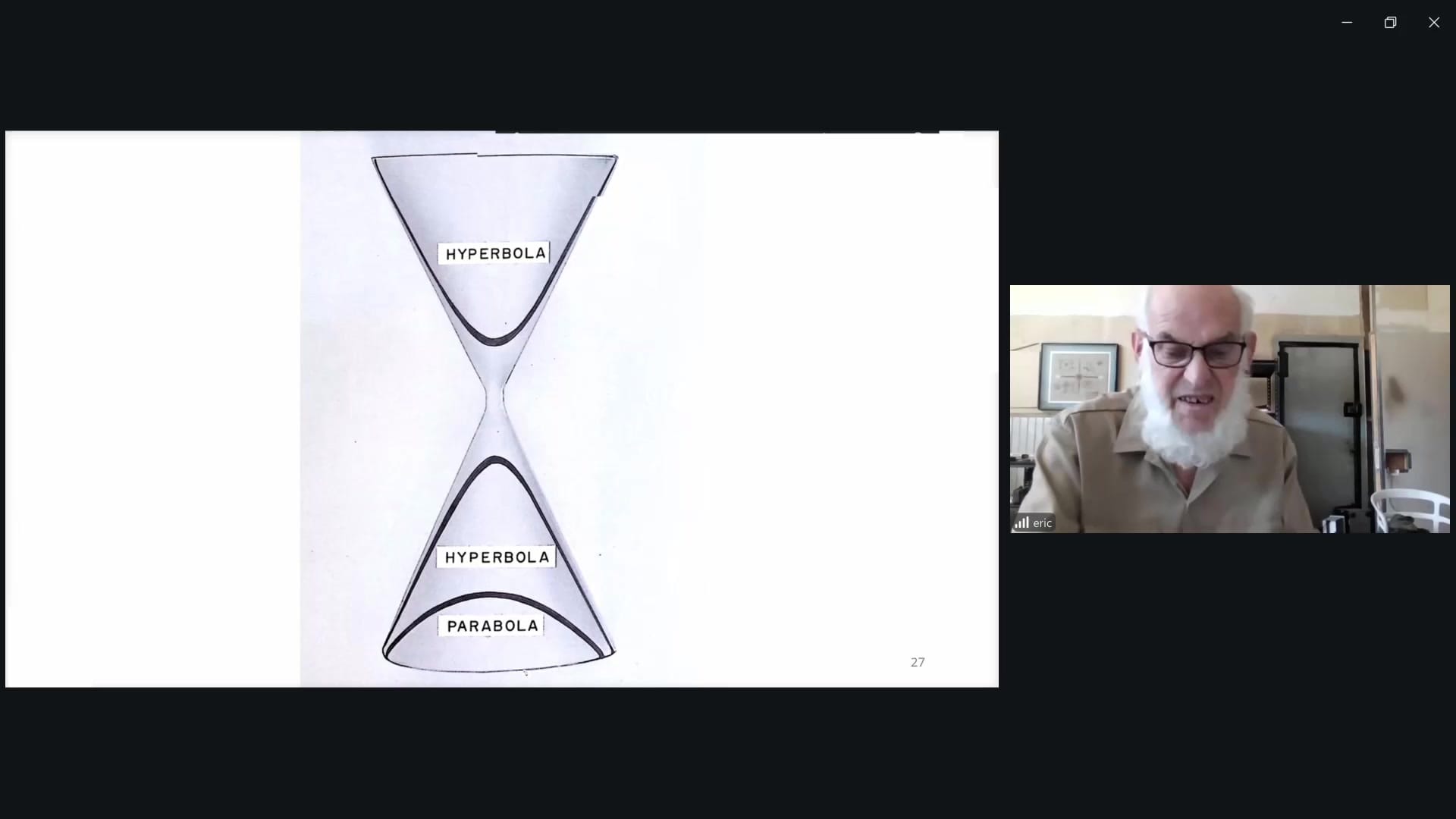
The scale is no longer theoretical
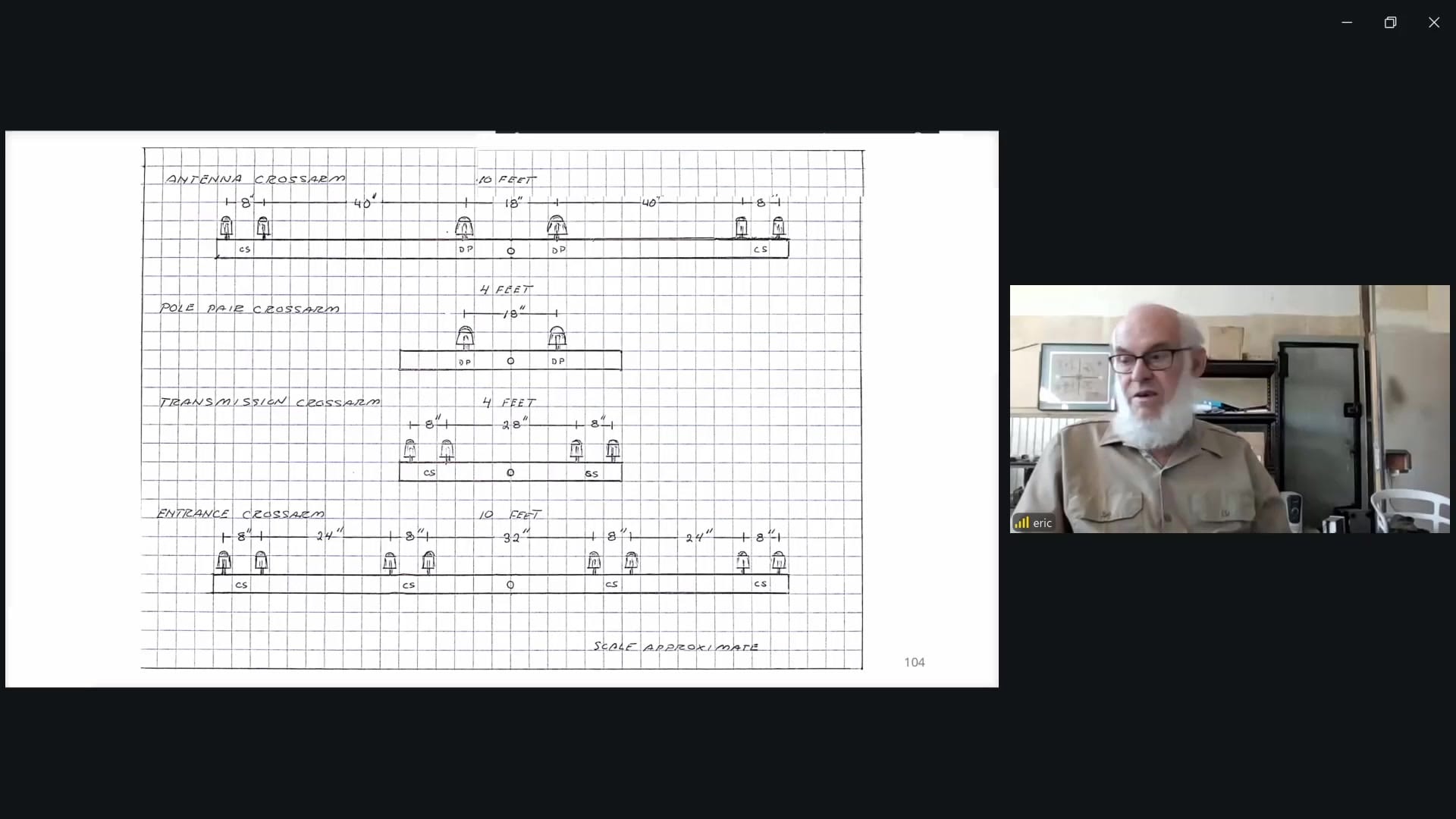
The second half shifts from equations and history to the physical Tonopah system. Dollard walks through the pole numbering, line sections, terminal points and the present state of a research installation that is measured in miles rather than tabletop inches.
54 poles, approximately 2.1 miles, 4,800 feet of completed Aerial section
Dollard gives those figures while describing the present Tonopah arrangement, making the project a rare full-scale continuation of the Alexanderson line of research.
The large structure is there to answer a very specific geophysical question: can the Aerial be used as a receiving system for signals inside the Earth while rejecting unwanted external signals?
“There’s no delay and there’s no advance. Everything operates in unison.”
Eric Dollard, ESTC 2026
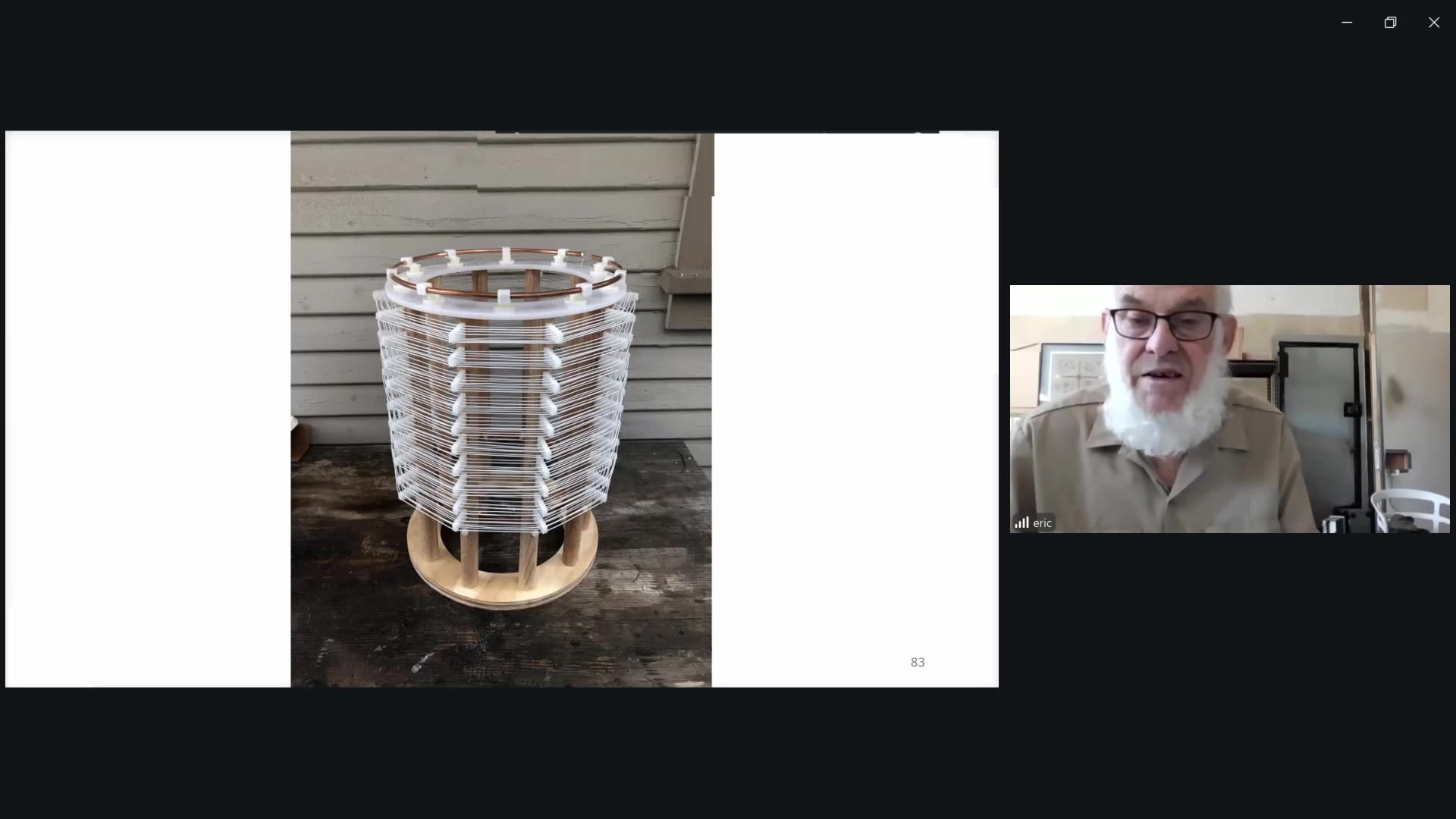
From Bolinas history to an Earth-signal receiver
Dollard describes the Landers system operating from roughly 300 cycles per second to 30 kilocycles per second with minimal phase and amplitude deviation. He says the resulting reception was high fidelity and that what he heard and measured was absolutely stunning.
“Hi, Eric. I really love how you derived the equations and everything for the antenna work.”
Audience member, ESTC 2026
The Q&A continues into the mathematics, editing the material for publication and what still has to happen before the Tonopah receiving system reaches its intended capability.
Who this is for
This presentation is for researchers interested in Tesla transmission, telluric and seismic signals, long-wire structures, electrostatic induction, Steinmetz mathematics, Bolinas history and the lost engineering of early electrical wireless systems. It is especially valuable if you want the historical record and the modern full-scale experiment in one continuous presentation.
Download the full 223-minute presentation now.




Reviews
There are no reviews yet.