
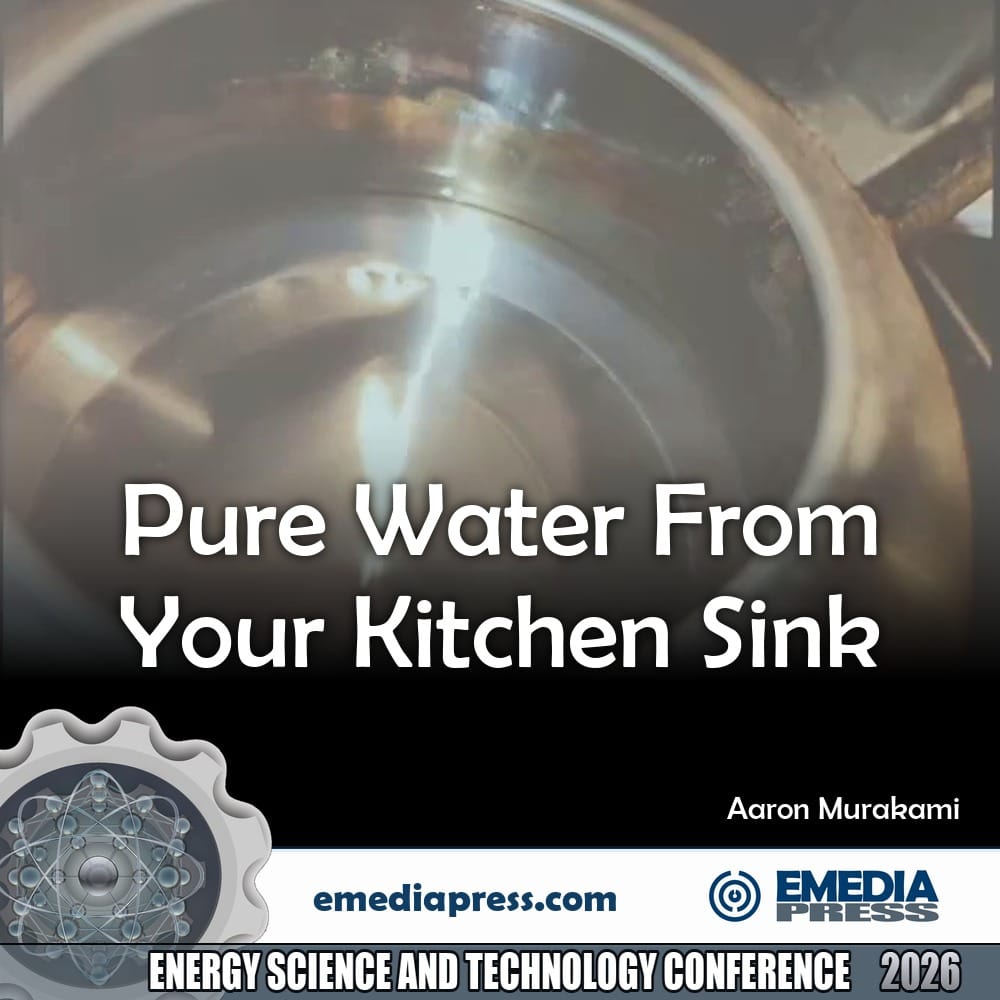
Description
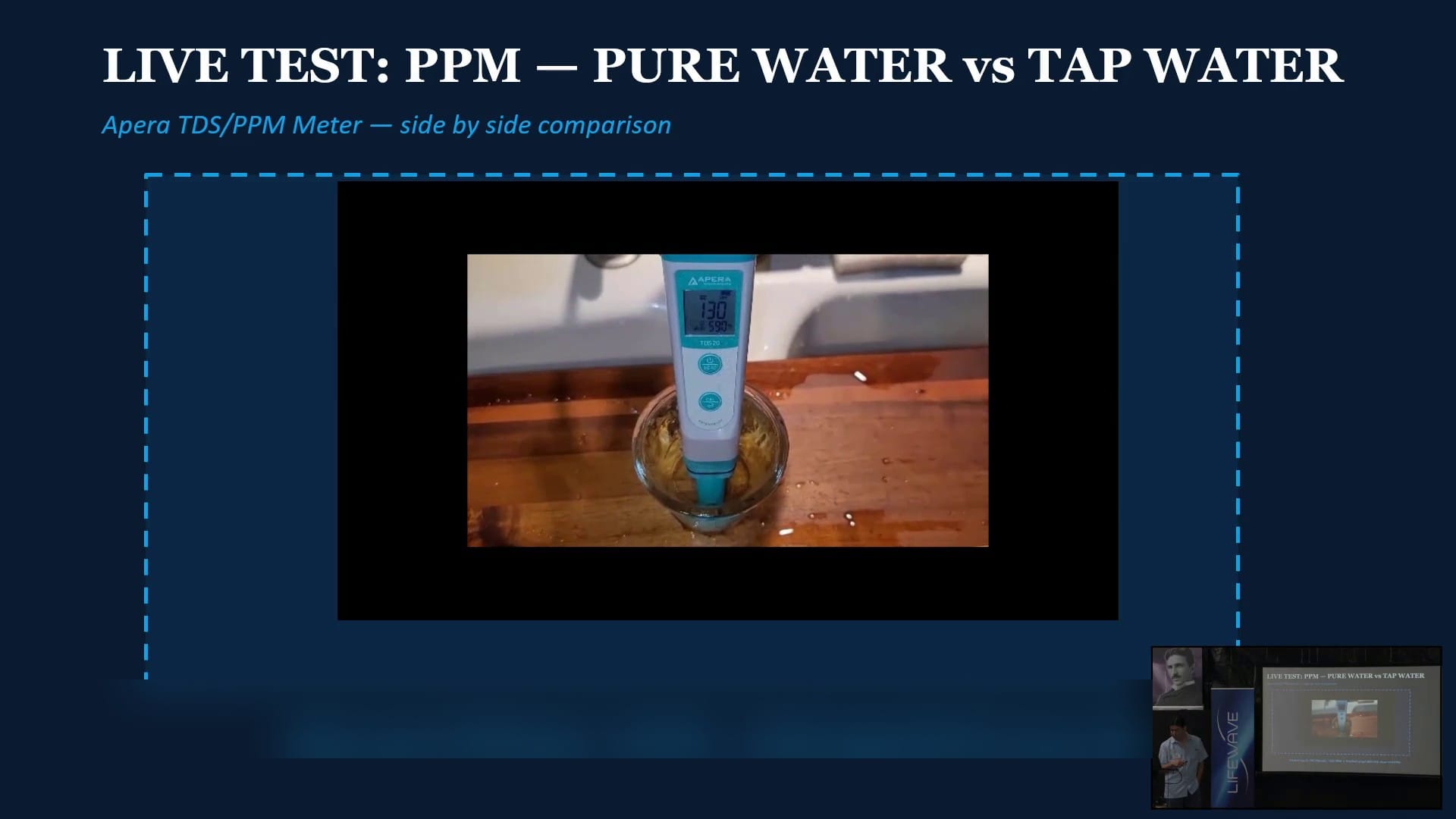
130 parts per million at my tap. Between 8 and 9 at my spigot. No distiller.
My full 48-minute presentation, recorded live at the 2026 Energy Science & Technology Conference. Download the MP4 video and keep your copy.
I distilled my own water for years, until the electricity, the slow output and the cleaning wore me out. Now, as I say in the talk, “I’m not distilling any water and I’m not spending a single penny on electricity.” On stage I show the test from my own kitchen: my regular tap reads about 130 parts per million, and the water from my spigot settles between 8 and 9. Then I check both again on a second meter.
I organize this conference. These are the readings I show on screen from my own kitchen, not a lab certification, and this is a do-it-yourself project with no support from me.
“They assume that if you have filtered water you’re drinking pure water, but you’re not.”
Aaron Murakami, ESTC 2026
What you get: the full 48-minute presentation as a downloadable MP4 video, recorded live at the 2026 Energy Science & Technology Conference. This is a copy you can keep and revisit.
Regular price $17. Introductory price $12.75. 25% off at the introductory price through November 6, 2026. No coupon required. The discount is already applied on this page.
What you will see in the full presentation
- Filtered versus pure: why ordinary filtering takes out some of the chlorine and chemicals but leaves the heavy minerals in.
- The tap-water question: the sink at the conference and my kitchen both read around 130 parts per million. I guess that is typical for aquifer water around Spokane, and I say it is a guess.
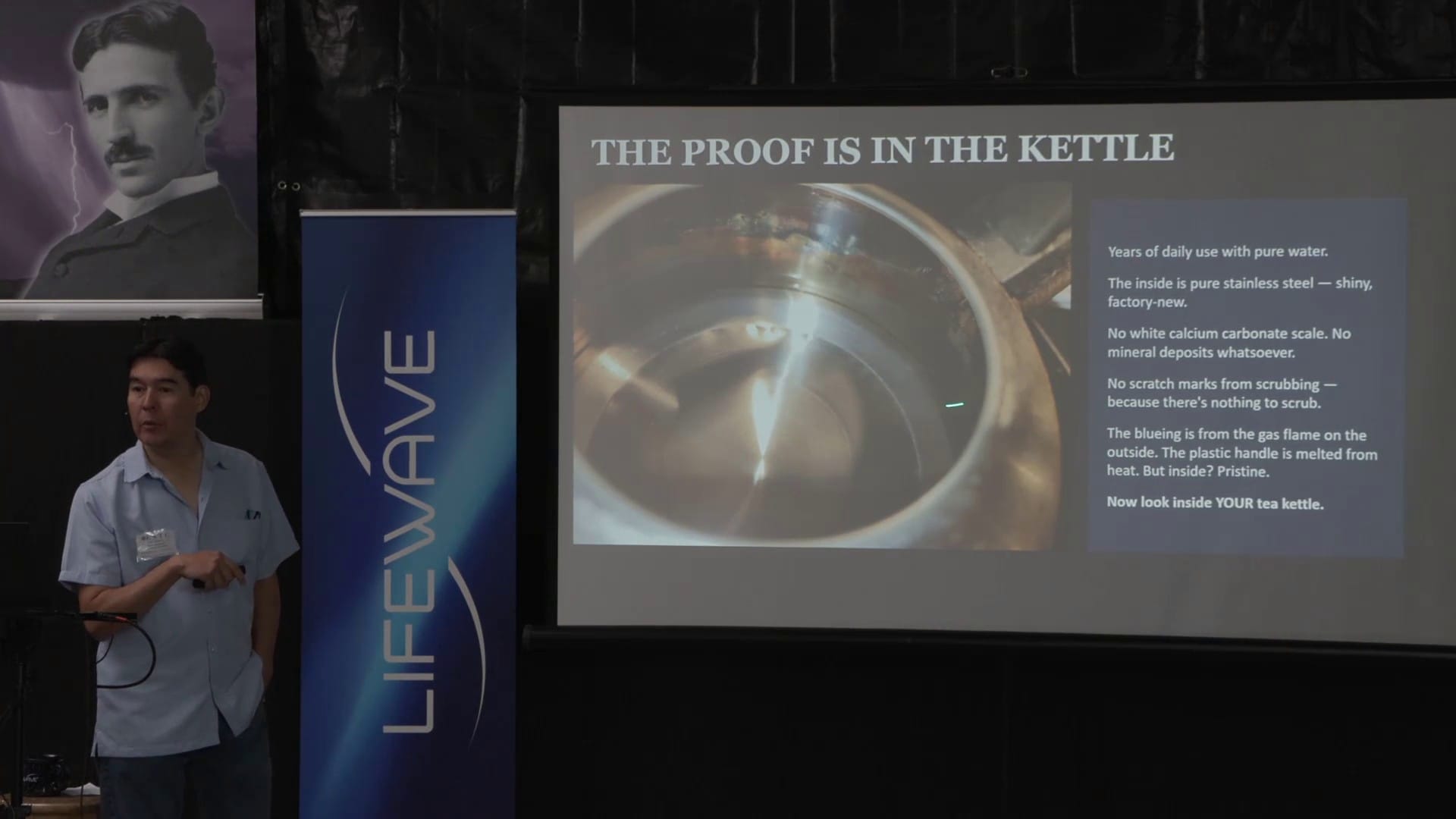
- The kettle: a tea kettle I have had for maybe 20 years, with a melted handle and an inside that still looks brand new. I use it daily, and there is no scale and no scrubbing.
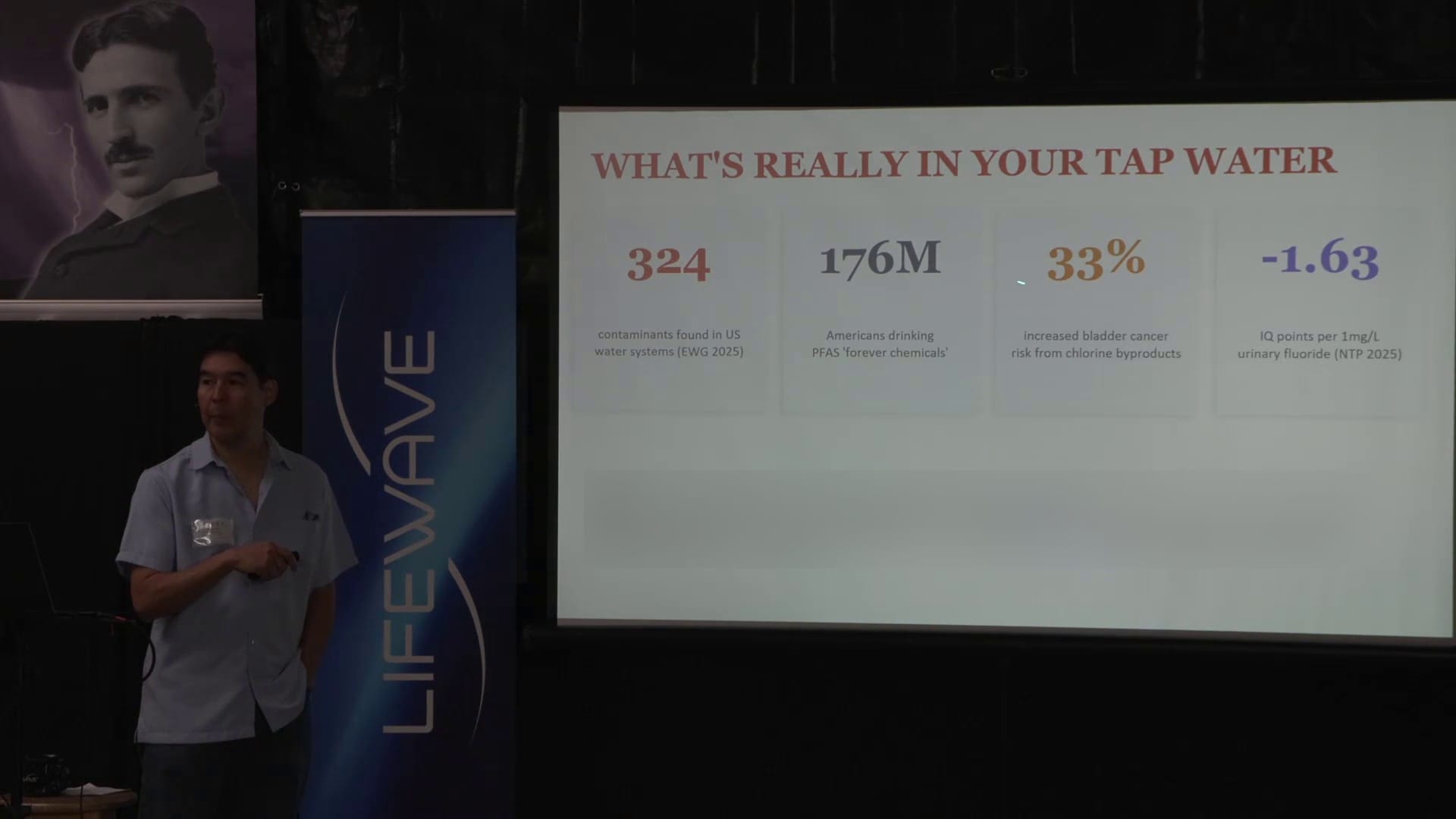
- The drinking-water slides: 324 or more contaminants found in drinking water, and 176 million Americans with forever chemicals in their water. These are slide figures, not my meter readings.
- What distilling costs: by my numbers, 750 watts for four hours, three kilowatt hours to distill one gallon of water, plus the cleaning.
- My upkeep standard: “If I can’t just set it forget it and walk away, I’m not interested.” I have not touched my setup in about two and a half years.
- The zero check: the meter reads zero before the glass is filled.
- The regular tap: cold sink water, run first, then about 130 parts per million once the reading settles.
- The spigot: the number drops while the line flushes, past 29 and 15, then settles between 8 and 9 parts per million.
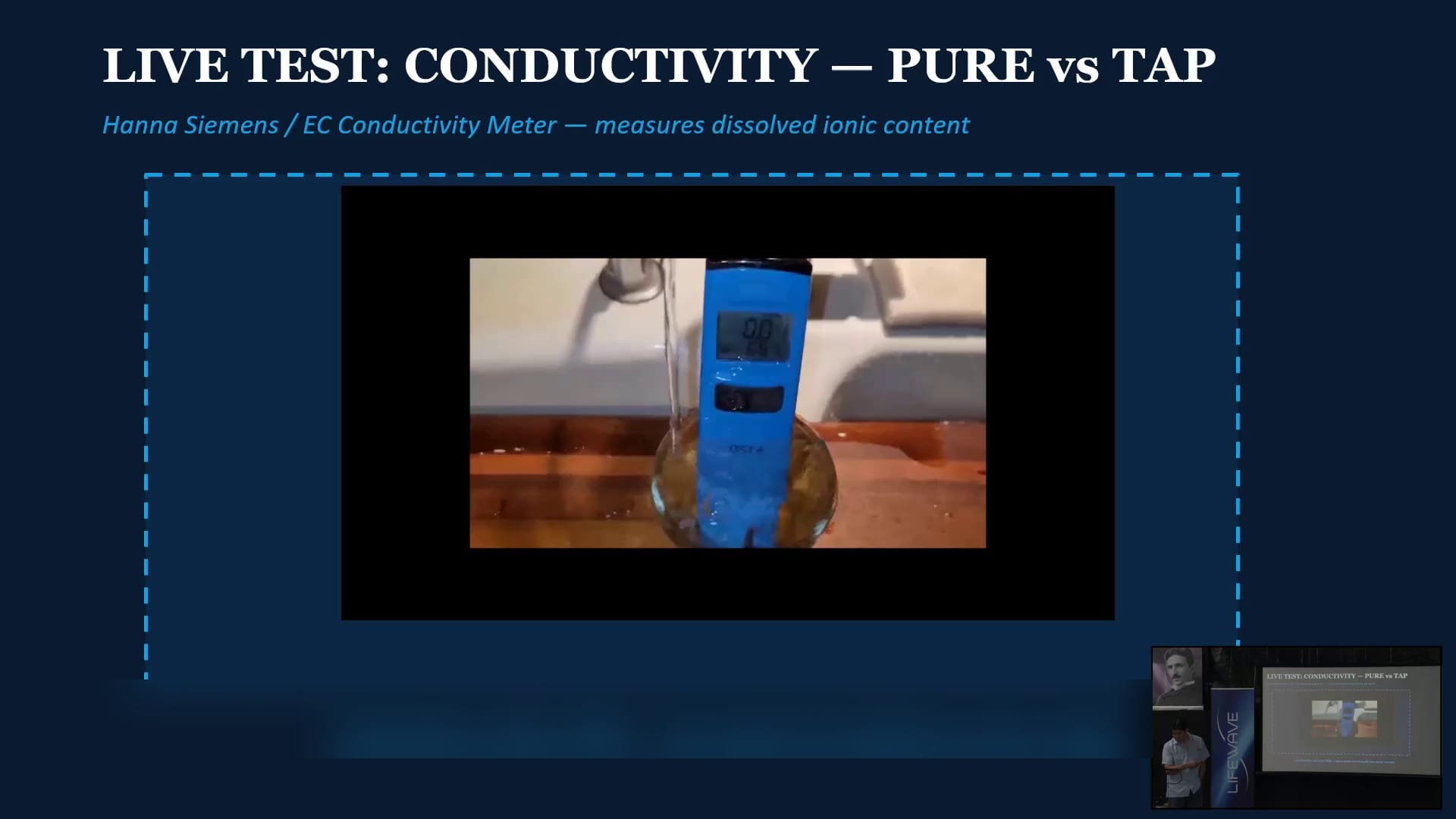
- A second meter: conductivity, 0.25 millisiemens per centimeter at the regular tap. Temperature changes the reading a little, and I say so.
- The spigot on the second meter: 0.04, then 0.03, then 0.02, then 0.01.
- Afterward: maintenance and questions from the audience. If you build one yourself, there is no support from me.
Two glasses, two meters
My regular tap water is already filtered, so this is filtered water against my spigot, not untreated water against my spigot. The 15 on the meter shows up while the spigot is still flushing. The number I give is the settled one, between 8 and 9.
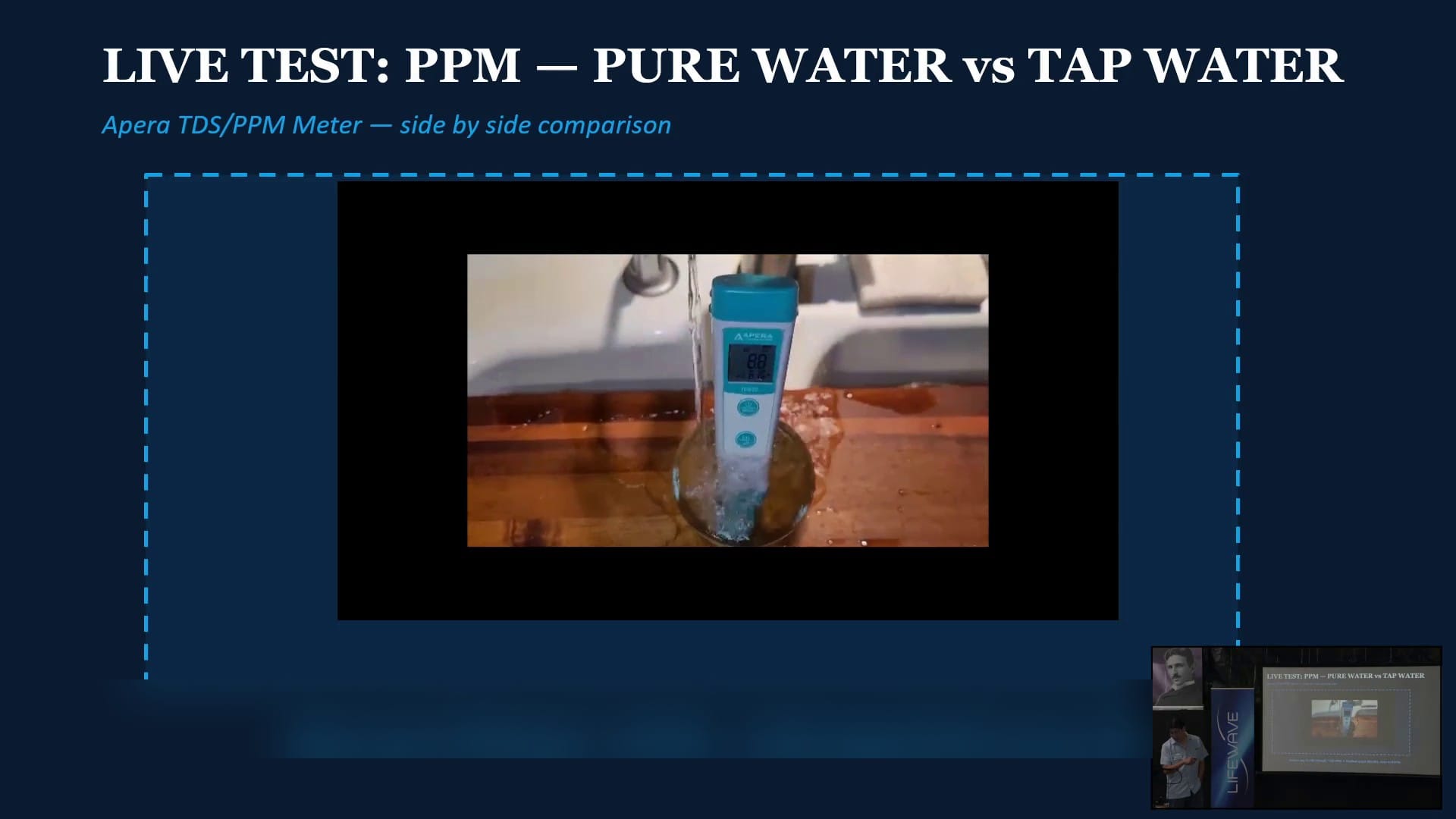
0.25 down to 0.01 millisiemens per centimeter
On the conductivity meter, my regular tap water read 0.25 millisiemens per centimeter. The water from my spigot came down to 0.01 while you watch. These are the readings from my own kitchen, not a promise about anyone else’s water.
“I mean, even if it’s 10, 20 PPM, to me that’s pure water good enough to drink compared to the 130 parts per million.”
Aaron Murakami, ESTC 2026
Who this is for
You distill your water and you are tired of the time, the electricity and the cleaning. You filter your tap water and assume it is pure, but you have never put a meter in it. Or you own a TDS meter and want to see one result checked two different ways.
You do not need to be an engineer: both meters show their readings on screen. The talk runs 48 minutes because it covers distilling, upkeep, the water slides, the full test on both meters and the audience questions. The MP4 download is yours to keep.
“If I can’t just set it forget it and walk away, I’m not interested.”
Aaron Murakami, ESTC 2026
Download the full 48-minute presentation.
Regular price $17. Introductory price $12.75. 25% off at the introductory price through November 6, 2026. No coupon required. The discount is already applied on this page.
After watching, you will understand why filtered water and pure water are not the same thing, how I test the difference with two meters, and what the readings were at my own sink.


Reviews
There are no reviews yet.