
Description
Nine presenters. No script. No slides. Two hours of whatever the room asked.
The full 130-minute closing panel of the 2026 Energy Science & Technology Conference, free to download and keep.
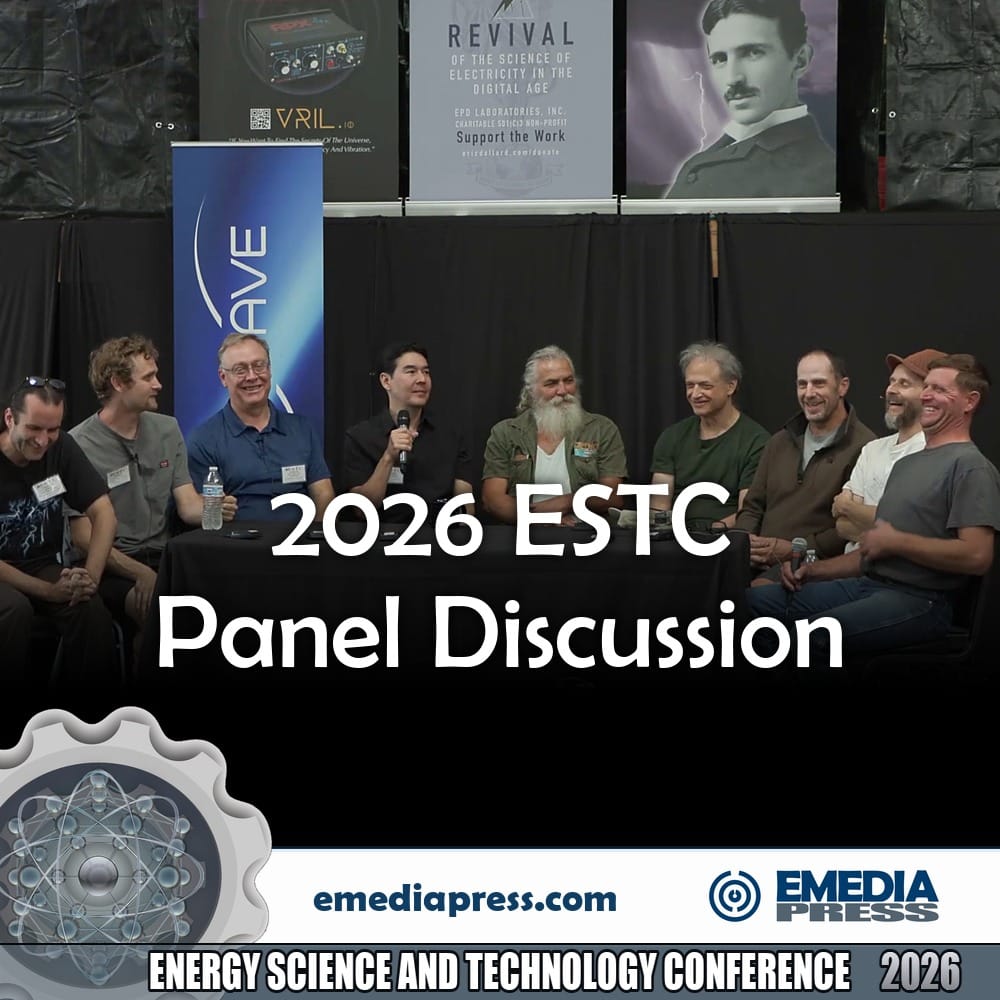
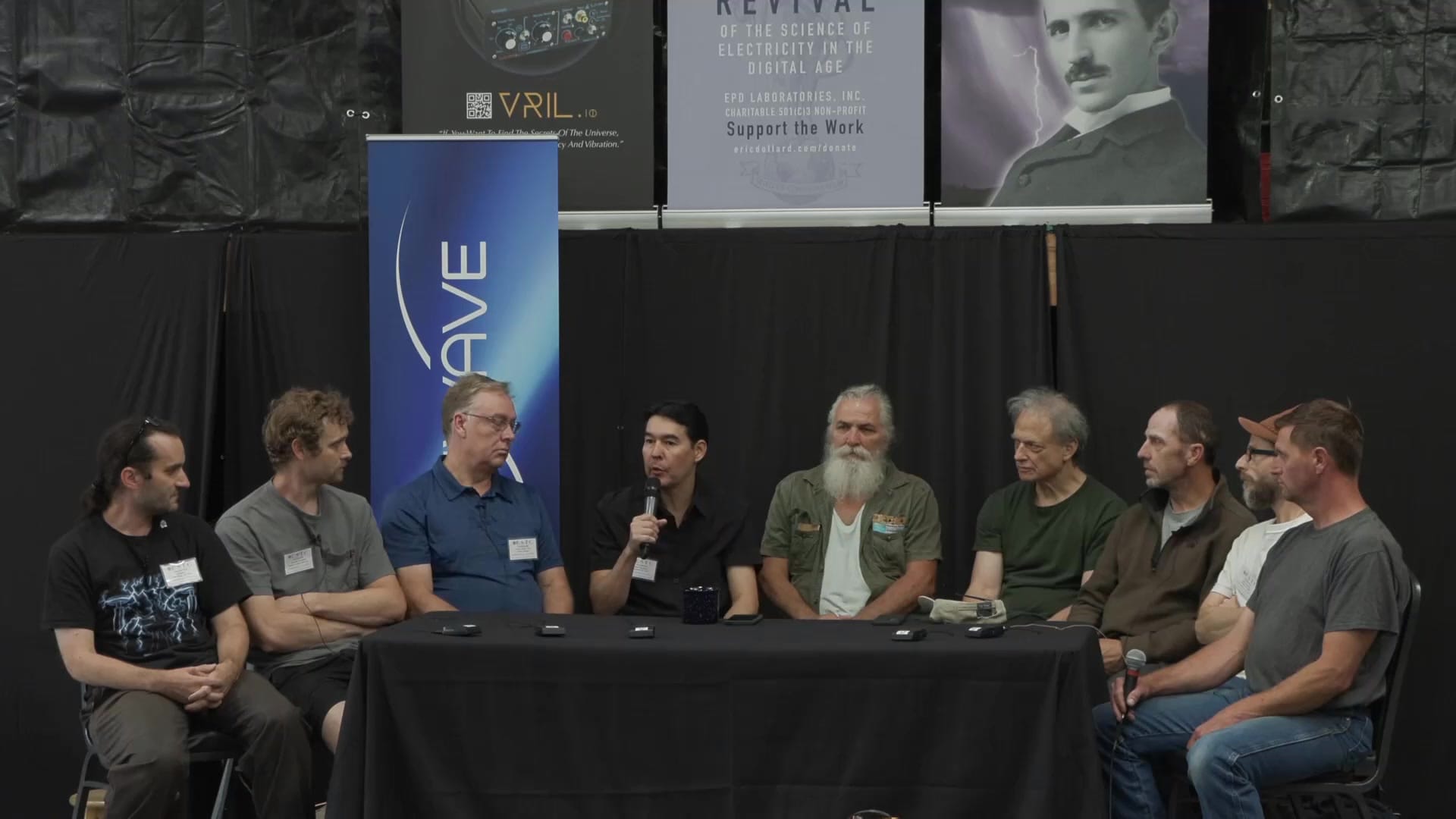
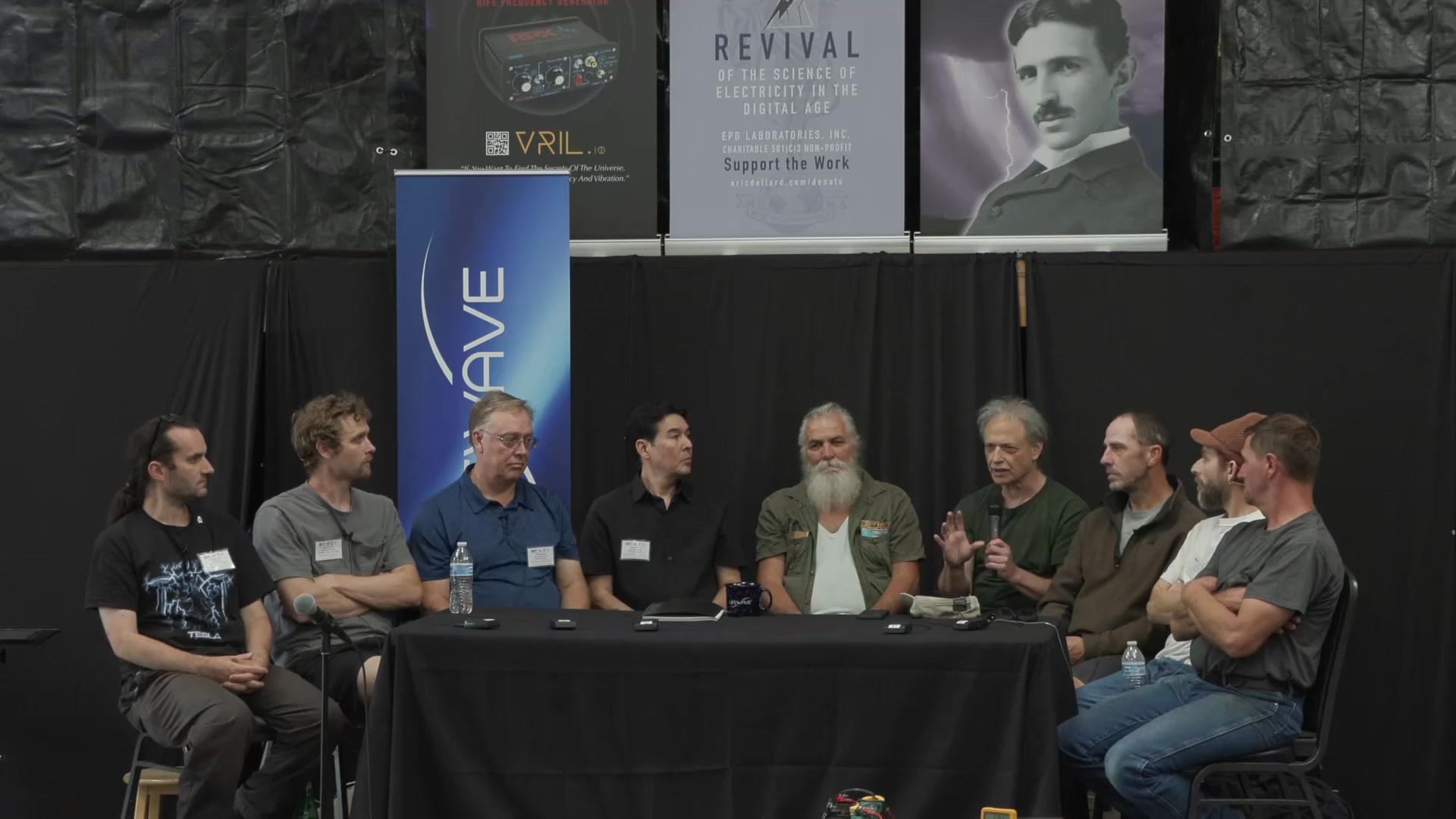
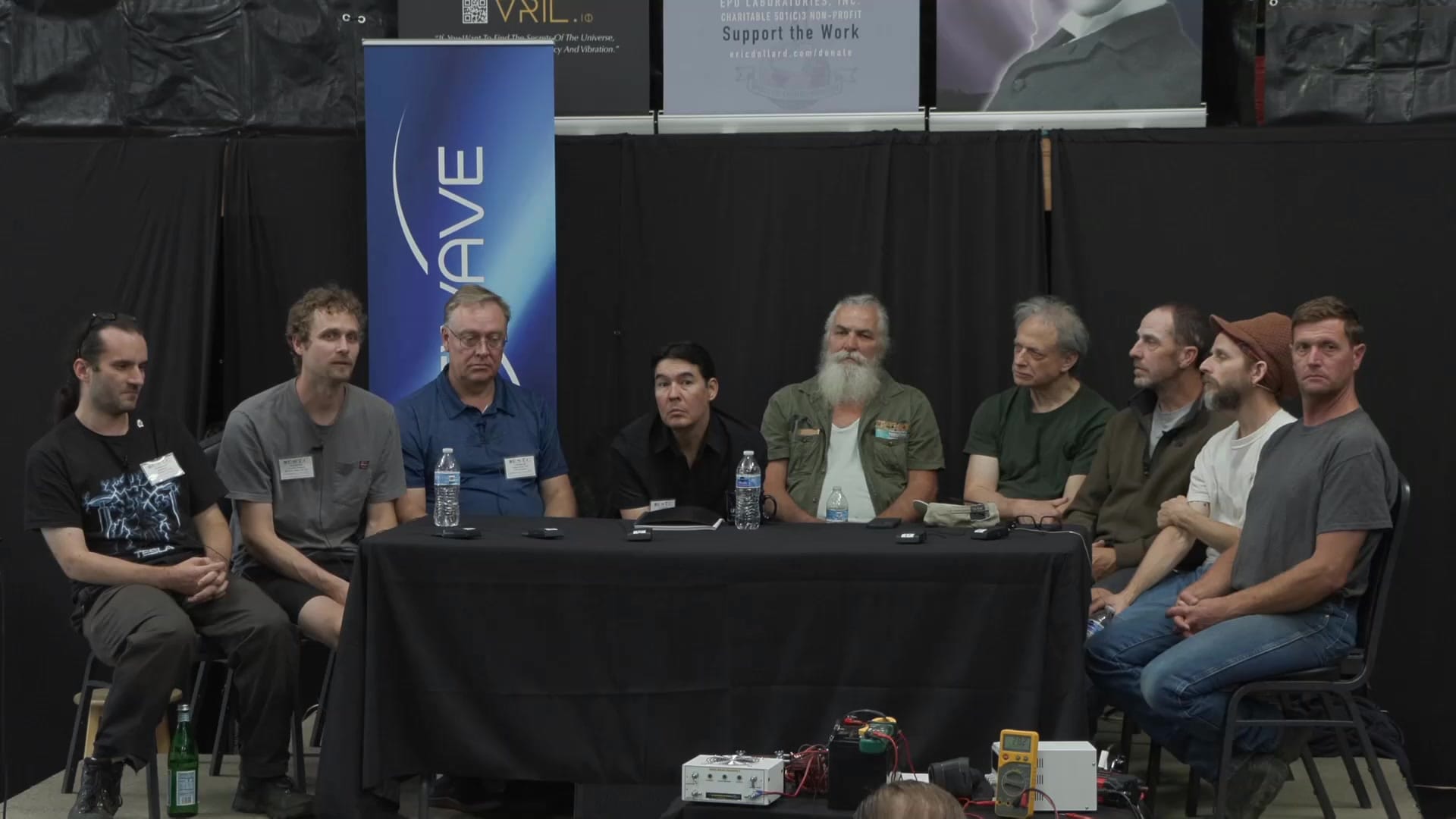
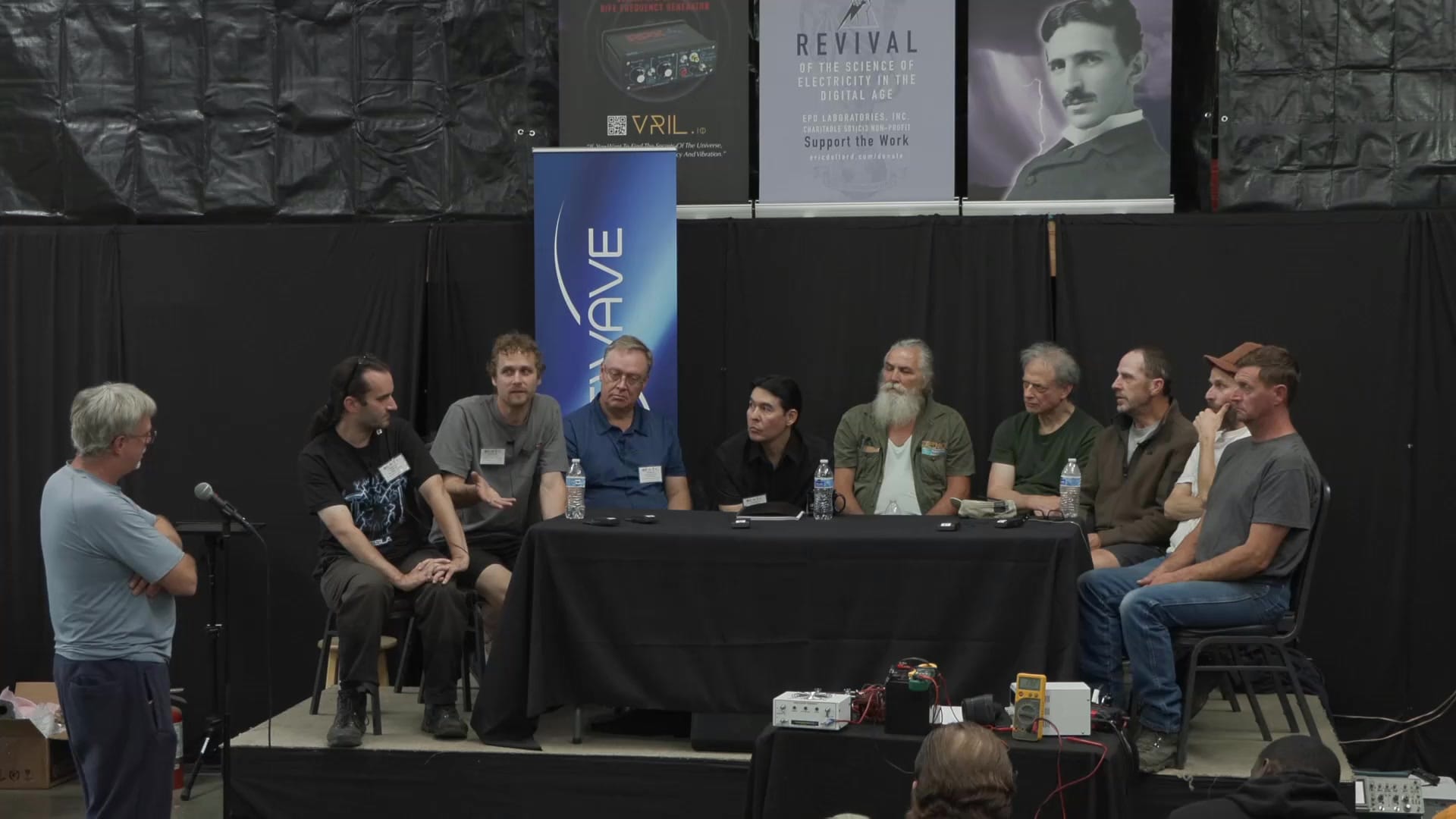
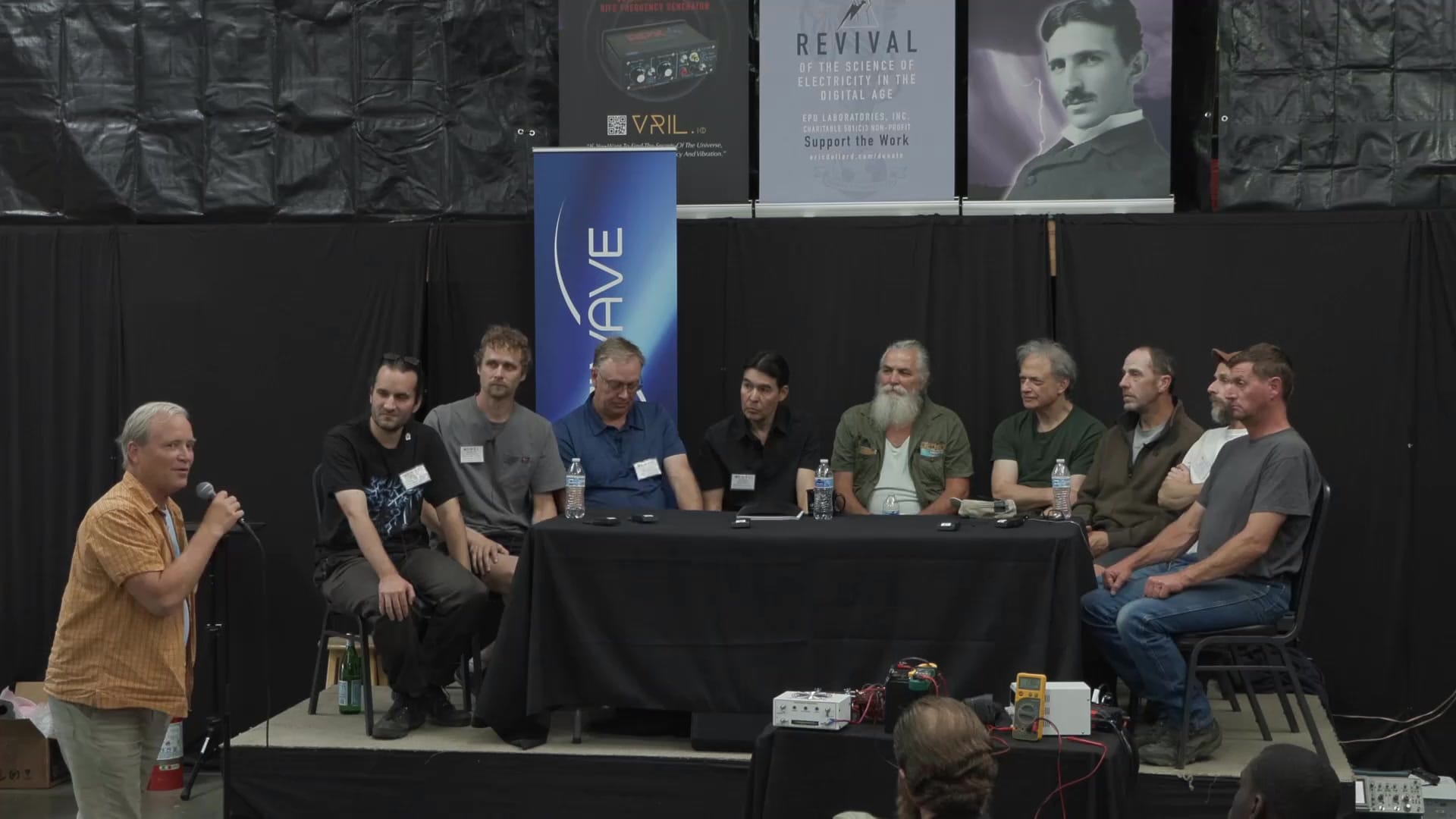
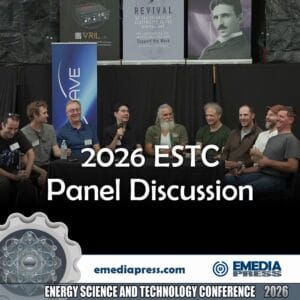
Aaron Murakami moderates a live closing discussion with Hakasays, Jeremiah Ferwerda, Adrian Marsh, Al Francoeur, Tom DiFerdinando, Terry McMenomy, Davy Oneness and Justin Miller. After a week of prepared talks, the presenters sit in a row and take questions from the floor and from the online stream. Nobody has notes. When one of them starts an answer, another one usually finishes it, or argues with it.
Someone watching online asks what to do when you understand the theory but do not have the tools. The answer comes straight back: “Kitchen table. Seriously. Work in your living room.” That is the whole panel in one exchange.
The first forty minutes are the presenters on each other’s work and their own: Hakasays on the coil he wound on site two to four days before the conference without knowing its frequency, Jeremiah Ferwerda on nine pumps and six years of prototyping, Adrian Marsh on why he flies in from the UK every year since 2018, Terry McMenomy on the three-story home they built from scratch off YouTube videos, Al Francoeur on eight years off the grid. Then the microphones open, and the room runs the show until the moderator calls time.
What you get: the full 130-minute panel as an MP4 video download, recorded live at the 2026 Energy Science & Technology Conference. It is free. This is the complete recording, not the preview. Download it and keep your copy.
WHAT YOU’LL HEAR IN THE FULL PANEL
- The coil in the luggage: Hakasays on winding his demonstration coil in the days before the conference and knowing from geometry, wire and frame material that it would perform before he ever measured it. “What you see on YouTube and everywhere else is people just making sparks and basically throwing spaghetti at the wall and seeing what sticks.”
- From 3D print to machined pump: Jeremiah Ferwerda on about nine pumps built so far, the CNC router and mill in his shop, why the production Tesla pump will be precision machined, and his answer when an online asker wants his disk spacing: “We have had people try to copy and take our work.” Start from Tesla’s patent and make the prototype easy to take apart.
- How to get started with theory but no tools: the question from the stream, the kitchen table answer, and then the longer version from Al, Adrian and Tom on what a first bench actually needs.
- Half a mile of dead line, through a spotting scope: Justin Miller on the only cut he ever made on the 12 kV side of a transformer, how he confirmed the line was de-energized, and how badly his hands shook anyway.
- Every band snowed: Al Francoeur on firing his Mobius coil and finding UHF, VHF, television, AM and FM all turned to buzz, and the inverted sine wave he saw on the scope. “Where’s the neutral zone?”
- 50 watts of bulbs, one net watt from the wall: Aaron Murakami on the SERPS solid-state demonstration he witnessed at the Hayden Eagles Lodge, the Onan generator set at Paul Babcock’s shop idling under 1,500 watts of halogen lamps, and the high-voltage N machine that flashes a neon bulb at 90 to 110 volts from a toy-car motor.
- The ether argument: A question from the floor on how to polarize more ether draws Marsh (“You need to create a need”), DiFerdinando (“you got to find the excitation”) and the moderator on breaking symmetry. His second question sets off the real disagreement between Marsh and DiFerdinando, which is not about the ether at all. Marsh: “The spirit is unknowable.” DiFerdinando: “If the spirit is real, it’s a part of reality.”
- Open-system thermodynamics: an online question on whether anyone uses open-system thermodynamics and fluid dynamics in electrical research, and the answer that every home fridge is already a machine with a coefficient of performance of 2 to 5.
- The Tesla turbine thread: a floor attendee who built one thirty years ago, the valvular conduit and capacitive discharge ignition, the turbine running on propane, and the moderator’s argument for why a tuned Tesla turbine beats a gas generator set.
- Replication that failed: the account of trying to copy Eric Dollard’s three-coil Colorado Springs transmitter, cutting a quarter turn at a time, failing completely, and spending years on a single coil instead.
- “I’m sick of following all the dead inventors”: a comment from the floor on John Bedini, and Marsh’s answer on why he puts everything in the open: “Putting it all in the open source for me is actually the safest and most effective way in order to invent.”
- Eight years off the grid: Al on the fridges, freezers, trailer, RV and underground lines his system has carried since the power company cut him off for refusing a smart meter.
130 minutes of unscripted cross-talk
This is the conference after the slides are over. One presenter begins an answer, another reframes the question, a third connects it to a project in a different field, and the person at the floor microphone pushes back. The overlap between the week’s talks only happens here, because this is the only time all nine are in the same conversation.
“I like to joke, scientists ought to become scientific first responders. Run toward the contradictions.”
Tom DiFerdinando, ESTC 2026
Where each presenter’s own talk picks up
Every panelist on this stage has a full presentation of his own in the 2026 series. Hakasays’ coil becomes Build A Better Tesla Coil and, with Justin Miller, the EPD Telluric Transmitter. Marsh’s answers on intent and open source are the framework of A Foundation for True Science. Francoeur’s eight years off the grid are the bench report in Onan and Dynamotor Tech. DiFerdinando’s “run toward the contradictions” is the method behind Orgone Energy. McMenomy’s wind machine is Efficient Wind Catching Tech with Peter Lindemann. Davy Oneness’s detectors are Unlocking Hidden Forces, and Justin Miller’s ranch work is Regenerative Grazing. The panel is where you hear them argue about each other’s work; the talks are where each one shows his own.
Who this is for
Anyone who watched a 2026 presentation and wanted to ask the next question. The builder who wants to hear nine working researchers disagree about how to start. The person deciding which of the full talks to get, who wants to hear each presenter unscripted first. The attendee who was in the room and wants to hear what was said after they left for the airport.
It is free, and there is nothing to sign up for. The download is the full 130 minutes, yours to keep.
Download the full 130-minute panel discussion free.
After this panel you will know how nine presenters answer the same question differently, where they disagree and why, and which of their full presentations you want to see next.


Reviews
There are no reviews yet.