Magnetic fluid conditioning for your car, your furnace, your water and your pool
Magnetizer® — Clamp It On. No Power, No Salt, No Chemicals, No Maintenance.
Permanent monopole magnetic units that strap onto the outside of a fuel line or water pipe with the included cable ties. Nothing is cut, nothing plugs in, nothing wears out. Made and sold since 1985 to homes, fleets, hotels, factories and government test programs — the test reports and letters are further down this page, and every figure links to its source.
Magnetizer® Products from A & P Electronic Media — authorized Magnetizer distributor since 2011
Results shown are manufacturer test data or results reported by Magnetizer Inc.; every figure links to its source. Results vary.
Watch: A TV News Story On The Magnetic Fuel Saver
News 8 report by Colleen Moody (2 min 18 s). In the reporter’s words: “the manufacturer of this product boasts that by using special magnets they’ve developed for cars, trucks, and motorcycles, you’ll increase your gas mileage by nearly 20%” (watch at 0:16 on YouTube) and that the unit “should pay for itself within three months” (watch at 1:13 on YouTube). Manufacturer claims as reported; results vary.
How Magnetizer Works
Magnetizer Inc. was founded in 1985 after six years of research (manufacturer presentation, company background slide), and its units have been made and sold ever since. Each unit is a housing of permanently magnetized ceramic blocks that clamps around a pipe or fuel line, arranged so the fluid passes through a focused single-pole field (classic presentation at 5:09; report p. 6). Here is the manufacturer’s own explanation, taken from its data sheets and test report:
Fuel
Fuel in a line travels as clusters of hydrocarbon molecules that oxygen cannot fully penetrate, so part of every charge leaves as unburned hydrocarbons, carbon monoxide and carbon deposits. The manufacturer says a properly focused magnetic field flips the fuel’s hydrogen from the para to the more reactive ortho state, breaking the clusters apart so more oxygen bonds to the fuel. More of the fuel burns, which is why the tests measure both lower exhaust emissions and lower consumption. (Source: report p. 1.)
Water
Hard-water minerals stay dissolved because of a small electrical potential between the minerals and the water. When the water reaches a heating surface the minerals re-crystallize as rock scale. Passing the water through the magnetic field reduces the water’s surface tension so — in the manufacturer’s words — the scale reaches “a higher degree of hydration” and the moving water carries it off; the same buffering effect moves pH towards neutral. (Source: Residential and Commercial Water Treatment data sheets.)
Magnetizer’s classic 6-minute presentation (1980s footage) explaining the technology for home water, pools and fuel. Spoken in the video: the units are “made from ceramic alloys and permanently magnetized; for installation you need no tools and no plumbing modifications are required” (watch at 5:09 on YouTube).
On record
US patents RE 35,689 and 5,829,420 · California Air Resources Board executive order EOD-174-3 · US military national stock number NSN 2910-01390-0004 (assigned after the Air Force MEEP evaluation). As listed in the manufacturer’s test report, report p. 2.
The Proof We Have On File
Everything below comes from a document or video in our possession that names Magnetizer. One-page documents are shown in full; every figure links to the page of the report it comes from, or to the minute of the video where it is said.
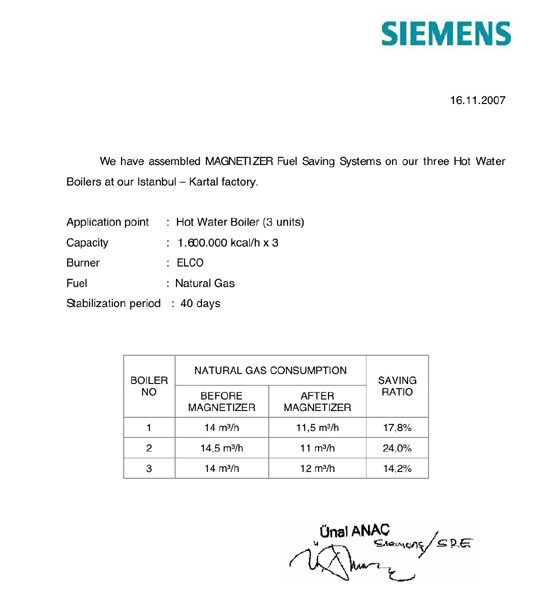
Siemens — Istanbul-Kartal factory, letter dated 16.11.2007
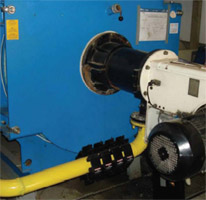
“We have assembled MAGNETIZER Fuel Saving Systems on our three Hot Water Boilers at our Istanbul – Kartal factory.” Three 1,600,000 kcal/h natural-gas boilers, ELCO burners, 40-day stabilization period.
Natural gas consumption before / after, per the letter: boiler 1 — 14 to 11.5 m³/h (17.8%); boiler 2 — 14.5 to 11 m³/h (24.0%); boiler 3 — 14 to 12 m³/h (14.2%). Average saving 18.6%. Signed Ünal Anaç.
Source: the letter as supplied to the distributor, shown here in full — open the scan or download it as a PDF. Manufacturer-supplied customer letter; results vary.
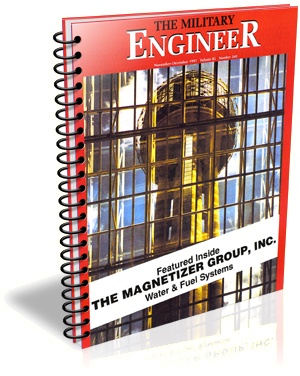
The Military Engineer, Nov–Dec 1993, cover (300 px — the only copy on file) Open full size
The Military Engineer, Nov–Dec 1993
The journal of the Society of American Military Engineers — an engineering trade journal, so this is commercial and institutional water and fuel systems, not a home product review. The cover reads: “Featured inside: The Magnetizer Group, Inc. — Water & Fuel Systems.”
Source: cover image only. The article text is not on file with emediapress, so nothing from it is quoted here.
2. Video testimonials — New York Hilton
Two short interviews recorded by Magnetizer with the New York Hilton’s engineering staff about the units on the hotel’s commercial building water systems (cooling tower, chiller plant, heat exchanger, water supply). This is commercial-scale evidence, not a home installation. Neither video states a percentage saving, so we don’t either.
Commercial installation — New York Hilton, Chief of Operations (1 min 05 s), on the Magnetizer units fitted to the pipes feeding the hotel’s rooftop cooling tower (open on YouTube).
Commercial installation — New York Hilton, Chief Engineer (1 min 50 s), asked “How was your experience with Magnetizer in the Hilton?” (watch at 0:00 on YouTube) — “This is really good … we open chillers and we have very good condition” (watch at 0:17 on YouTube). He lists the installations: cooling tower, chiller plant, heat exchanger and the water supply in four locations (watch at 0:42 on YouTube), after one to one-and-a-half years.
3. Manufacturer test data — the 23-page report
Magnetizer Inc. compiled its fuel and emissions tests into one document. We have re-saved it as a searchable PDF: Magnetizer Fuel Test Data, 23 pages (PDF). The headline numbers, each linked to its page:
18.8%
less fuel per km — 1990 Chevy LUV, CVS-75 / FTP-75 dynamometer cycle
Chilean EPA (Comisión de Descontaminación, Santiago), 6 Jan 1992 · report p. 7
20.11%
diesel saving — Scania passenger bus, 6,700 km over 24 days
CREA-PA Brazil (EPA testing), May–June 2003 · report p. 20
26%
lower fuel consumption — Kohler generator under constant electrical load
VTEC Laboratories, Germany & USA, laboratory test · report pp. 12–14
17%
drop in gasoline consumption — Volkswagen Quantum
Autolatina (Ford / Volkswagen), Argentina, 13 Oct 1993 · report pp. 14–15
+4.8%
average horsepower — full race engine on the dyno
Penske Racing dyno test, 17 Feb 1989 · report p. 11
60.7% / 61.2%
less diesel smoke opacity — two diesel pickup trucks
Sri Lanka EPA, Lucas Hartridge free-acceleration test, 17 May 1999 · report pp. 17–18
+8%
fuel savings, hydrocarbons −15%, carbon monoxide −11% — postal van
US Postal Service, California (summary line) · report p. 5
18.6%
average natural-gas saving on three factory hot-water boilers (building heating)
Siemens, Istanbul, letter dated 16 Nov 2007 · letter (PDF)
All fuel figures above are manufacturer test data taken from that report (or, for Siemens, from the letter shown). They are single tests on specific engines and boilers; results vary.
▸Every test in the report, page by page (each entry links to its page)
Comparison table, patents RE 35689 and 5,829,420, CARB executive order EOD-174-3, US military stock number NSN 2910-01390-0004 — pp. 1–2
Before / after hydrocarbon and carbon-monoxide table for about 40 vehicles (Chevy, Ford, Nissan, BMW, VW, Hyundai and others; some entries from Boston Gas Company, Guatemala, Argentina and Malaysia) — pp. 2–3
Certified-test bullet list: VTEC 26%; Institute of Aeronautics (Poland) CO −40%, HC −20%; RV Power Group 5.34 to 8.08 mpg; Bacon Equipment +33% tractor horsepower; Penske +4.8%; Chile EPA 18%; Tomei Industrial Furnace (Taiwan) 11.7% less heavy oil; Northern California Diagnostic Laboratories +5% horsepower; US Border Patrol test 8/10/95 (27.0%, 29.8%, 10.3%, 50.8% on four vehicles); Electrometal Ltd 7/31/95 genset 25% diesel; Wheels Ltd 11/04/95 rental cars +17.46% and +18.0%; City of Berkeley CA fleet 14.13%, 2.46%, 7.06% — pp. 4–5
Certified-tests summary: Beijing Railroad 4.88–5.91%; United States Air Force 80% smoke reduction, +50% CO and HC reduction on petrol vehicles with catalytic converters; US Postal Service CA +8% fuel; US Federal Border Patrol +10% fuel; SIRIM Malaysia 5% fuel, CO −40%; EPA Latin America 18.8%; Sri Lanka 60% opacity; Mercedes-Benz, Nissan, Proton, Ford/VW emission reductions — p. 5
United States Air Force, Air Force Material Command, Management & Equipment Evaluation Program (MEEP), Hurlburt Field, Florida: two petrol vehicles and one diesel bus over six months; conclusion “demonstrated the ability to reduce harmful emissions in both petrol and diesel engines”; recommended for Air Force use and a national stock number was assigned — pp. 6–7
Chilean EPA CVS-75 test, 1990 Chevy LUV 1600: 8.50 to 10.10 km/l, 18.8% — pp. 7–9
Mercedes-Benz Argentina S.A., 10 Nov 1993, diesel bus: CO 0.09 to 0.04 (600 rpm), HC 30 to 12 — p. 9
Guatemala, Nissan Dicorsa plant, 13 Apr 1991: five vehicles, idle and 2,500 rpm CO / HC before and after — p. 10
SIRIM Malaysia, Proton 1.5S, June 1993: HC 130 to 100, CO 2.0 to 1.4, power 58 to 59 kW — p. 11
Penske dyno, 17 Feb 1989: average 609.2 to 614 hp (+4.8%) — p. 11
VTEC Laboratories generator test: about 26% lower fuel flow at constant load — pp. 12–14
Autolatina (Ford / VW) Argentina, 13 Oct 1993: gasoline consumption down 17% — pp. 14–15
SIRIM Malaysia, 20 May 1999: Proton Iswara 1.3S −3.29% fuel, +6.6% power; Proton Perdana 2.0i −6.62% fuel; Kia Sportage 2.0 −6.11% fuel, +2.3% power — pp. 15–17
Sri Lanka EPA, 17 May 1999: pickup one opacity 30.1 to 11.8 HSU (60.7%); pickup two 56.4 to 21.7 HSU (61.2%) — pp. 17–18
Nepal, April–May 1999: seven petrol vehicles average CO −83.12%, HC −38.97%; seven diesel vehicles average smoke −61.13% — pp. 18–19
China Academy of Railway Science, Tung Fong 4 locomotive, June 1996 – March 1997: average 4.88% (5.91% in April 1997, peak 9.11%); softer carbon on injectors — p. 19
CREA-PA Brazil, Scania bus, 1 May – 7 June 2003: 2.874 to 3.452 km/l, 20.11% — p. 20
Transporte São Luiz, Brazil, Oct–Nov 2003 tachograph analysis: about 9.36% — p. 20
1983 Ford F-100 teardown at 158,000 miles with units fitted since 41,000 miles: clean water jacket, no carbon on valves or pistons — p. 21
California emissions test, 2001: HC −84%, CO −83%, NOx −72%; stabilization period 200–500 miles — pp. 22–23
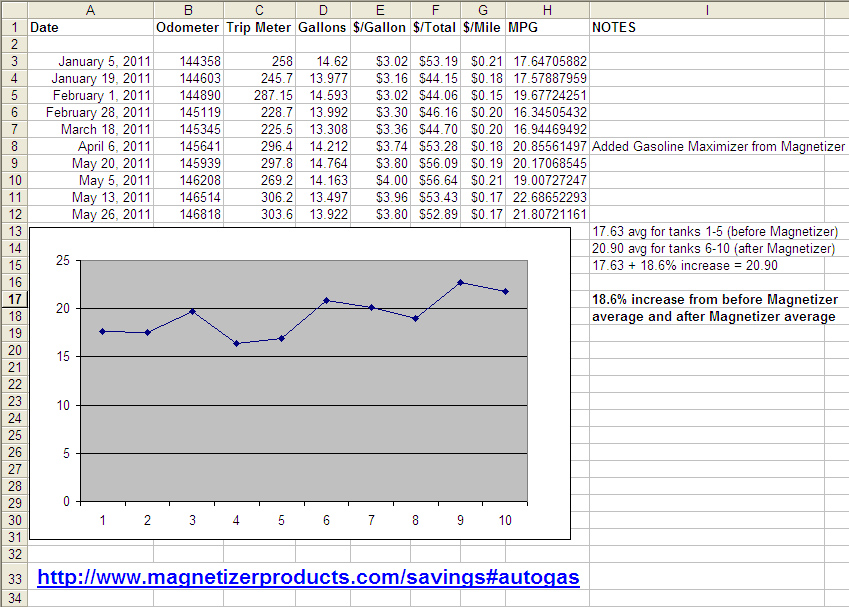
A customer’s fuel spreadsheet, January to May 2011: ten fill-ups, with the Gasoline Performance Maximizer added before tank six. Average 17.63 mpg for tanks 1–5, 20.90 mpg for tanks 6–10 — an 18.6% increase (mileage log PDF).
Self-reported by one driver; one car, one season. Results vary.
Shop Magnetizer — 10 Products
Prices are per unit; shipping is calculated at checkout. Add as many different items to your cart as you like. Each bullet links to the data sheet it comes from.
■ Vehicles
Gasoline, diesel and motorcycle fuel lines.
Magnetizer Gasoline Performance Maximizer
Item #5000
Clamp-on magnetic fuel conditioner for the fuel line of a gasoline car, SUV or light truck. Fits with cable ties — nothing is cut.
Gasoline results in the manufacturer’s report: 18.8% less fuel per km, 1990 Chevy LUV, Chilean EPA CVS-75 test, 6 Jan 1992 (report p. 7); 17% drop in gasoline consumption, VW Quantum, Autolatina Argentina, 13 Oct 1993 (report pp. 14–15); +8% fuel savings, US Postal Service van, California (report p. 5). One customer’s own log: +18.6% mpg over ten tanks, Jan–May 2011 (log PDF). The tiles and the log are shown in the proof section; the TV news story is at the top of this page (watch at 0:16 on YouTube). Manufacturer test data; results vary.
Installation
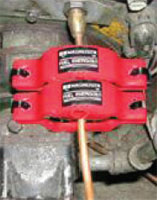
Cable ties are included. Strap the unit around the outside of the line with them — nothing is cut and nothing plugs in. Allow a stabilization period while old carbon clears: the manufacturer quotes 200–500 miles (report p. 23) and recommends an oil change after the first few hundred miles because loosened deposits end up in the oil (report p. 19).
Diesel results in the manufacturer’s report: 20.11% saving on a Scania passenger bus over 6,700 km, CREA-PA Brazil, May–June 2003 (report p. 20); 60.7% and 61.2% less smoke opacity on two diesel pickups, Sri Lanka EPA, 17 May 1999 (report pp. 17–18); 4.88–5.91% average fuel saving on a diesel locomotive, China Academy of Railway Science, 1996–97 (report p. 19); CO 0.09 to 0.04 at 600 rpm on a diesel bus, Mercedes-Benz Argentina, 10 Nov 1993 (report p. 9); the US Air Force MEEP evaluation ran one diesel bus for six months and recommended the system for Air Force use (report p. 6). The first two are tiles in the proof section. Manufacturer test data; results vary.
Installation
Cable ties are included. Strap the unit around the outside of the line with them — nothing is cut and nothing plugs in. Allow a stabilization period while old carbon clears: the manufacturer quotes 200–500 miles (report p. 23) and recommends an oil change after the first few hundred miles because loosened deposits end up in the oil (report p. 19).
There is no motorcycle-specific test on file, so no vehicle test figures are shown here. Motorcycles are listed as an application on the transportation data sheet, and the TV report at the top of this page names motorcycles among the vehicles the unit is made for (watch at 0:21 on YouTube). Car and truck tests are in the proof section and under the Gasoline and Diesel cards above.
Installation
Cable ties are included. Strap the unit around the outside of the line with them — nothing is cut and nothing plugs in. Allow a stabilization period while old carbon clears: the manufacturer quotes 200–500 miles (report p. 23) and recommends an oil change after the first few hundred miles because loosened deposits end up in the oil (report p. 19).
The Siemens letter (16.11.2007) covers three natural-gas hot-water boilers at a factory: 17.8%, 24.0% and 14.2% less gas, average 18.6% (letter PDF); it is shown in full in the proof section. Six more natural-gas heating results reported by Magnetizer Inc. (IBM White Plains 17%, 1997; 204 apartments Quebec City 13.3%, 1999; York Holdings Montreal 8.3%, 1999; Scarborough office 12.9%, 1999; Nexacor Oshawa 10.97%, 2001; mine heater house 11.95%, 2002) are in the dated case studies — original letters not on file, so no source link.
Installation
Cable ties are included. Strap the unit around the outside of the line with them — nothing is cut and nothing plugs in. Allow a stabilization period while old deposits clear: the one boiler letter on file (Siemens, natural gas) used 40 days (letter).
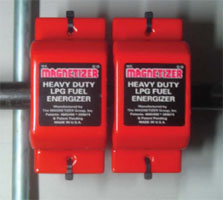
There is no LPG-specific test or customer letter on file, so no figures are shown here. The residential fuel data sheet lists LPG boilers, furnaces and hot-water heaters as applications. The natural-gas boiler letter (Siemens, 2007) is a different fuel; it is in the proof section and under the Natural Gas card above.
Installation
Cable ties are included. Strap the unit around the outside of the line with them — nothing is cut and nothing plugs in. Allow a stabilization period while old deposits clear; no LPG-specific figure is on file.
Reported by Magnetizer Inc. (original letter not on file, so no link): Scarsdale Manor, New York, 1997 — two boilers on #4 and #6 oil showed yearly fuel savings of 17% and 19%, $17,855 a year against $3,716 of equipment, tested with a Bacharach Fyrite II analyzer; with “dirty oil” the boiler efficiency increased instead of decreasing. The full quote is in the dated case studies.
Installation
Cable ties are included. Strap the unit around the outside of the line with them — nothing is cut and nothing plugs in. Allow a stabilization period while old deposits clear; no fuel-oil-specific figure is on file.
There is no data sheet or test on file for the refrigerator unit. The manufacturer’s slide presentation, refrigeration slide (8:25 on YouTube; the player is in the industrial section), states: “Improves COP up to 25%. Compressor power reduced 15–23%. Reduces cycling. Prolongs equipment life. Reduces wear. Just clamp it on.” Manufacturer claims; results vary.
Installation
Cable ties are included. Strap the unit around the outside of the line with them — nothing is cut and nothing plugs in. Allow a settling period; no refrigeration-specific figure is on file.
No residential test report or customer letter is on file for this unit, so no figures are shown here. In the manufacturer’s own words: the home water system “prevents scale from building up inside your hot water heater” (Garrett Shivo interview, 1:21), and the classic presentation’s home segment covers scale in hot-water tanks, softer laundry and less detergent (2:20 on YouTube; the player is in How Magnetizer Works). Commercial water-side results (hotel cooling towers, an engineering journal feature, a university) are in the proof section and the industrial section.
Installation
Cable ties are included. Strap the unit around the outside of the line with them — nothing is cut and nothing plugs in. Existing scale is dissolved gradually rather than at once (data sheet); no time figure is on file.
No pool-specific test report or customer letter is on file, so no figures are shown here. The data sheet reports that users see less scale on tile and less scum from body oils. The manufacturer’s own pool material: the classic presentation’s pools-and-spas segment — pools and spas “can be kept cleaner” and “the use of chemicals will be greatly reduced” (3:22 on YouTube) — and the pools slide of the slide presentation (5:10 on YouTube). Manufacturer film and slides; results vary.
Installation
Cable ties are included. Strap the unit around the outside of the line with them — nothing is cut and nothing plugs in. Existing scale in pipes, heater and filter clears gradually rather than at once (data sheet); no time figure is on file.
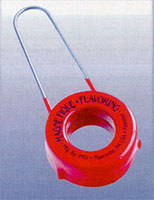
A hand-held magnetic ring that slips over the neck of the bottle — no cable ties, nothing to install. Magnetizer’s own sheet says wine poured through one side becomes smoother and sweeter on the palate; flip it over for richer and more dry.
✓Pour wine, coffee, tea, juice or water through the ring (manufacturer sheet)
✓Two clearly marked sides: one for smoother and sweeter, the other for richer and drier (manufacturer sheet)
✓Slips over the neck of the bottle; no cable ties — a conversation piece that makes a fun gift
From Magnetizer’s own Flav-O-Ring sheet: “Pour inexpensive wine through one side of the FLAVORING and it immediately becomes smoother and sweeter on the palate … Turn the FLAVORING over and the same wine becomes richer and more dry.” It is clearly marked so you know which side is which, and it works the same way on tea, coffee, juice and water. Taste is personal — that is the fun of it.
Installation
Nothing to install: the ring slips over the neck of the bottle. No cable ties are needed or included. Pour through the marked side you prefer.
Commercial, Industrial, Marine & Agricultural Systems
The same technology in larger sizes for commercial pipes and lines. These are quoted per application — tell us the fluid, the pipe size and the flow and we will come back with a price. Each data sheet below is the manufacturer’s own.
Agricultural Crop Booster
Irrigation, greenhouse, drip, pivot and golf-course water lines.
Commercial installations on video — New York Hilton
The hotel’s engineering staff on the Magnetizer units fitted to its cooling tower, chiller plant, heat exchanger and water supply — the kind of building-services installation the water and fuel treatment lines above are quoted for.
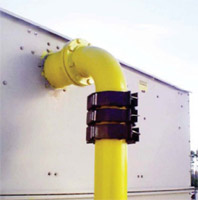
Commercial installation — New York Hilton, Chief of Operations (1 min 05 s), on the Magnetizer units fitted to the pipes feeding the hotel’s rooftop cooling tower (open on YouTube).
Commercial installation — New York Hilton, Chief Engineer (1 min 50 s), asked “How was your experience with Magnetizer in the Hilton?” (watch at 0:00 on YouTube) — “This is really good … we open chillers and we have very good condition” (watch at 0:17 on YouTube). He lists the installations: cooling tower, chiller plant, heat exchanger and the water supply in four locations (watch at 0:42 on YouTube), after one to one-and-a-half years.
Magnetizer’s 10-minute slide presentation: company background (0:25), water and fuel benefits (2:10), pools (5:10), automotive (5:40), industrial (7:25), oil line (7:55), refrigeration (8:25), agriculture (8:40). Music only, no narration — read the slides.
Dated Case Studies Reported By Magnetizer Inc.
These eight customer results were published by Magnetizer Inc. with a date and place. We do not hold the original letters, so they are labelled accordingly, carry no source link, and are kept separate from the documents above.
▸Natural gas heating — 5 buildings, Canada and USA, 1997–2002
“The average fuel consumption per degree-day with Magnetizer treatment was reduced by 17%. The estimated average savings was $20,000. This particular installation had one time cost of $6,354.”
— IBM, White Plains, New York — 300 HP natural-gas burners, tested by IBM’s service contractor
White Plains NY, 1997 · Reported by Magnetizer Inc.; original letter not on file with emediapress.
“1998/99 vs. 1996/97: 13.3% reduction in natural gas used. 1998/99 vs. 1997/98: 12.6% reduction in natural gas used (adjusted for degree days).”
Quebec City, Canada, 1999 · Reported by Magnetizer Inc.; original letter not on file with emediapress.
“The saving achieved of 8.3% based on an average energy consumption of $120,000.”
— York Holdings office building — January to June comparison over four years
Montreal, Canada, 1999 · Reported by Magnetizer Inc.; original letter not on file with emediapress.
“This comparison shows a decrease of 9.73 cubic meters per degree-day. Percentage of saving 7.5%. Our treatment is only on the heating boilers. These boilers consume 58% of the building’s total cubic meters. Therefore 7.5% divided by 58% consumption factor gives an overall 12.9% savings.”
Scarborough, Ontario, Canada, 1999 · Reported by Magnetizer Inc.; original letter not on file with emediapress.
“Multi unit apartment building powered by natural gas benefited an energy savings of 10.97% based upon available data for previous years.”
— Nexacor Realty Management
Oshawa, Ontario, Canada, 2001 · Reported by Magnetizer Inc.; original letter not on file with emediapress.
“The savings in natural gas as a result of the installation of magnets was 11.95% in 2001-2002 when compared to 2000-2001.”
— McReedy East Mine — mine-ventilation heater house, one year without and one year with magnets
Location not stated in the source; monitoring completed May 2002 · Reported by Magnetizer Inc.; original letter not on file with emediapress.
▸Fuel oil boilers — Scarsdale Manor, 1997
“Both boilers showed yearly fuel savings of 17% and 19% respectively. The yearly savings was $17,855 with cost of Magnetizer equipment of $3,716.”
— Scarsdale Manor (A.B. Wolle, Inc.) — two boilers, Bacharach Fyrite II combustion analyzer, #4 and #6 oil
Scarsdale NY, 1997 · Reported by Magnetizer Inc.; original letter not on file with emediapress.
▸Water-side scale and chemicals — University of California, 1991
“Saved $4,200 yearly on elimination of chemicals, acid treatments, drilling, and maintenance. ROI in 2 months.”
— University of California — water-side treatment
California, tested 1991 · Reported by Magnetizer Inc.; original letter not on file with emediapress.
Who Is Behind This
Magnetizer’s products came to emediapress through Garrett Shivo, CEO of Magnetizer at the time of the interview below, who has known Peter Lindemann since 1982. Garrett helped A & P Electronic Media become an authorized distributor in 2011 so that readers of Magnet Secrets could buy the real thing.
Below, Garrett explains the engine and home-water units in a 3-minute radio interview with Mike Hughes of the Product Prognosticator.
Garrett Shivo, CEO of Magnetizer, interviewed by the Product Prognosticator (3 min 13 s). In his words: the Engine Performance Maximizer “is designed to magnetize the fuel of automobiles, which gives a more complete burn, reducing emissions, increasing efficiency, and helping the overall life of the car by reducing carbon” (watch at 0:33 on YouTube), and the home water system “prevents scale from building up inside your hot water heater” (watch at 1:21 on YouTube).
Questions & Answers
▸How do I install it?
Strap the unit around the outside of the fuel line or pipe with the cable ties, which are included with every product except the Flav-O-Ring (that one simply slips over the neck of the bottle). No cutting, no tools, no wiring. In the Air Force evaluation the units were “installed to the fuel lines on all vehicles using only plastic cable ties … no lines, fuel or water, were cut or disturbed” (report p. 6). The home water unit is installed by the homeowner or with about 30 minutes of a plumber’s time (data sheet).
▸What does each unit fit?
The consumer units are sized for ordinary household pipe and vehicle fuel-line diameters: automotive fuel lines (Gasoline, Diesel), small fuel lines (Motorcycle), gas and oil supply lines (Natural Gas, LPG, Fuel Oil), a refrigerant line (Refrigerator), a main water pipe (Hard Water) and a pool return line (Pool & Spa). Larger commercial pipes are quoted as industrial systems — use the Request a quote button.
▸How soon should I see a change?
The manufacturer describes a stabilization period while old carbon or scale is cleaned out: 200–500 miles on a vehicle (report p. 23), 40 days on the Siemens boilers (letter), and about three months on the Chinese locomotive (report p. 19). The report also notes that loosened engine deposits end up in the oil, so an oil change after the first few hundred miles helps (report p. 19).
▸Gasoline or diesel — which one?
Match the unit to the fuel. The Gasoline and Diesel Performance Maximizers are the same idea sized and tuned for each fuel; the Motorcycle Energizer is the small-line version.
▸Does it need power or maintenance?
No. The magnets are permanent ceramic; there is nothing to plug in, replace or service (classic presentation, 5:09; every data sheet lists “no external power source required”).
▸What about shipping?
Shipping is calculated at checkout from your address and the items in your cart. You can add any number of different Magnetizer products to one order.
▸What results can I expect?
We cannot promise a number. The figures on this page are single tests on specific vehicles, boilers and buildings, reported by the manufacturer or its customers with their dates and linked to their sources. Your result depends on your engine or appliance, its condition, your fuel or water and the installation.
Shipping calculated at checkout. Commercial and industrial systems are quoted separately — use the Request a quote button above.
References & Documents
Every file and video cited on this page, in one place. All open in a new tab.
Documents (PDF)
Magnetizer Fuel Test Data (23 pages) — the manufacturer’s compilation of fuel-economy and emissions tests, 1989–2003; every number on this page cites a page in it
The eight dated case studies above have no source document on file and are therefore not listed here.
Fuel, energy and scale results on this page are manufacturer test data or results reported by Magnetizer Inc., each linked to its source and dated. They are not a promise of what you will get. Results vary with the vehicle, appliance, fuel, water and installation.
Like this:
LikeLoading…
Reviews
There are no reviews yet.
Only logged in customers who have purchased this product may leave a review.






















Reviews
There are no reviews yet.