Posted on — Leave a comment

2026 ESTC Panel Discussion: Free Download

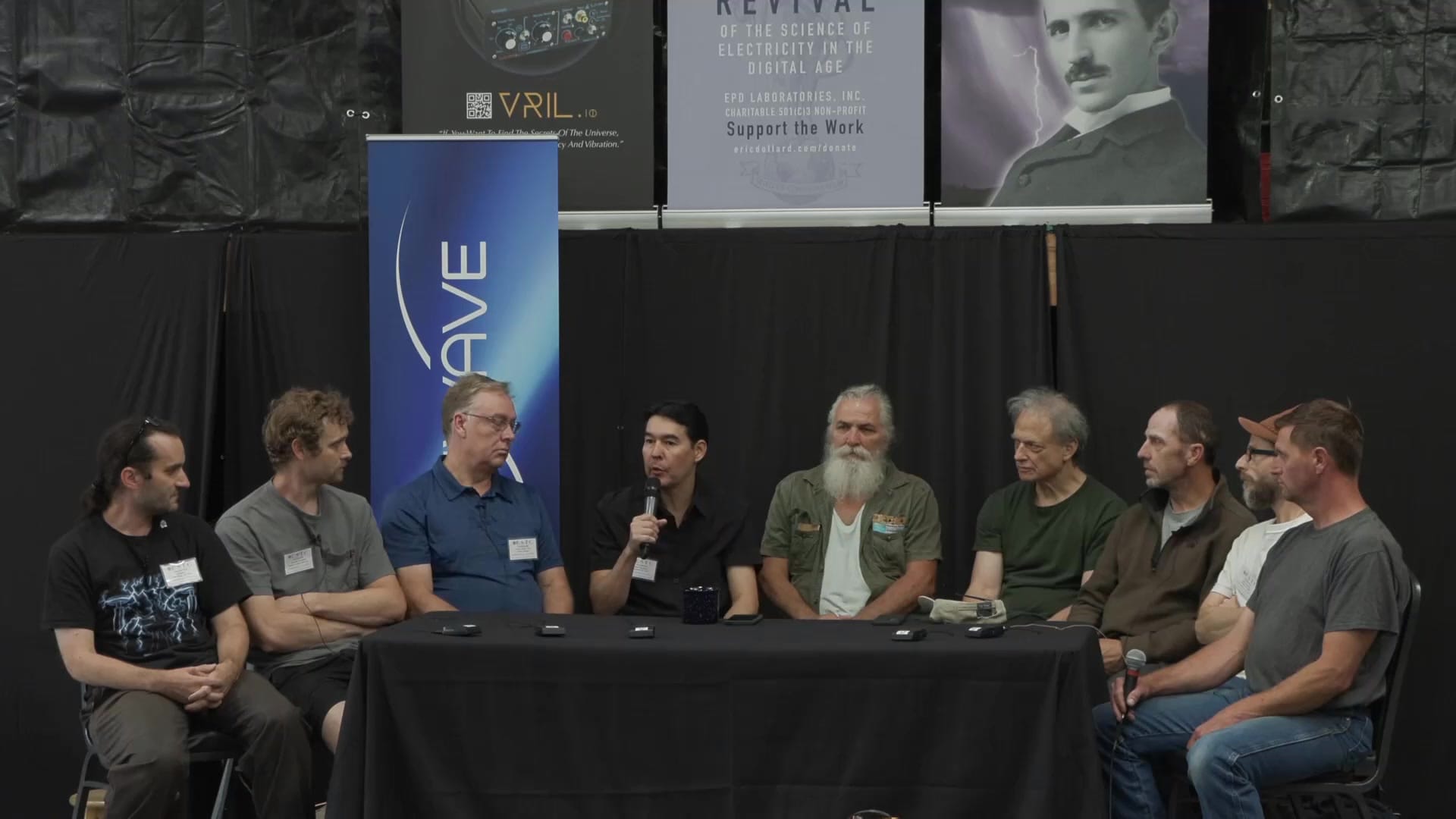
The 2026 ESTC presenters seated on stage for the closing open Q and A, moderated by Aaron Murakami

Someone watching online asked what to do when you understand the theory but do not have the tools. The answer came straight back from the stage: “Kitchen table. Seriously. Work in your living room.” That is the closing panel of the 2026 Energy Science and Technology Conference in one exchange. The full 130 minutes is out now, free to download and keep.

Aaron Murakami moderates Hakasays, Jeremiah Ferwerda, Adrian Marsh, Al Francoeur, Tom DiFerdinando, Terry McMenomy, Davy Oneness and Justin Miller. After a week of prepared talks they sit in a row and take questions from the floor and the online stream, with no slides and no script.

Get the 2026 Panel Discussion free

What you will hear

  • The coil in the luggage: Hakasays on building his demonstration coil two to four days before the conference, winding it on site, and knowing from geometry, wire and frame that it would perform before he measured it.
  • Nine pumps: Jeremiah Ferwerda on six years of prototyping, the shop, and the disk-spacing question he turns down: “we have had people try to copy and take our work.”
  • Half a mile of dead line: Justin Miller on the only cut he ever made on the 12 kV side of a transformer, how he confirmed the line was dead, and how badly his hands shook anyway.
  • Every band snowed: Al Francoeur firing his Mobius coil and finding UHF, VHF, television, AM and FM all turned to buzz.
  • Eight years off the grid: Al on the fridges, freezers, trailer and RV his system has run for over eight years, and the smart meter he refused.
  • The ether argument: Marsh and DiFerdinando on how to polarize more ether, then the real disagreement between them, which is not about the ether at all. Marsh: “The spirit is unknowable.” DiFerdinando: “If the spirit is real, it’s a part of reality.”

Where each presenter’s own talk picks up

Most of the panelists have a full 2026 presentation of their own, alone or with a partner. The panel is where you hear them argue about each other’s work; the talks are where each one shows his own. Tom DiFerdinando’s Orgone Energy came out yesterday, and Hakasays’ Build A Better Tesla Coil is out tomorrow.

The 2026 ESTC releases so far

Gangrene Energy and The Alexanderson Antenna, Eric Dollard. Onan and Dynamotor Tech, Al Francoeur. A Foundation for True Science and the free The coMra Effect, Adrian Marsh PhD. Orgone Energy, Tom DiFerdinando. And today, free, the 2026 Panel Discussion.

Hear about each release first

Energy Times readers hear about each ESTC 2026 release as it goes live, along with new books, papers and research from emediapress.com. It is free, and you can leave any time. Get Energy Times.

Get the 2026 Panel Discussion free

Aaron Murakami
Energy Science and Technology Conference · emediapress.com
Posted on — Leave a comment

Adrian Marsh’s coMra Effect Talk, Free Download: What Coherence Looks Like on Camera

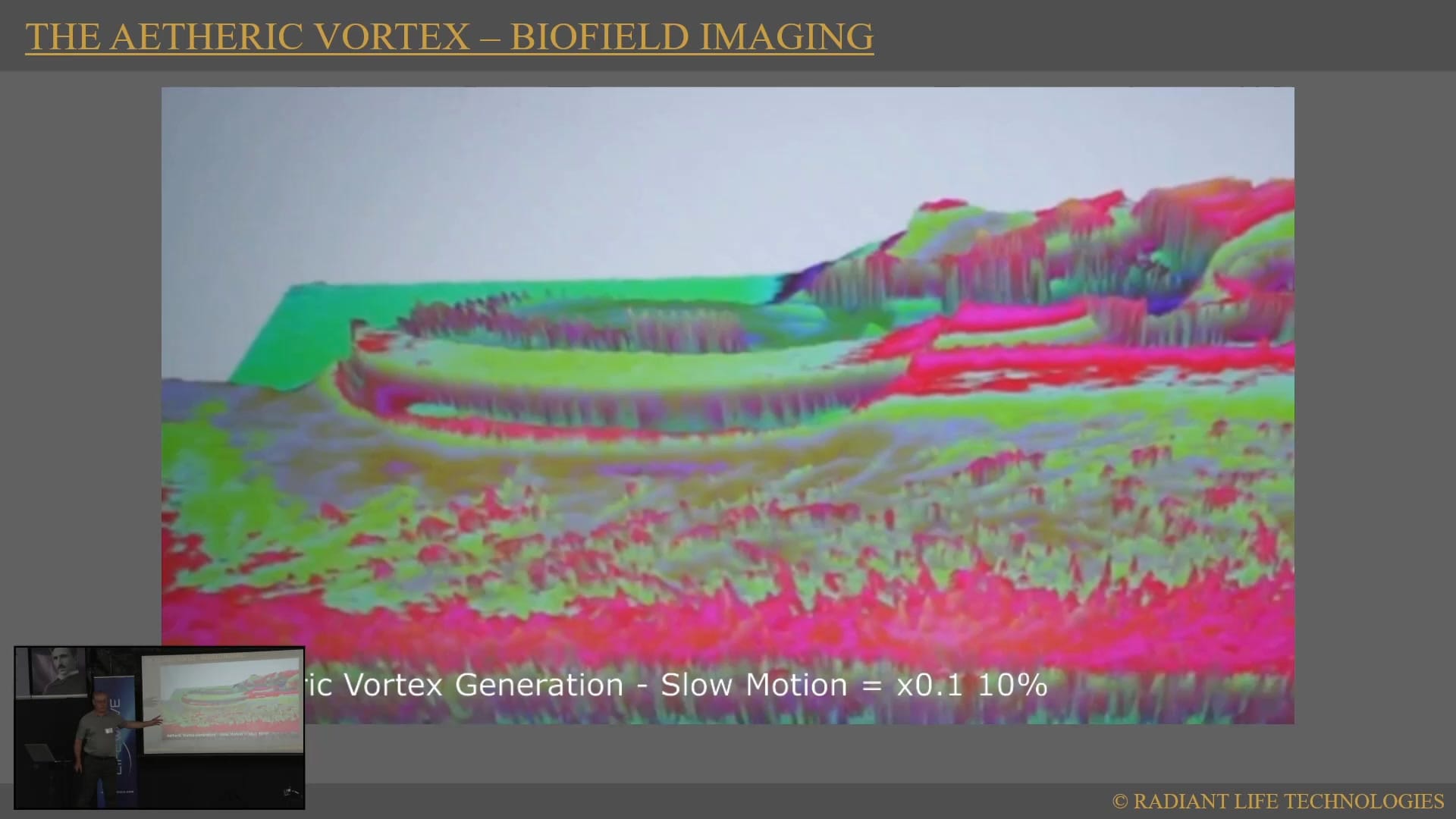
Etheric vortex biofield imaging: vortex generation shown in slow motion

Adrian Marsh’s other 2026 ESTC presentation, The coMra Effect, is out today as a free download: the full 131 minutes, yours to keep. It is the first half of a two-part argument. The second half is A Foundation for True Science, released this morning as well, and Marsh built that talk on the framework he lays out in this one.

coMra stands for Coherence Achieved Through Modulation of Radiances. Marsh, who took his PhD in physics at the Cavendish Laboratory, Cambridge, working on superconducting coherent quantum effect devices, says the three words have to be understood together: a laser, LEDs, permanent magnets and ultrasound, combined with “specific geometry, timing, and modulation,” do something as a set that none of them does alone. He spends the talk showing what he means by that, on the device and on camera.

Get The coMra Effect, the full 131-minute presentation, free

The vortex on camera

The moment to watch for is the biofield imaging footage, run at one tenth of normal speed. An early coMra device sits on the bench by itself; then it is placed on a person, and a rotating pattern Marsh calls the etheric vortex forms where the two meet. Then he says what the imaging shows when one input is taken away.

  • No LEDs, no vortex. “If you take away the LEDs, you don’t see the vortex.”
  • No magnet, no vortex. “You take away the magnetic field, you don’t see the vortex either. This is what I mean by coherence.”
  • The laser at the center. Marsh assigns each input a role: the coherent laser sets the message, the three colored LED triangles carry it, the permanent magnets contain the vortex, the ultrasound works on the physical side.
  • The geometry behind it. Three rotating triangles forming a nine-pointed star in his Toltec framework, then the same figure drawn onto the device with the laser in the middle.

Two kinds of image, kept apart

Marsh also shows a BioWell before-and-after from a coMra Pro 905 session, ten minutes apart, and he is careful to say what it is: a Kirlian-type fingertip instrument whose proprietary software renders the readings as a chakra-based picture. You see the two images, you hear how they were produced, and you hear his reading of them in the same minute of the recording. The biofield video and the BioWell graphic are different things and he treats them that way.

Where he draws the line

Near the end an audience member asks the medical question: have there been controlled trials on heart rate variability, blood pressure, physiological parameters? Marsh answers that he is not a medical doctor, that a colleague works in a clinical environment with doctors who do measure, and that the group publishes from time to time. Then: “We are not making medical claims.” What the devices are used for, and what he and others say about using them, is in the recording in their own words; this post stays on the physics and the images.

For the Tesla crowd

Coherence, Marsh says, is what he has been chasing for 30 years: in Cooper pairs moving with a lattice at Cambridge, in Tesla apparatus, and here. His matching-network analogy comes straight off the coil bench: without one, the power bounces back to the generator, and he says the same thing happens between a vibration and a being. And his line on over-unity: “True over-unity is actually inspiration. And if you want to build an over-unity machine on the bench, then model inspiration.”

Inside the 131 minutes

The Toltec framework: tree of life as the etheric spectrum, the 21 jewels of awareness, numerology as his tool for reading the device’s numbers (905, 980, 520, 375 nanometers). The slow-motion imaging. The coMra Pro in hand, its two controls and the infrared laser you can only see through a phone camera. The manual and the protocols he says were worked out empirically over 15 years of production. The Q and A: how his group developed the system, the year it took to make the first prototype, the seed-in-the-mouth question on coherence, and the medical question above.

The 2026 ESTC releases so far

Gangrene Energy, Eric Dollard, on the dirty electricity in the utility system. The Alexanderson Antenna, Eric Dollard, from the Bolinas blueprints to a radio telescope pointed into the Earth. Onan and Dynamotor Tech, Al Francoeur, a motor-generator that ran from April 17 to the solstice. And out this morning with this one, A Foundation for True Science, Marsh’s second talk, with his etheric resonator on the analyzer.

Hear about each release first

Energy Times readers hear about each ESTC 2026 release as it goes live, along with new books, papers and research from emediapress.com. It is free, and you can leave any time. Get Energy Times.

Get The coMra Effect free

Aaron Murakami
Energy Science and Technology Conference · emediapress.com