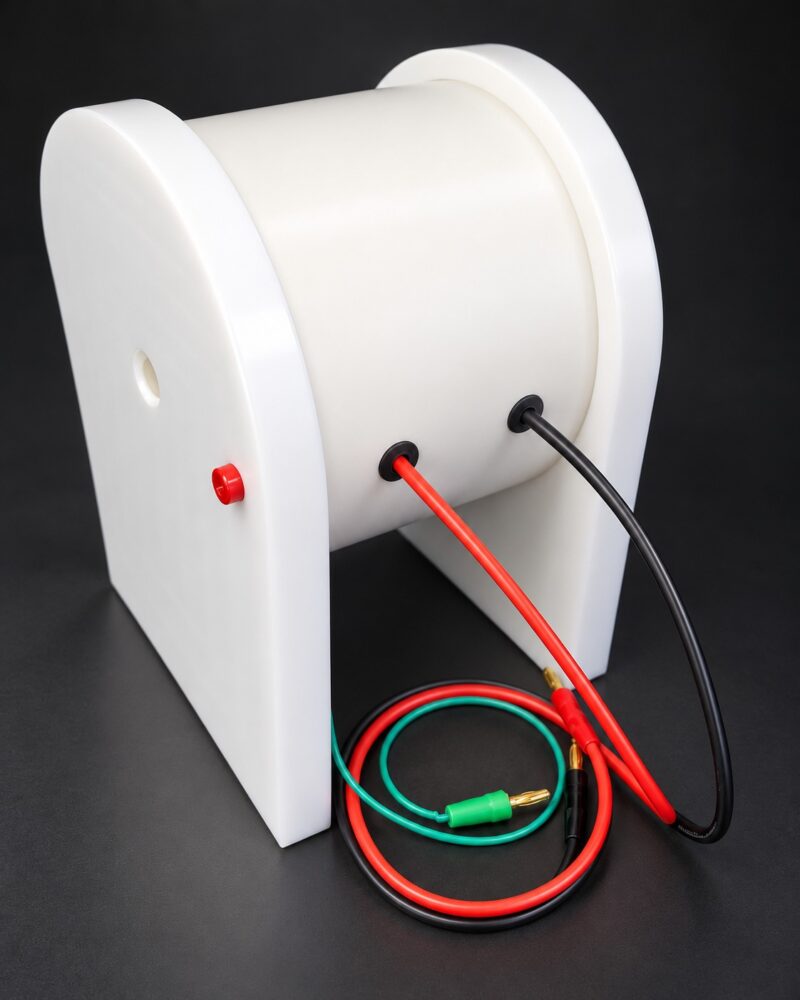
The 13th Annual Energy Science & Technology Conference sold out fast. 5 days. 15+ presenters. 23+ presentations. 11+ live demonstrations. And for the first time ever: a 2-phase AC motor allegedly built by Nikola Tesla himself on public display — linked directly to Patent No. 382,279.
You don’t have to miss any of it.
Live streaming gets you every presentation, every demo, every minute — watched from wherever you are. And right now, you can lock in the early bird price:
$197$147 — Save $50
⚠ This price goes up to $197 on April 1st. That’s not a maybe — it’s already set. Once March 31st passes, the $50 savings are gone.
This is 5 full days of content you cannot get anywhere else — live demos of technologies that most people only read about. Eric Dollard on gang green energy with a live demo. Adrian Marsh PhD demonstrating the coMra Effect. Hakasays demonstrating Tesla’s Extra Coils. Working Bourke engines. Tesla water pump. A gravity wave detector. The list goes on.
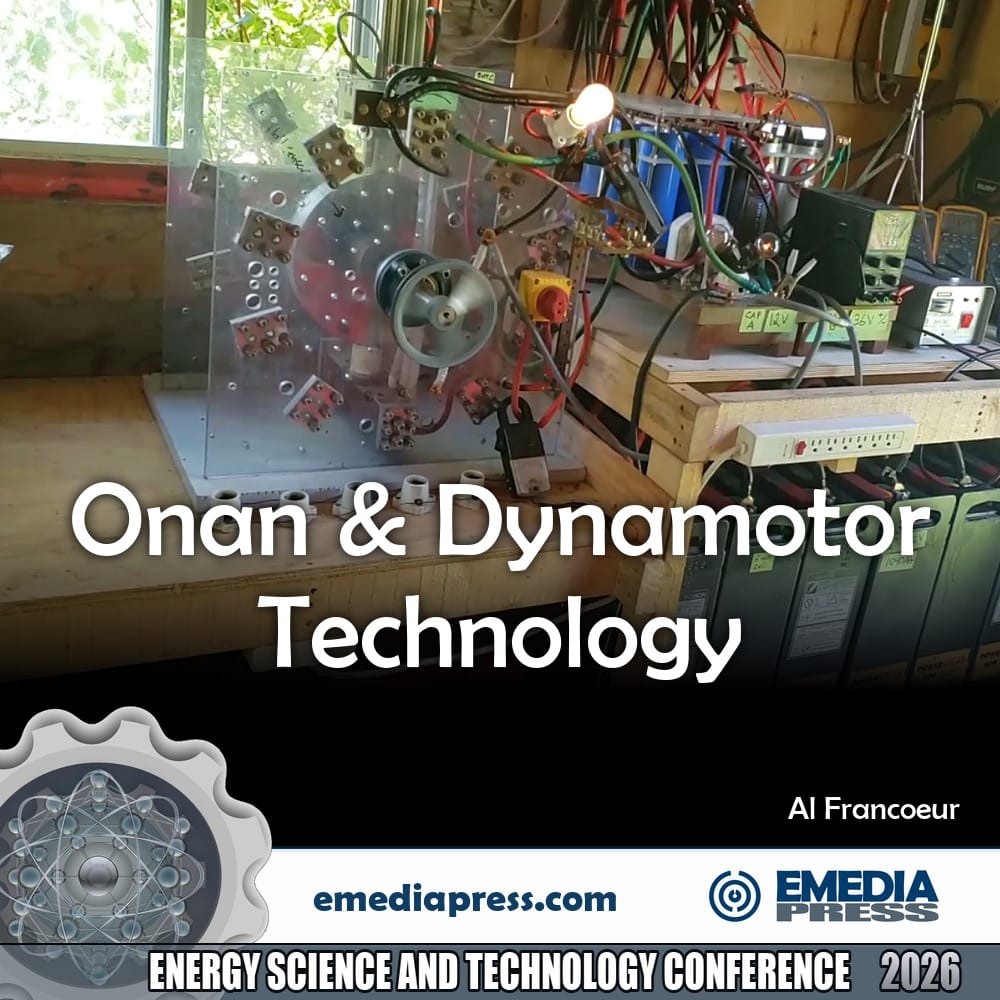
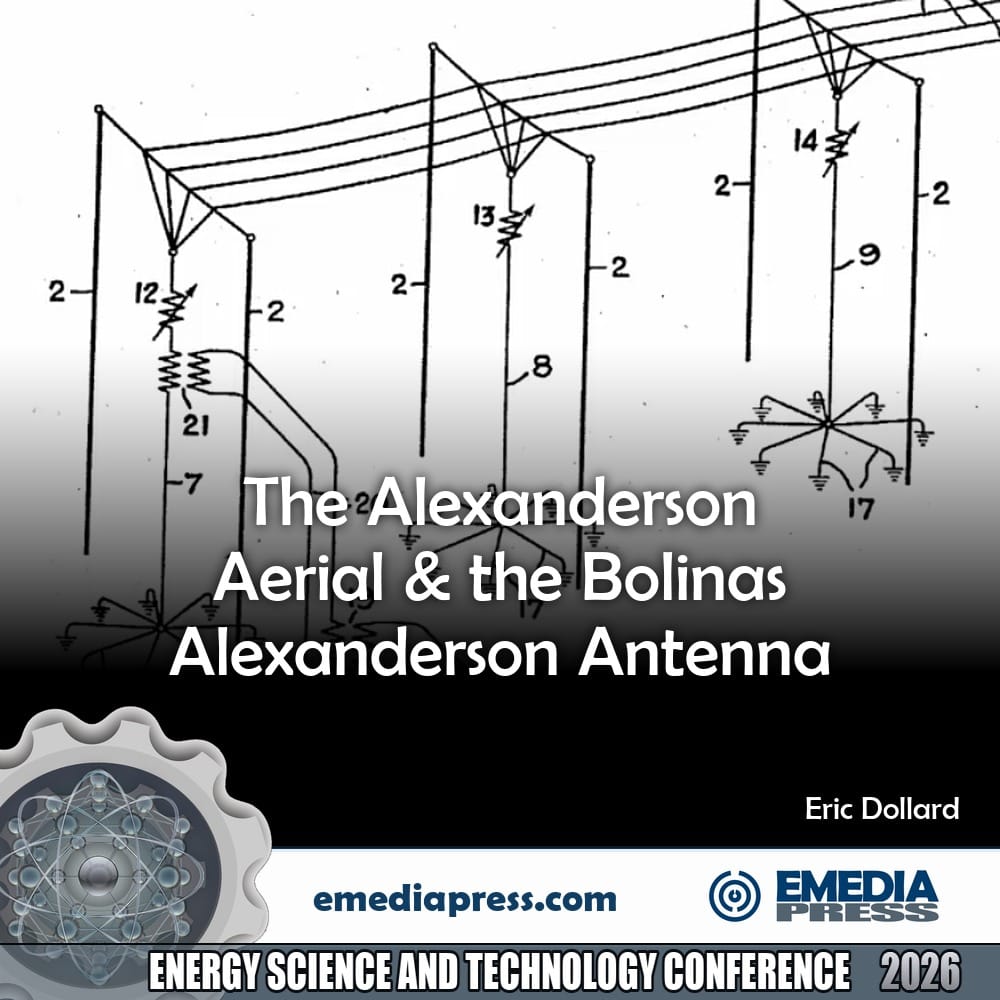
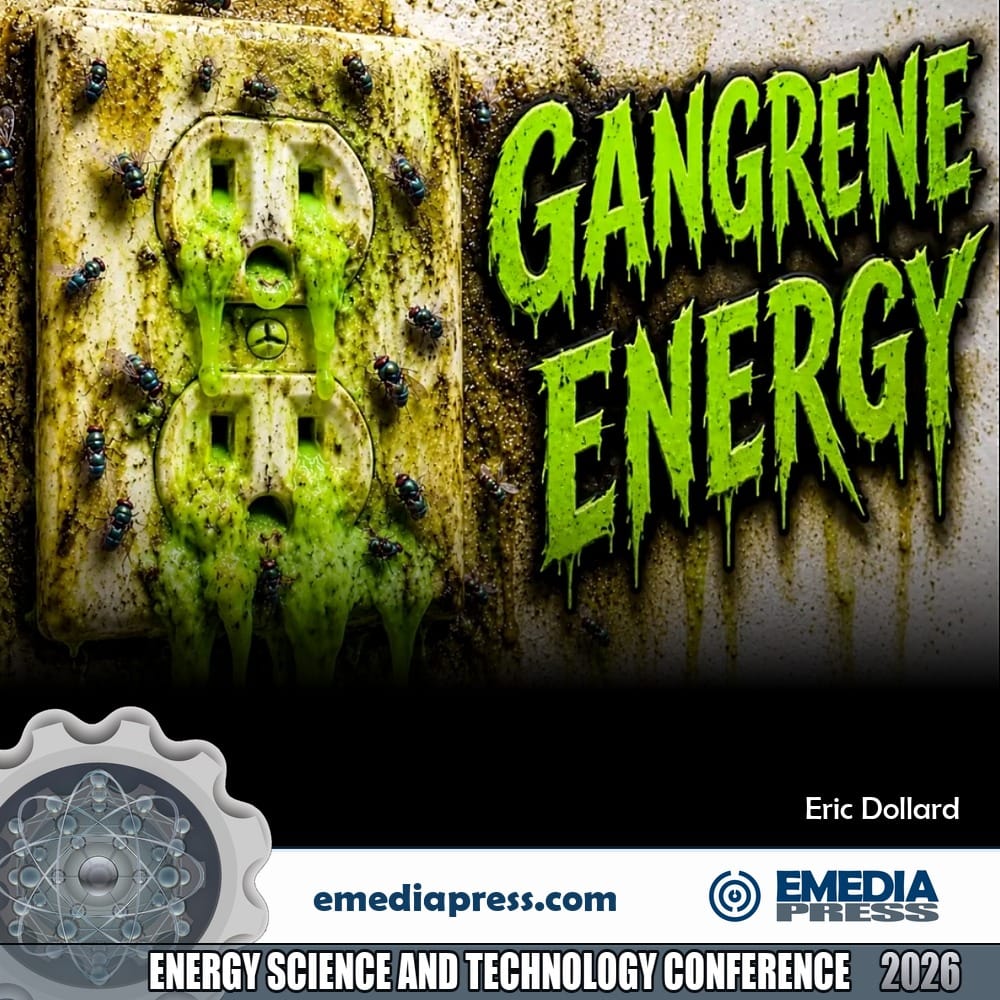
Conference highlights include: • Eric Dollard – “The Alexanderson Ariel & Bolinas Alexanderson Antenna” + “Gangrene Energy” [LIVE DEMO] • Adrian Marsh PhD – “The coMra Effect” + “A Foundation for Esoteric Science” [LIVE DEMOS] • Hakasays – “Tesla’s Extra Coils” [LIVE DEMO] • Sky Huddleston – Working Bourke Engines [LIVE DEMO] • Jeremiah Ferwerda – Tesla Water Pump + Tesla Turbine [LIVE DEMOS] • Davy Oneness – Gravity Wave Detector + Bedini B.A.S.E. Processor [LIVE DEMOS] • Al Francoeur – “The Onan and Dynamotor Technologies” • Carmen Miller – Motor allegedly built by Tesla himself [ARTIFACT ON DISPLAY] • Tom DiFerdinando – “Orgone Energy: The Motor Force of Inner and Outer Space” • Peter Lindemann – Co-presenting (see schedule for details) • …and many more
The full schedule is posted on the conference page. As usual, expect it to be tweaked here and there as we get closer to the event — stay tuned.
The seismic streaming page at EPD Laboratories just got a serious upgrade. Go check it out — it doesn’t look like anything else on the internet.
The EPD-SM1 Seismic Stream Monitor is a custom-built audio player styled after vintage broadcast equipment — complete with a live VU meter showing signal level in real time, and a full signal chain display showing the path from the antenna field through cellular uplink to the Icecast server to your monitor. Hit play and you’re listening to the electrical signals between the ionosphere and the interior of the earth, picked up by an above ground Beverage Antenna at EPD Laboratories in Tonopah, Nevada — 4,800 ft above sea level. Try out the volume slider — it’s fully interactive.
Below it sits the EPD-CR1 Earth Signals Chart Recorder — a real-time scrolling waveform display with adjustable gain (1x, 3x, 5x, 7x). This is a mock recorder for now to show the effect — we’ll be getting into logging the earth signal data and analyzing it with AI and other tools. Coming soon. Play with the gain button and experiment.
There’s also a working spectrum analyzer on the page. You can see the frequencies coming through in real time — the active frequency shows in yellow and the green trace is an RMS average over 60 seconds. Look around the 12-14 kHz range and you’ll notice consistent signals being picked up. Those are the Russian Alpha Navigation System (RSDN-20) broadcasts — a long-range military navigation network operating at approximately 11.905 kHz, 12.649 kHz, and 14.881 kHz.
The pops and clicks are lightning strikes. When those strikes produce pitches — chirps and squeaks — those are responses to lightning creating standing wave situations in the earth. More options are coming — some free and some by subscription.
Special thanks to Hakasays (who will be presenting at ESTC 2026) for streaming the earth signals live. One of his many contributions is that he pays for the cellular data plan to stream it from the shack in Tonopah to the internet. Thank you. And special thanks to Simon Davies of teslascientific.com for help in making the system look better and making the spectrum analyzer more useful.
EPD Laboratories, Inc. is a 501(c)(3) nonprofit. There’s a donation link right on the streaming page — every dollar goes directly into advancing the electrical sciences.Support EPD Laboratories 501(c)(3)
The Emediapress affiliate program pays 45% commission on every referred sale across our entire catalog — that’s over 220 books, videos, presentations, and devices.
And we just added something new: streaming tickets for ESTC 2026 are now in the affiliate program. That’s 10-15% on every streaming ticket sold through your link. The conference is sold out in person — streaming is the only way most people can attend. That’s a lot of potential referrals.
Here’s how it works: sign up for free, grab your unique affiliate link, and share it. Every sale that comes through your link earns you a commission. You can generate a custom affiliate link for any page — including the conference page. Payouts hit your PayPal automatically a few days after the end of each month. No invoicing. No chasing payments. You share, people buy, you get paid.
Quick start: Sign up at the affiliate area, then use the affiliate link generator to create your link for the ESTC conference page. Share that link on social media, forums, email, YouTube — wherever your audience is. You earn on every streaming ticket and product sale that comes through.
With the conference sold out and streaming as the only option — and early bird pricing ending March 31st — this is the best time to share your link. People are looking for a way in. Give them one and earn while you do it.
Note: The affiliate program cannot be used to get discounts on your own purchases. Commission is on referred sales only.
Here’s a new video from a recent live call featuring Eric Dollard, Adrian Marsh PhD, Hakasays, and several callers asking questions. We covered a lot of ground in this discussion – from the live earth signal reception system now streaming at epdlabs.org to the novel audio amplifier project, the legendary “Glom Locker” full of vintage surplus parts, and some fascinating observations about what’s happening with solar activity and earth signals.
Earth Signal Reception – Now Live
One of the main topics Eric covered was the seismic streaming system that’s now live. This is the culmination of over $300,000 and 10 years of infrastructure development at the EPD Laboratories facility in Nevada.
The system uses a 4,800 ft antenna section (about 5/6 of a mile) running from pole 26 to pole 49, with transmission lines going to a shack at pole 54. That’s over a mile of wire total, with two conductors – so basically double that length when you add it all up.
What you’re hearing when you tune in are the electrical signals between the ionosphere and the interior of the earth (about 5 miles underneath your feet, as Eric explains). The pops and clicks are lightning strikes. But the really interesting part is when those strikes start to make pitches – chirps and squeaks at very high frequencies that are responses to the lightning creating standing wave situations in the earth.
Eric explained that when things start getting stressed inside the earth, those pitches drop down in frequency and sound more like “breaking beer bottles” and chirping noises. You also get frequency sweeps which are waves propagating through the magnetic field of the earth. The more coherent and musical the sounds become, the more likelihood there may be seismic activity brewing – though as Eric notes, it’s more complicated than that simple correlation.
The system intercepts the electrostatic displacement current between the ionosphere and the interior of the earth through a mutual capacitance configuration. It’s a remarkable setup.
Note: you may need to set “original sound for musicians” in your audio settings because the pops and clicks can get filtered out otherwise as “interference.”
The “Glom Locker”
We also showed some footage of the famous Glom Locker – an intermodal shipping container filled with thousands of rare vacuum tubes, cases of capacitors, and all kinds of vintage surplus parts. Much of this was acquired by Steve Hills (the director of EPD Laboratories Inc) over decades in the surplus business, along with contributions from Mark McKay.
My friend Jari Karvonen spent about a week helping organize some of this during a recent trip, but we really only scratched the surface. The importance of this collection cannot be overstated – as Eric pointed out, modern components simply don’t work like the old stuff. Brand new electrolytic capacitors from top name brands had so much effective series resistance they weren’t even functioning as capacitors. The new stuff just doesn’t cut it.
When you’re building one-of-a-kind equipment like the Navy TBM transmitter setup or the earth signal amplifiers, you have to glean eBay for the last of the real components from the 50s and earlier. It’s actually cheaper in the long run, and you know it’s going to work.
The Novel Audio Amplifier Project
Eric has been developing a completely novel audio amplifier design that’s unlike anything else in the audio world. This isn’t a voltage gain amplifier like virtually everything else on the market (including all solid state amplifiers). Instead, the transformers themselves amplify – the tubes just add power.
The design extends the original Macintosh concept of equal loading in the cathode and anode with bifilar winding, taking it to multi-stage transformer configurations that are also multi-stage amplifiers. The transformers are coupled with the vacuum tubes into something like a traveling wave amplifier.
The development path goes from small triodes to 6AS7G tubes (which have high transconductance but people use them as voltage amplifiers and get nowhere), then to the Western Electric 300 type triode, and finally to the 811 and 812 power triodes for a 300 watt per channel final version.
The commercial version will be based on a Western Electric 143A theater amplifier design – we found one on eBay from Japan for $27,000, which gives you an idea of what the authentic units go for. This design uses currently available tubes like the 6SN7 and 6550.
The key innovation is focusing on eliminating intermodulation distortion rather than just harmonic distortion. As Eric explained, it’s intermodulation distortion that creates phantom signals – beat frequencies between higher frequencies that don’t actually have any real existence. That’s especially critical when amplifying earth signals where you don’t want artifacts.
Custom transformers and chokes are currently being engineered by a well-known company to go on the prototype panels I cut while I was down there. Once we have a working proof of concept, the goal is to produce a limited edition of maybe 10 rack-mount units to raise funds, then potentially set up an audio company to bring a commercial version to market.
And here’s the kicker – there won’t be a single component made in China in the whole thing. All vintage quality parts sourced from eBay.
Observations on Solar Activity and Earth Signals
One of the more sobering parts of the discussion was Eric’s observations about what’s happening with solar and earth electrical activity. Steve McGreevy and others who have monitored these signals for decades have reported that the earth just seems to be getting quieter and quieter. The solar cycles have been getting weaker and weaker, and quite possibly the next solar minimum will be the biggest dip we’ve seen since this stuff has been recorded.
Even when the earth got hit by a significant coronal mass ejection recently, nothing showed up on the antenna – normally around midnight it would go into “complete war” during such an event. So the whole sun/earth electrical system seems to be in some kind of declining phase. As Eric noted, this could be a sine wave 25,000 years in length – about one aeon. It’s happened before during things like the dark ages grand minimum.
This makes the work of capturing and recording these signals now even more important – so we have historical data for when activity eventually picks back up.
What’s Needed to Continue This Work
Eric was candid about the funding situation. About $50,000 has been used up getting to what you see here, and significant donations haven’t come in for quite a while. The next big expenses include:
Another NV Energy power connection at the mine: $15,000
Contractor to put up toll entrance cable on the right of way: $14,000
Labor costs for specialized workers to advance the projects
The donations are what keep the motor running – whether it’s big contributions like the $10,000 someone donated to buy the 5 miles of brand new copper wire, or smaller amounts that add up over time.
Every donation goes directly into furthering this work in the electrical sciences. For those who don’t have money to donate, sharing these videos and driving traffic to the websites helps us reach people who might be able to contribute.
ESTC 2026 – Meet Eric in Person
Speaking of Eric Dollard – the 13th Annual Energy Science & Technology Conference is happening June 24-28, 2026 here in Spokane, Washington. Eric is scheduled to present on “The Alexanderson Ariel & Bolinas Alexanderson Antenna” and “Gangrene Energy” (with live demo).
This is your chance to meet Eric in person, ask questions, and experience live demonstrations you won’t see anywhere else.
Only 19 in-person seats remain out of 55 total. And here’s the thing – this is the same weekend as Hoopfest (the world’s largest 3-on-3 basketball tournament), so hotels are already filling up.
Super Early Bird pricing of $347 (save $100) ends February 28th.
Other highlights include:
Adrian Marsh PhD presenting on “The coMra Effect” and “A Foundation for Esoteric Science”
Hakasays demonstrating “Tesla’s Extra Coils”
Justin Miller’s status report on the EPD Long Line Facility
Davy Oneness on gravity wave detectors and John Bedini’s B.A.S.E. processor
Carmen Miller presenting a 2-phase AC motor allegedly built by Tesla himself
23+ presentations total with 11+ live demonstrations
Long before modern electronics, inventors like James Wimshurst were exploring how nature separates charge… It was the heart of early X-ray experiments and high-voltage demonstrations—and an early example of what we might now call an open system, pulling energy dynamically from its surrounding electric field. In the 1860s, physicist Poggendorff went a step further, creating the first corona motor—a device that used ionized air, not mechanical brushes, to push a rotor. More than a century later, Oleg Jefimenko revived that work to show that electric fields themselves can do mechanical work directly, bypassing the conventional closed-circuit model of electricity. Those classic experiments are the foundation for much of today’s exploration into electrokinetic and open-energy systems. That’s the legacy our students tapped into—literally by hand—at the fair.
Designing the Demonstration
I designed and built the demonstration system with assistance from the students, prepared the Wimshurst generators, and helped set up the components for the presentation. During the setup period I spoke with teachers, students, and visitors about how the devices operate and about their significance in exploring open-system physics—where charge, field, and motion interact continuously with the environment. I explained how the work of pioneers such as Oleg Jefimenko, John G. Trump, and later experimenters like Eric Dollard and Chris Carson helped extend this field of study. Carson’s self-sustaining high-voltage electrostatic rotary converter, inspired by Trump’s MIT research, demonstrated the same basic principle: energy can circulate through the electric field itself rather than being consumed. We also discussed the remarkable Testatika machine built by Paul Baumann of the Methernitha Christian Community in Switzerland—a large Wimshurst-type generator said to power their facilities through similar electrostatic processes. While I handled much of the technical design and preparation, the students themselves conducted the official presentation before the judges, in keeping with the competition’s rules. Their confidence and understanding showed that they truly grasped what they were demonstrating.
Building the Machines
We used two Wimshurst generators: one commercial unit and one that I constructed from locally sourced materials—polycarbonate discs, aluminum sectors, brass combs, and Leyden jars made from plastic tubing and foil. Both produced visible sparks several centimeters long. For the second exhibit, we built a corona motor using an empty soda can as the rotor. The can’s rim had several tiny tangential holes sanded to bright aluminum, mounted on a stainless-steel marinade-injector needle pivot connected to one of the Wimshurst terminals. Opposite the can, a sharp sewing needle, connected to the other terminal, was aimed just off tangent to the can’s surface. When the Wimshurst machine spun up, faint bluish plumes of corona discharge arced from the sewing needle toward the can. The invisible ion wind pushed air along the can’s surface, producing pure electrostatic thrust. The can began to rotate—first hesitantly, then faster and smoother—powered entirely by electric-field interactions. No magnets. No moving coils. Just field, air, and geometry.
The Demonstration
During the judging, Emmanuel, Sheenaia, and Vivian operated the Wimshurst machines and demonstrated the corona motor to the panel. Two neon bulbs connected to the terminals flickered orange with each charge pulse, showing the potential difference across the Leyden jars. As the can rotated, they brought it near an aluminum backplate. Immediately, the can was attracted to the plate—a vivid display of electric-field interaction—and the corona brightened to a deep violet glow. The audience could see and hear electricity in motion. Teachers leaned in, students gasped, and judges nodded appreciatively. The excitement in the room was palpable as they witnessed a nineteenth-century principle come alive again through twenty-first-century craftsmanship.
Beyond the Sparks
What made the project stand out was that it revealed open-system behavior in a tangible, student-friendly form. Unlike ordinary circuits that consume stored charge, the Wimshurst and corona motor are self-recharging systems that draw and separate charge directly from their surroundings. They invite students to think beyond conventional energy models—to ask where the “push” really comes from, and how fields themselves can store and exchange energy dynamically. Every hiss from the corona and every pulse from the Leyden jars reminded the students that the universe is not inert—it is an active electrical medium waiting to be understood.
Inspiring the Next Generation
When our team’s name was announced for 2nd Place, the students’ excitement said it all. Dozens of others gathered afterward to ask how to build their own machines. Teachers expressed interest in future workshops, and local officials congratulated the group for reviving curiosity about classic high-voltage experiments. For me, the real reward was watching young people realize that science is still full of mysteries worth exploring. You could see it in their expressions—the moment they recognized that even a simple hand-cranked machine could unlock questions about the nature of energy itself.
Looking Ahead
We plan to expand our work with larger electrostatic systems and explore continuous-operation versions powered by modern high-voltage supplies. There is a vast field of discovery waiting in the interplay between electrostatics, induction, and resonance—territory that pioneers like Jefimenko, Trump, Dollard, Carson, and Baumann have already begun to map. Alternative-energy research doesn’t always require exotic materials or expensive laboratories. Sometimes it just needs a soda can, a crank, and the courage to look at electricity differently.
Epilogue
The Misamis Oriental Science Fair was more than a competition—it was proof that when curiosity meets craftsmanship, even century-old ideas can feel revolutionary again. Our students demonstrated that high-voltage electrostatics, far from being obsolete, can still capture imaginations and open minds to the broader possibilities of open-system energy research. As we packed up that day, a few last sparks jumped between the terminals of the Wimshurst machine—small, fleeting, and beautiful, like the moment of discovery that started them.
About the Author
Ed Becnel is a retired software engineer who earned a Bachelor of Science degree in Electrical Engineering. He has been keenly interested and involved in alternative-energy and overunity research for many years. Originally from Louisiana, Ed relocated to the Philippines in 2021, where he continues to mentor young students in experimental science and engineering. He is currently collaborating with colleagues in the U.S. on various projects related to alternative energy production and utilizationr.
Author: Ed Becnel Mentor, Misamis Oriental National High School With students Emmanuel Bongcas, Sheenaia Cabanig, and Vivian Aboc Tagoloan, Misamis Oriental – October 2025
Caleb Collier, a Spokane local and Marine Veteran, was kind enough to have me on his Libertarian podcast so I could share some of the work that I’ve been involved with. He took a tour at my shop to check out the MWO, Tesla Turbine, water purification machine and other technologies – due to time constrains, we could only cover a few topics, which I hope you’ll enjoy.
Carlos F. Benitez, a Mexican civil engineer from Guadalajara, filed a series of patents in the 1910s that described self-sustaining electrical systems capable of running motors and lights indefinitely while recharging their own batteries—and producing surplus energy. A century later, these ideas remain controversial, but they’ve influenced modern free-energy work, especially John Bedini’s SG (School Girl) systems. Whether Bedini knew about Benitez early on or not, the principles are essentially identical: discharge one battery to pulse another with radiant spikes, yielding more than what left the input. In this post, I’ll break down Benitez’s patents, compare them to Bedini SG, and explain why low-impedance batteries can make results easier to achieve. I’ve spent years digging into this, from witnessing Paul Babcock’s shop demos to running my own Bedini setups.
The Bedini SG is a simple circuit: a battery charges a coil, the switch turns off, and the collapse spike pulses another battery. Scaled right (e.g., with big cell tower batteries and a 10-coiler), tests around 2004 by Bedini and Peter Lindemann showed 500% more work provided to real loads on the output batteries compared to what left the input batteries. Experimenters have had mixed results, often due to high-impedance batteries or poor switching. Of course, plenty of folks have pondered motor-generator setups that self-charge—sounds crazy, but utilizing certain principles, there have been many successes, and none of it violates any laws of thermodynamics.
Benitez iterated from basic commutator switching to his ultimate design with a Poulsen arc and mercury vapor rectifiers (MVRs), pulsing DC at 50–60 Hz envelopes containing ringing from the LC tank. That ringing—radiant spikes—overcharges the idle battery. MVRs shine here: virtually no voltage drop and ultra-fast recovery, outpacing even SiC diodes.
Low-impedance batteries help because these impulses dissipate in resistance. For lead-acid, starters have lower impedance (for high bursts) compared to deep cycles (higher for sustained low current). Marine batteries are the worst case—they try to be both starter and deep cycle but never work right. Lithium iron phosphate batteries seem even better because their impedance is so low it’s hard to measure—this is what Paul Babcock found with the successes he demonstrated in his home shop that I witnessed on multiple occasions. It may make results easier, but it’s not the only factor.
Bedini wasn’t only for long swaps; short/high-freq swaps work too. Fast switching intervals runs on surface charge (that “electrostatic fluffy charge on top”), not deep capacity so the batteries don’t run down. John Bedini told me about his intention to start experimenting with high-frequency battery swapping (e.g., 30 kHz) using PIC chips for LEDs and small models, likely with LiFePO4 like 18650s—but he passed within a year or so of looking into doing that.
Benitez’s system needs a fresh look—it’s been hashed out on my forums (energeticforum.com and energyscienceforum.com), which are updated and blazing fast now. They need a little maintenance: I’ll scrub the membership list soon and automate sign-ups (manual process was too time-intensive to keep spammers out). More positive results came from those threads than anywhere else, thanks to authoritative experts like John Bedini, Peter Lindemann, and Eric Dollard personally contributing in mass abundance—a treasure trove they didn’t share much elsewhere.
Peter Lindemann’s 2018 presentation is a great intro (available at Self-Recharging Battery Supply of Carlos F. Benitez). You can start with Benitez’s earliest method (simple commutator) and scale to the full Poulsen arc/MVR setup—post your builds in energeticforum.com to keep the momentum going.
Benitez’s Complete Patent List (Including the Unrelated Fluid Motor)
Benitez filed seven patents (one U.S., two French, four British) from 1908–1918. The electrical ones (1913–1918) build from basic oscillations to automated self-runners. The 1908 fluid motor is mechanical and unrelated—included for completeness. All are public domain; patent numbers link to Espacenet.
Reciprocating piston motor for motive fluids (steam/air) with direct piston-valve actuation for efficient admission/exhaust. Convertible modes; no electrical tie-in.
New Process for the Generation of Electrical Energy
Ultimate: Dual-battery with clock-solenoid switching; motor-alternator feeds Poulsen arc/condenser tank; MVRs rectify ringing to overcharge.
Bedini SG vs. Benitez: The Solid-State Evolution
Bedini SG and Benitez share the same principle: discharge one battery to pulse another with radiant spikes, yielding more than what left the input. Bedini simplified it for modern parts; Benitez used mechanical/early vacuum tech.
Mechanical commutator (early) or clock-solenoids (hourly in GB121561A).
Spike Generation
Inductive collapse.
Poulsen arc chops alternator AC → LC tank ringing (50–60 Hz envelope + kHz ringing).
Results
500% more work to real loads on output batteries (Bedini/Lindemann 2004 tests with cell tower batteries/10-coiler); mixed for small setups.
“Excess electrical energy” (GB121561A); overcharges idle battery while running loads.
Load
Often self-contained (coil as “load”); mechanical work on the shaft for turning fans or a generator for more net electrical gain.
Motors/lights via terminals (40–41); surplus for tools/industry.
Batteries
Low-impedance key (starters lower than deep cycles; LiFePO4 even better per Babcock).
Galvanic (lead-acid implied); modern low-ESR helps.
Note on Capacitors
Benitez used “condensers” (1910s term) and in FR20076E mentioned “electrolytic devices” for structural improvements — but never explicitly “electrolytic capacitor.” The high-voltage self-recharge effect I’ve empirically verified (50–95% voltage rebound post-short) is almost exclusively seen in electrolytic capacitors (aluminum oxide dielectric). This may not be related to what Benitez was doing, but you should know about this. I discovered this effect on my own for the first time around 2002 with a 1200V 0.1uF AC capacitor from a microwave, charged via Bedini SG made from a Sony Capstan (reel to reel) motor. I found that by charging the capacitors with high voltage pulses—whether it was 100V or 10,000V—it changed the properties in the capacitor to act like an electret, where it retained a permanent type of ability to recharge almost all the way back up to the top of where I was charging it. It reached 100V, a neon bulb triggered an SCR to discharge to another battery—and after conditioning, it self-charged to nearly 100V without input. I did this with canister electrolytics charged by oscillating high-frequency ignition coil output, conditioning them to self-charge and self-run the oscillator. My 2007 demo ran indefinitely on two conditioned 33,000 µF electrolytics at 0.6V — proof this radiant “memory” is dielectric-specific and possible that this is one of several ways that Benitez’s system worked even if he didn’t understand that principle. Video of this self-running oscillator is down below.
Low-Impedance Batteries: Why They Help
These spikes are high voltage, low current, radiant impulses. Impedance kills them:
Lead-Acid: Starters have lower impedance (for high bursts) vs. deep cycles (higher for sustained low current).
Marine Batteries: Worst—try to be both starter/deep cycle but never work right.
LiFePO4: Near-zero impedance—Babcock’s demos I saw ran forever on them. May make results easier.
Dive Deeper: Forums, Resources, and Build Plans
Discuss Benitez on my forums—more positive results there than anywhere else, thanks to experts like John Bedini, Peter Lindemann, and Eric Dollard personally contributing in mass abundance—a treasure trove they didn’t share much elsewhere:
For Bedini SG mastery, get the Bedini SG Trilogy—still the most authoritative resource based on years of experience personally working with John Bedini.
You can start with Benitez’s earliest method (simple commutator) and scale to the full Poulsen arc/MVR setup—post your builds in energeticforum.com to keep the momentum going.
Here’s the old self-running Bedini oscillator video from around 2007-2008:
Showing how an AM radio reception is boosted by pulling the signal out of the Earth and how a real AM radio with a Tesla Coil inside is what is needed. The modern phony AM radios without real receiving coils are at a disadvantage. Also discussing the grounding system and the future plans for the loop antenna to monitor the Earth’s magnetic field and more.
What if the key to unlimited, clean and free energy has been within reach for decades – Free Energy Research – have you seen it? In this blog post, we’ll explore a captivating 1987 video featuring Peter Lindemann, Eric Dollard, and the Borderland Sciences Research Foundation (BSRF) crew as they dive into groundbreaking technologies. Recorded in a Santa Barbara, California lab, this VHS gem showcases a variety of experiments—some directly tied to free energy, others part of the BSRF lab’s broader research efforts. The lab’s work carries historical significance, influencing modern energy research and offering hope for sustainable solutions to today’s global challenges.
The BSRF Crew and Their Mission
In 1987, a team of visionary researchers, including Peter Lindemann, Eric Dollard, Michael Knox, Chris Carson, and Tom Brown, united under the BSRF banner. Their mission was to push the boundaries of energy science while building a community of innovators. While free energy—abundant, sustainable power—was a key focus, the video also highlights diverse R&D experiments. This collective effort not only advanced alternative science but also fostered collaboration that continues to inspire researchers exploring unconventional energy solutions.
Electricity Unveiled: Magnetism and Dielectricity
Eric Dollard begins by redefining electricity as an interplay of magnetism and dielectricity. Magnetism, tied to decay and heat, is familiar, but dielectricity—linked to the elusive “ether”—is the hidden force behind free energy. This perspective challenges conventional physics, opening new research paths into energy’s fundamental nature. Dollard’s insights lay the groundwork for the experiments that follow, merging foundational science with revolutionary potential.
Mind-Blowing Demonstrations
The video features stunning experiments, some tied to free energy, others reflecting broader R&D:
Cosmid Induction Generator: Dollard demonstrates how magnetic induction generates electromotive force—a core concept in energy production. These experiments, even when not directly linked to free energy, deepen our understanding of electromagnetic phenomena and their potential applications.
AC Faraday Homopolar Generator: A twist on Faraday’s 1831 design, this generator produces alternating current (AC), a rare feat for homopolar devices. It could inspire innovative designs in renewable energy technologies.
These demos showcase the team’s ingenuity across a wide scientific scope.
The Rotary Parametric Transformer: Efficiency Redefined
Peter Lindemann presents the Rotary Parametric Transformer, built by Michael Knox with Dollard’s input. This variable reluctance device appears to exceed 100% efficiency, challenging energy principles:
Total Efficiency: Includes all inputs and outputs, typically under 100% due to losses.
Working Efficiency: Excludes losses like windage, achieving outputs like 108% in tests.
While not purely “free energy,” it hints at anti-thermodynamic possibilities and potential applications in enhancing modern energy system efficiency.
Homopolar Generator: From DC to AC
Revisiting Faraday’s homopolar generator (typically DC), the team creates an AC version using a spinning disc with magnets and strategic brushes. This breakthrough addresses conversion challenges, aligning with free energy goals while showcasing broader innovation. Such advancements could lead to more efficient energy converters in renewable technologies.
Dielectricity and Transient Wonders
Dollard explores dielectricity with Tesla coil experiments, revealing:
Burning Patterns in Wood: High-voltage transients etch organic patterns, linking electricity to nature’s archetypes.
Light Bulb Phenomena: Bulbs glow with star-like formations in dielectric fields, hinting at energy-to-matter connections.
These visually stunning demos highlight dielectricity’s role in free energy and its broader scientific and aesthetic significance.
Why This Matters Today
This 1987 footage isn’t just a relic—it’s a call to action. While some experiments diverge from free energy, they reflect the BSRF lab’s fearless exploration, urging us to rethink energy amid today’s urgent global challenges. Their work remains a beacon for those seeking alternative solutions to power our future sustainably.
Support the Research
To advance this legacy, consider donating to EPD Laboratories, Inc., a 501(c)(3) nonprofit supporting Eric Dollard’s efforts in electrical sciences. Visit ericpdollard.com/donate.