Carlos F. Benitez, a Mexican civil engineer from Guadalajara, filed a series of patents in the 1910s that described self-sustaining electrical systems capable of running motors and lights indefinitely while recharging their own batteries—and producing surplus energy. A century later, these ideas remain controversial, but they’ve influenced modern free-energy work, especially John Bedini’s SG (School Girl) systems. Whether Bedini knew about Benitez early on or not, the principles are essentially identical: discharge one battery to pulse another with radiant spikes, yielding more than what left the input. In this post, I’ll break down Benitez’s patents, compare them to Bedini SG, and explain why low-impedance batteries can make results easier to achieve. I’ve spent years digging into this, from witnessing Paul Babcock’s shop demos to running my own Bedini setups.
The Bedini SG is a simple circuit: a battery charges a coil, the switch turns off, and the collapse spike pulses another battery. Scaled right (e.g., with big cell tower batteries and a 10-coiler), tests around 2004 by Bedini and Peter Lindemann showed 500% more work provided to real loads on the output batteries compared to what left the input batteries. Experimenters have had mixed results, often due to high-impedance batteries or poor switching. Of course, plenty of folks have pondered motor-generator setups that self-charge—sounds crazy, but utilizing certain principles, there have been many successes, and none of it violates any laws of thermodynamics.
Benitez iterated from basic commutator switching to his ultimate design with a Poulsen arc and mercury vapor rectifiers (MVRs), pulsing DC at 50–60 Hz envelopes containing ringing from the LC tank. That ringing—radiant spikes—overcharges the idle battery. MVRs shine here: virtually no voltage drop and ultra-fast recovery, outpacing even SiC diodes.
Low-impedance batteries help because these impulses dissipate in resistance. For lead-acid, starters have lower impedance (for high bursts) compared to deep cycles (higher for sustained low current). Marine batteries are the worst case—they try to be both starter and deep cycle but never work right. Lithium iron phosphate batteries seem even better because their impedance is so low it’s hard to measure—this is what Paul Babcock found with the successes he demonstrated in his home shop that I witnessed on multiple occasions. It may make results easier, but it’s not the only factor.
Bedini wasn’t only for long swaps; short/high-freq swaps work too. Fast switching intervals runs on surface charge (that “electrostatic fluffy charge on top”), not deep capacity so the batteries don’t run down. John Bedini told me about his intention to start experimenting with high-frequency battery swapping (e.g., 30 kHz) using PIC chips for LEDs and small models, likely with LiFePO4 like 18650s—but he passed within a year or so of looking into doing that.
Benitez’s system needs a fresh look—it’s been hashed out on my forums (energeticforum.com and energyscienceforum.com), which are updated and blazing fast now. They need a little maintenance: I’ll scrub the membership list soon and automate sign-ups (manual process was too time-intensive to keep spammers out). More positive results came from those threads than anywhere else, thanks to authoritative experts like John Bedini, Peter Lindemann, and Eric Dollard personally contributing in mass abundance—a treasure trove they didn’t share much elsewhere.
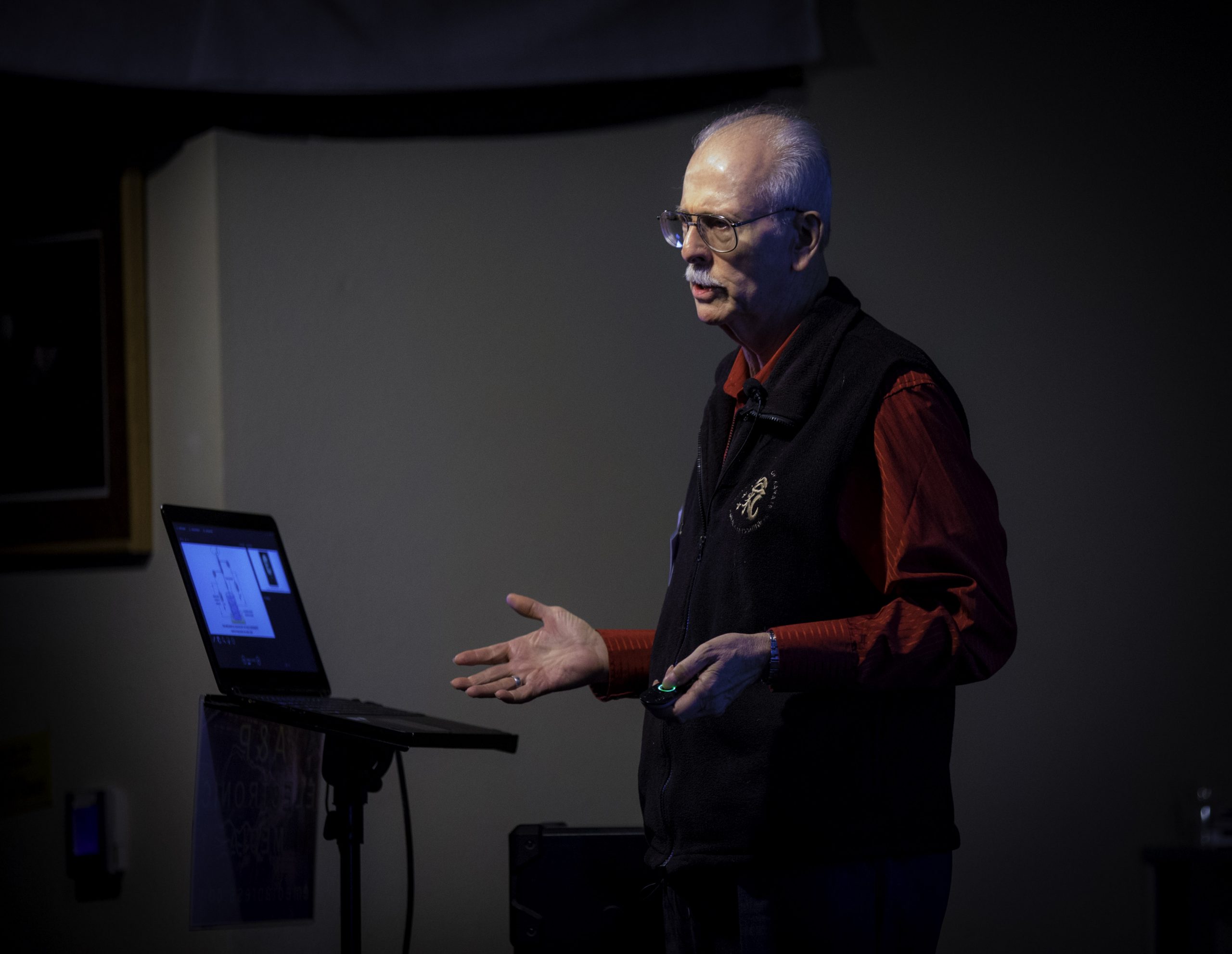
Peter Lindemann’s 2018 presentation is a great intro (available at Self-Recharging Battery Supply of Carlos F. Benitez). You can start with Benitez’s earliest method (simple commutator) and scale to the full Poulsen arc/MVR setup—post your builds in energeticforum.com to keep the momentum going.
Benitez’s Complete Patent List (Including the Unrelated Fluid Motor)
Benitez filed seven patents (one U.S., two French, four British) from 1908–1918. The electrical ones (1913–1918) build from basic oscillations to automated self-runners. The 1908 fluid motor is mechanical and unrelated—included for completeness. All are public domain; patent numbers link to Espacenet.
| File/Grant Date | Patent Number | Title | Summary |
|---|---|---|---|
| Aug 13, 1908 / Oct 4, 1910 | US971517A | Fluid-Motor | Reciprocating piston motor for motive fluids (steam/air) with direct piston-valve actuation for efficient admission/exhaust. Convertible modes; no electrical tie-in. |
| Aug 28, 1913 / Jul 4, 1914 | FR474690A | New Process for the Production of Electric Currents | Foundational oscillatory circuit: Induction coil interrupts DC to excite secondary, charging capacitors resonantly without vapor converters. |
| Jul 28, 1914 / May 13, 1915 | GB17811A | System for the Generation of Electric Currents | Rotary commutator switches capacitor banks through induction coil; secondary pulses charge auxiliaries and self-drive motor. |
| Jul 28, 1914 (Add.) / Aug 19, 1915 | GB5591A | System for the Generation of Electric Currents (Addition to GB17811A) | Refines feedback: Direct secondary-to-primary via transformers; sequenced discharges for surplus energy. |
| Jul 4, 1914 (Add.) / Mar 22, 1916 | FR20076E | New Process for the Production of Electric Currents (Addition to FR474690A) | Enhances electrolytic capacitors for high-frequency resonance and impedance compensation. |
| Jul 28, 1914 / Aug 17, 1916 | GB14311A | System for the Generation of Electric Currents | Battery integration: Reciprocal series/parallel charging via primaries, condensers, and spark gaps. |
| Apr 10, 1918 / Dec 24, 1918 | GB121561A | New Process for the Generation of Electrical Energy | Ultimate: Dual-battery with clock-solenoid switching; motor-alternator feeds Poulsen arc/condenser tank; MVRs rectify ringing to overcharge. |
Bedini SG vs. Benitez: The Solid-State Evolution
Bedini SG and Benitez share the same principle: discharge one battery to pulse another with radiant spikes, yielding more than what left the input. Bedini simplified it for modern parts; Benitez used mechanical/early vacuum tech.
| Aspect | Bedini SG | Benitez System |
|---|---|---|
| Core Action | Battery charges coil; switch off → collapse spike pulses secondary battery. | Active battery powers motor/alternator → coil/arc collapse → ringing spike pulses idle battery. |
| Switching | Solid-state transistor (e.g., 2N3055); timed swaps. | Mechanical commutator (early) or clock-solenoids (hourly in GB121561A). |
| Spike Generation | Inductive collapse. | Poulsen arc chops alternator AC → LC tank ringing (50–60 Hz envelope + kHz ringing). |
| Results | 500% more work to real loads on output batteries (Bedini/Lindemann 2004 tests with cell tower batteries/10-coiler); mixed for small setups. | “Excess electrical energy” (GB121561A); overcharges idle battery while running loads. |
| Load | Often self-contained (coil as “load”); mechanical work on the shaft for turning fans or a generator for more net electrical gain. | Motors/lights via terminals (40–41); surplus for tools/industry. |
| Batteries | Low-impedance key (starters lower than deep cycles; LiFePO4 even better per Babcock). | Galvanic (lead-acid implied); modern low-ESR helps. |
Note on Capacitors
Benitez used “condensers” (1910s term) and in FR20076E mentioned “electrolytic devices” for structural improvements — but never explicitly “electrolytic capacitor.” The high-voltage self-recharge effect I’ve empirically verified (50–95% voltage rebound post-short) is almost exclusively seen in electrolytic capacitors (aluminum oxide dielectric). This may not be related to what Benitez was doing, but you should know about this. I discovered this effect on my own for the first time around 2002 with a 1200V 0.1uF AC capacitor from a microwave, charged via Bedini SG made from a Sony Capstan (reel to reel) motor. I found that by charging the capacitors with high voltage pulses—whether it was 100V or 10,000V—it changed the properties in the capacitor to act like an electret, where it retained a permanent type of ability to recharge almost all the way back up to the top of where I was charging it. It reached 100V, a neon bulb triggered an SCR to discharge to another battery—and after conditioning, it self-charged to nearly 100V without input. I did this with canister electrolytics charged by oscillating high-frequency ignition coil output, conditioning them to self-charge and self-run the oscillator. My 2007 demo ran indefinitely on two conditioned 33,000 µF electrolytics at 0.6V — proof this radiant “memory” is dielectric-specific and possible that this is one of several ways that Benitez’s system worked even if he didn’t understand that principle. Video of this self-running oscillator is down below.
Low-Impedance Batteries: Why They Help
These spikes are high voltage, low current, radiant impulses. Impedance kills them:
- Lead-Acid: Starters have lower impedance (for high bursts) vs. deep cycles (higher for sustained low current).
- Marine Batteries: Worst—try to be both starter/deep cycle but never work right.
- LiFePO4: Near-zero impedance—Babcock’s demos I saw ran forever on them. May make results easier.
Dive Deeper: Forums, Resources, and Build Plans
Discuss Benitez on my forums—more positive results there than anywhere else, thanks to experts like John Bedini, Peter Lindemann, and Eric Dollard personally contributing in mass abundance—a treasure trove they didn’t share much elsewhere:
- EnergeticForum.com: Carlos F. Benitez Thread (2010–ongoing; diagrams, replications).
- EnergeticForum.com: Tesla Switch (Benitez Variant) (2008–ongoing; Brandt/Bedini ties).
- EnergyScienceForum.com: Tesla 4-Battery Switch (2017; Benitez references).
- EnergyScienceForum.com: Bedini SG Beyond Handbook (2016; Benitez comparisons).
Peter’s presentation: Self-Recharging Battery Supply of Carlos F. Benitez (great starter).
For Bedini SG mastery, get the Bedini SG Trilogy —still the most authoritative resource based on years of experience personally working with John Bedini.
You can start with Benitez’s earliest method (simple commutator) and scale to the full Poulsen arc/MVR setup—post your builds in energeticforum.com to keep the momentum going.
Here’s the old self-running Bedini oscillator video from around 2007-2008: