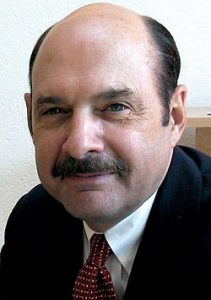
John Petersen, two times runner up for Secretary of the Navy is one of the most informed futurists who served on the security council of a former Presidential Administration.
He will be painting the big picture by giving the first presentation on Friday, which kicks off the main Energy Conference. There are only 30 seats left so get your tickets while you can: Energy Conference
Here is a link to his page that lists all the parts, setup, etc. – everything necessary to replicate this yourself. This is a high voltage circuit so please only do this if you have experience or at least enlist the experience of someone who is qualified. https://waveguide.blog/tesla-hairpin-circuit-stout-copper-bars-replication/
At this year’s 2018 Energy Science & Technology Conference, Ken Wheeler, author of Uncovering the Missing Secrets of Magnetism, will be presenting on magnetism.
Ken Wheeler is an expert in Ancient Greek, Pali, & Russian and has worked for various governmental agencies as a translator. He was the founder of a popular website that focused heavily on the teachings and history of Buddhism with a heavy focus on the etymology of its related language. Ken is passionate about learning, exploring and teaching various subjects, especially magnetism. Several years ago, he released a free book called Uncovering the Missing Secrets of Magnetism, which is already in its fourth edition. This work was dedicated to some of Ken’s personal friends and associates, but also to those that have paved the way for the electrical sciences with clarity and that includes Tesla, Maxwell, Steinmetz, Heaviside and Eric P. Dollard. The book is available here: https://archive.org/download/magnetism1small/magnetism1small.pdf (3rd edition)
When Ken Wheeler first completed the first edition of his book, he offered to have me distribute it and give all the sales to Eric Dollard as a donation. This was a very kind and selfless offer and we appreciate it greatly. Although Ken hasn’t asked for anything in return, we encourage everyone to support Ken by giving him a donation to PayPal email: kenw111@insightbb.com
There are 34 seats available for the 2018 Energy Science & Technology Conference – get your tickets now: Energy Conference
Share this with your friends with the links below!
Mineral, Vegetable and Animal Life by Edward Leedskalnin
Ed Leedskalnin, known for his amazing construction marvel Coral Castle, is credited with inventing a “Perpetual Motion Holder”, which consists of a U shaped core with a coil on both sides that are connected in criss-cross fashion. There is an iron keeper that closes the gap and when a battery is connected to the two coils, the keeper stays magnetized to the U permanently. This causes an internal magnetic current to run in the loop perpetually and when the keeper is finally removed by force, the magnetic field collapses and it causes the coils to output electricity.
The image above is a book cover to one of Ed Leedskalnin’s books, Mineral, Vegetable and Animal Life, which has the Perpetual Motion Holder depicted on the cover.
The Perpetual Motion Holder works as claimed and it is easy to build. What is interesting is that it is normally thought that current has to be supplied to the coils in order for the metal to become magnetized and when the current is removed, the magnetization disappears. However, this is not the case as is easily demonstrated by the Perpetual Motion Holder. Many people have had these devices magnetized for many, many years and no matter how long, when the remove the keeper, the coils output a pulse of electricity. It can be measured with a meter or you can see that it will light an LED, etc.
Einstein said that the key to creativity is to hide one’s sources and in this case, that is exactly what Ed Leedskalnin did. It was known that Leedskalnin was very studious and he examined much of the literature of his day regarding electricity, magnetism, biology, etc. During this time, one of the most famous books on magnetism, which is still a valuable resource was first published in the 1840’s and spelled out the Perpetual Motion Holder, but with a very different name – 100% exact explanation of the results of the device.
Davis’s Manual on Magnetism was one of the first and most popular books that detailed this device and virtually every technically oriented scholar at Princeton in that day knew of it. This is NOT the first reference to this device, but it is one of many from it’s time. There is an earlier reference and we’ll get to that soon.
Davis’s Manual on Magnetism – below are some pages from the book’s title page and the relevant pages for the Perpetual Motion Holder. Please read the comments in between some of the images:
You can see on page 75 above that image 126’s description is that of the Magic Circle – the original name for the Perpetual Motion Holder. If you have two semi-circles attached with a coil of wire around a side of this circle and charge it, the two iron semi-circles with stick together. If you remove the electricity, they continue to stick.
Below on page 76, you see a variation of this with handles that two people can pull on to demonstrate just how strong this effect is. And you see the details of its interesting properties:
“If the flow of the current in the coil is stopped while the armatures are applied to each other, as shown in figures 50 and 51, they will still continue firmly attached; but if once separated, will not adhere again.” Below, you see in Fig. 53, the classic “STRONG” type of electromagnet as used by Ed Leedskalnin and is apparently invented by Prof. Henry who is mentioned in section 132 at the bottom of the page. We’ll discuss Prof. Henry soon.
Above is an image of another variation of the Magic Circle, which is designed for much stronger variations. It is a hybrid between the original Magic Circle and the strong electromagnet with coils on both legs of the horseshoe shaped core.
Below, it says, “If, however, the armature is applied to the poles, and the flow of the current is stopped while it is attached, it will continue to adhere for weeks or months with great force, so as to be able to sustain one third or one half as much weight as while the current was circulating. But if the keeper be once removed, nearly the whole magnetism will disappear, and the magnet, if of good iron, will not even be able to lift an ounce. The polarity of the magnet will of course be reversed by changing the direction of the current.”
That statement reveals that some of the power actually is lost after removing the battery, but for the most part, it sticks until manually removed – or until electricity with the opposite current is applied.
So there you have it, the full revelation of the “Perpetual Motion Holder from the 1840’s. The mention of Prof. Henry is very important because not only is he the inventor of these stronger electromagnets that went way beyond what anyone had developed before, but he appears to also be the inventor of the Magic Circle.
Joseph Henry was a contemporary of Michael Faraday and independently discovered the Laws of Electromagnetic Induction but about on year after Faraday. The unit of measurement for inductance is named after Joseph Henry.
In some of Joseph Henry’s notes, which are documented in a book called The Paper of Joseph Henry edited by Nathan Reingold, we see the earliest mention of the Magic Circle. This book details papers by Joseph Henry from November 1832 to December of 1835, which are called “The Princeton Years”.
Joseph Henry’s Magic Circle
Clearly, the editor of the book had absolutely no idea what the reference to the Magic Circle meant, but now you do! And it was in Joseph Henry’s notes around 50 years before Ed Leedskalnin was ever born.
This is the origin of the Perpetual Motion Holder, what is was originally called and who invented it. Please give credit where credit is due. The next time someone tells you about the Perpetual Motion Holder by Ed Leedskalnin, please kindly refer them to this page.
Please understand that this is not intended to take anything away from Ed Leedskalnin’s very interesting work but rather to correct a common misunderstanding about the Perpetual Motion Holder.
If you want to know how to make a simple one, this is one of the simplest How-To videos you can find:
The operating theory behind what maintains that magnetism is a whole other topic, but suffice to say, there is a magnetic current that is put into circulation around the loop. Many conventionally minded people do not believe in magnetic currents as they think a piece of metal that is magnetized only has a static field that just sits there. My opinion is that they are wrong, but that is another story.
Many years ago, John Bedini and I were discussing toroidal coils and he shared with me his belief that there is a magnetic current that is always in circulation around the ferrite core. The question then is how do we tap it for energy production? We did not come to a satisfactory answer, but something along these lines is possibly happening with Steve Marks’s TPU (Toroidal Power Unit).
One thing you might find very interesting is that conventional science has indeed discovered a never-ending perpetual electrical current in circulation in closed metal rings.
Abstract says: Quantum mechanics predicts that the equilibrium state of a resistive metal ring will contain a dissipationless current. This persistent current has been the focus of considerable theoretical and experimental work, but its basic properties remain a topic of controversy. The main experimental challenges in studying persistent currents have been the small signals they produce and their exceptional sensitivity to their environment. We have developed a technique for detecting persistent currents that allows us to measure the persistent current in metal rings over a wide range of temperatures, ring sizes, and magnetic fields. Measurements of both a single ring and arrays of rings agree well with calculations based on a model of non-interacting electrons.
Jim Murray shares his insights into segregated load analysis, looping overunity systems and other related topics.
Jim Murray will be presenting at the 2018 Energy Science & Technology Conference. Out of 150 seats, only 64 are available so register and get your tickets while you can – http://energyscienceconference.com
Use this coupon code to receive a 25% discount on any of Jim Murray’s presentations (this code works on Paul Babcock’s presentations too, which you can find on emediapress.com!) Discount code expires March 31, 2018: JIMPAUL25
If you’re wondering if you should come to the 2018 Energy Science & Technology Conference, listen to what others have to say – this is why you need to be there!
Here are a few of the presenters for the 2018 Energy Science & Technology Conference:
JEANE MANNING | SUSAN MANEWICH | JOHN PETERSEN AARON MURAKAMI | KEN WHEELER | ERIC DOLLARD
DAVID ALZOFON | JIM MURRAY | PROF. ROBERT HARALICK SURPRISE GUEST PRESENTER | YARO STANCHAK
MORE TO BE LISTED SOON!
Paul Babcock discussed this core material a long time ago starting with an interview I did with him near the time of our first conference. You can search my channel for Paul Babcock and related interviews: Paul Babcock
This is a very simple and effective way to make a core for an electromagnet that has very fast switching times and this is important if you want the oscillatory transients to have the highest possible voltage – this is what most people call the “spike”.
The video shows an entire how-to on this method – it could have been a 5 minute video, but I decided to just show the whole thing to answer any possible questions.
Professor Haralick is a Distinguished Professor at the computer science department of the Graduate Center, City University of New York. He has been a professor in the Bioengineering and Electrical Sciences departments at UW (University of Washington) and is a leading authority on pattern recognition.
At the 2016 Energy Science & Technology Conference, Prof. Haralick presented on: Paramagnetic and Diamagnetic Field Experiments, Robert M. Haralick, Guy Obolensky and Loren Zanier. You can learn more about that presentation here: https://emediapress.com/shop/paramagnetic-diamagnetic-field-experiments/
At last year’s conference, Prof. Haralick presented on experimental protocols for measuring subtle energy changes in water. This is a very tedious process and most scientists get it wrong. We’re all fans of Dr. Emoto’s work, but when you see his presentation on Mind Over Matter, you will learn about the protocols that Dr. Emoto actually never considered: https://emediapress.com/shop/mind-over-matter/
If you’re a fan of water technology and believe it can be influenced by subtle energy, then this presentation sets the foundation for quantifying the effects.
At this year’s 2018 Energy Science & Technology Conference, Prof. Haralick will present part 2, which will explore some of his personal experimental results and will do doubt lay out the very protocols that were used.
The 2018 Energy Science & Technology Conference is shaping up better than expected. Over 1/3 of the seats sold out in the first two days of opening up for payments! This will be another jam-packed conference with some very powerful presentations. Many attendees would come just to meet and learn from the Special Guest presenter Saturday evening – wait until everyone finds out who it is!!
Here’s who is coming so far: Jeane Manning, Susan Manewich, John Petersen, Ken Wheeler, Eric Dollard, David Alzofon, Jim Murray, Prof. Robert Haralick, Dr. _______________ – our surprise guest presenter, Yaro Stanchak and others will be listed soon.