Back in 2007 I filmed a little demonstration — a completely self-running, closed-loop Bedini SG oscillator built around a trifilar coil. No batteries in the loop… just capacitors that keep charging themselves indefinitely while the system runs at a voltage far below what the transistor is “supposed” to need.
Watch the newly re-uploaded video here (details below the video):
What you’re seeing:
Classic trifilar Bedini SG coil (23-gauge, ~2,000 turns): power, trigger, and one completely isolated recovery winding
RCA 3055 transistor (yes, the old-school one)
Front-end powered only by capacitors that are being conditioned with a high-frequency, high-voltage relay/ignition-coil pulse circuit
Recovery energy from the isolated winding is fed straight back to the input capacitors — the input side literally cannot “see” the output side – if it did, it would wind down fast and defeat itself
A simple ground rod connected to the circuit (just like John Bedini showed on the original 1990s KeelyNet schematics)
The result? The input capacitor drops a little at start-up, then climbs back up and just… stays there. I left it running for a long time until I literally got bored. The system stabilizes and oscillates forever on its own recovered energy — and it does it while running on less than a volt, way under the official transistor spec. That alone tells you something very non-conventional is happening with the current.
John Bedini always insisted the earth ground made the machine “run stronger.” Most builders ignored that detail. This demo proves he was right — you can see the dramatic difference the moment the ground rod is connected.
Those old original schematics that John originally posted are down below.
Why this matters in 2025
Two weeks ago I wrote about the Benitez self-running systems from the early 1900s. After personally witnessing multiple closed-loop devices over the years — including this simple oscillator — I’m no longer surprised that Benitez may have been telling the truth. In fact, when you study his patents side-by-side with some of the later “free energy” circuits that became famous, the family resemblance is unmistakable.
The real magic isn’t in complicated hardware. It’s in understanding switching, energy recovery, conditioning (caps or batteries), and the role of the local environment (yes, including that ground rod most people leave out).
The treasure trove awaits you
Everything I’ve learned over decades — plus thousands of posts, photos, scopes shots, and complete build details from John Bedini, Peter Lindemann, Eric Dollard and many others — lives inside Energetic Forum.
We’re actively posting new material again, and some of the most exciting SG-related projects I’ve been working on behind the scenes will start appearing there first.
Join today — it’s 100% free, approvals happen several times a day, and you’ll instantly get access to gigabytes of the most authoritative open-source material on the planet for these topics.
Come share your thoughts, your builds, and your questions. The forum is alive again — and the next wave of breakthroughs is going to come from builders like you
Caleb Collier, a Spokane local and Marine Veteran, was kind enough to have me on his Libertarian podcast so I could share some of the work that I’ve been involved with. He took a tour at my shop to check out the MWO, Tesla Turbine, water purification machine and other technologies – due to time constrains, we could only cover a few topics, which I hope you’ll enjoy.
Carlos F. Benitez, a Mexican civil engineer from Guadalajara, filed a series of patents in the 1910s that described self-sustaining electrical systems capable of running motors and lights indefinitely while recharging their own batteries—and producing surplus energy. A century later, these ideas remain controversial, but they’ve influenced modern free-energy work, especially John Bedini’s SG (School Girl) systems. Whether Bedini knew about Benitez early on or not, the principles are essentially identical: discharge one battery to pulse another with radiant spikes, yielding more than what left the input. In this post, I’ll break down Benitez’s patents, compare them to Bedini SG, and explain why low-impedance batteries can make results easier to achieve. I’ve spent years digging into this, from witnessing Paul Babcock’s shop demos to running my own Bedini setups.
The Bedini SG is a simple circuit: a battery charges a coil, the switch turns off, and the collapse spike pulses another battery. Scaled right (e.g., with big cell tower batteries and a 10-coiler), tests around 2004 by Bedini and Peter Lindemann showed 500% more work provided to real loads on the output batteries compared to what left the input batteries. Experimenters have had mixed results, often due to high-impedance batteries or poor switching. Of course, plenty of folks have pondered motor-generator setups that self-charge—sounds crazy, but utilizing certain principles, there have been many successes, and none of it violates any laws of thermodynamics.
Benitez iterated from basic commutator switching to his ultimate design with a Poulsen arc and mercury vapor rectifiers (MVRs), pulsing DC at 50–60 Hz envelopes containing ringing from the LC tank. That ringing—radiant spikes—overcharges the idle battery. MVRs shine here: virtually no voltage drop and ultra-fast recovery, outpacing even SiC diodes.
Low-impedance batteries help because these impulses dissipate in resistance. For lead-acid, starters have lower impedance (for high bursts) compared to deep cycles (higher for sustained low current). Marine batteries are the worst case—they try to be both starter and deep cycle but never work right. Lithium iron phosphate batteries seem even better because their impedance is so low it’s hard to measure—this is what Paul Babcock found with the successes he demonstrated in his home shop that I witnessed on multiple occasions. It may make results easier, but it’s not the only factor.
Bedini wasn’t only for long swaps; short/high-freq swaps work too. Fast switching intervals runs on surface charge (that “electrostatic fluffy charge on top”), not deep capacity so the batteries don’t run down. John Bedini told me about his intention to start experimenting with high-frequency battery swapping (e.g., 30 kHz) using PIC chips for LEDs and small models, likely with LiFePO4 like 18650s—but he passed within a year or so of looking into doing that.
Benitez’s system needs a fresh look—it’s been hashed out on my forums (energeticforum.com and energyscienceforum.com), which are updated and blazing fast now. They need a little maintenance: I’ll scrub the membership list soon and automate sign-ups (manual process was too time-intensive to keep spammers out). More positive results came from those threads than anywhere else, thanks to authoritative experts like John Bedini, Peter Lindemann, and Eric Dollard personally contributing in mass abundance—a treasure trove they didn’t share much elsewhere.
Peter Lindemann’s 2018 presentation is a great intro (available at Self-Recharging Battery Supply of Carlos F. Benitez). You can start with Benitez’s earliest method (simple commutator) and scale to the full Poulsen arc/MVR setup—post your builds in energeticforum.com to keep the momentum going.
Benitez’s Complete Patent List (Including the Unrelated Fluid Motor)
Benitez filed seven patents (one U.S., two French, four British) from 1908–1918. The electrical ones (1913–1918) build from basic oscillations to automated self-runners. The 1908 fluid motor is mechanical and unrelated—included for completeness. All are public domain; patent numbers link to Espacenet.
Reciprocating piston motor for motive fluids (steam/air) with direct piston-valve actuation for efficient admission/exhaust. Convertible modes; no electrical tie-in.
New Process for the Generation of Electrical Energy
Ultimate: Dual-battery with clock-solenoid switching; motor-alternator feeds Poulsen arc/condenser tank; MVRs rectify ringing to overcharge.
Bedini SG vs. Benitez: The Solid-State Evolution
Bedini SG and Benitez share the same principle: discharge one battery to pulse another with radiant spikes, yielding more than what left the input. Bedini simplified it for modern parts; Benitez used mechanical/early vacuum tech.
Mechanical commutator (early) or clock-solenoids (hourly in GB121561A).
Spike Generation
Inductive collapse.
Poulsen arc chops alternator AC → LC tank ringing (50–60 Hz envelope + kHz ringing).
Results
500% more work to real loads on output batteries (Bedini/Lindemann 2004 tests with cell tower batteries/10-coiler); mixed for small setups.
“Excess electrical energy” (GB121561A); overcharges idle battery while running loads.
Load
Often self-contained (coil as “load”); mechanical work on the shaft for turning fans or a generator for more net electrical gain.
Motors/lights via terminals (40–41); surplus for tools/industry.
Batteries
Low-impedance key (starters lower than deep cycles; LiFePO4 even better per Babcock).
Galvanic (lead-acid implied); modern low-ESR helps.
Note on Capacitors
Benitez used “condensers” (1910s term) and in FR20076E mentioned “electrolytic devices” for structural improvements — but never explicitly “electrolytic capacitor.” The high-voltage self-recharge effect I’ve empirically verified (50–95% voltage rebound post-short) is almost exclusively seen in electrolytic capacitors (aluminum oxide dielectric). This may not be related to what Benitez was doing, but you should know about this. I discovered this effect on my own for the first time around 2002 with a 1200V 0.1uF AC capacitor from a microwave, charged via Bedini SG made from a Sony Capstan (reel to reel) motor. I found that by charging the capacitors with high voltage pulses—whether it was 100V or 10,000V—it changed the properties in the capacitor to act like an electret, where it retained a permanent type of ability to recharge almost all the way back up to the top of where I was charging it. It reached 100V, a neon bulb triggered an SCR to discharge to another battery—and after conditioning, it self-charged to nearly 100V without input. I did this with canister electrolytics charged by oscillating high-frequency ignition coil output, conditioning them to self-charge and self-run the oscillator. My 2007 demo ran indefinitely on two conditioned 33,000 µF electrolytics at 0.6V — proof this radiant “memory” is dielectric-specific and possible that this is one of several ways that Benitez’s system worked even if he didn’t understand that principle. Video of this self-running oscillator is down below.
Low-Impedance Batteries: Why They Help
These spikes are high voltage, low current, radiant impulses. Impedance kills them:
Lead-Acid: Starters have lower impedance (for high bursts) vs. deep cycles (higher for sustained low current).
Marine Batteries: Worst—try to be both starter/deep cycle but never work right.
LiFePO4: Near-zero impedance—Babcock’s demos I saw ran forever on them. May make results easier.
Dive Deeper: Forums, Resources, and Build Plans
Discuss Benitez on my forums—more positive results there than anywhere else, thanks to experts like John Bedini, Peter Lindemann, and Eric Dollard personally contributing in mass abundance—a treasure trove they didn’t share much elsewhere:
For Bedini SG mastery, get the Bedini SG Trilogy—still the most authoritative resource based on years of experience personally working with John Bedini.
You can start with Benitez’s earliest method (simple commutator) and scale to the full Poulsen arc/MVR setup—post your builds in energeticforum.com to keep the momentum going.
Here’s the old self-running Bedini oscillator video from around 2007-2008:
On April 26, 2025, Peter and Eric discuss the classic video by BSRF Free Energy Research from 1987. That old video is available directly below and below that, you can see the new discussion video, which will inevitably become a classic companion to that video in order to preserve the history about it.
In this compelling interview with Karen Elkins, editor and founder of Science to Sage Magazine, Aaron Murakami shares incredible stories about his friendships with energy science pioneers like John Bedini, Eric Dollard, Peter Lindemann, and Paul Babcock, detailing how their work shaped his journey into alternative energy technologies. Aaron delves into how he got involved with the Lakhovsky Multiwave Oscillator (MWO) and offers an in-depth look at the device, explaining the critical differences between longitudinal and transverse waves, debunking the myth of scalar waves, and revealing how the MWO automatically tunes itself to its environment. He highlights Lakhovsky’s unbalanced vs. balanced operation, explaining the three intrinsic unbalanced features that most modern MWO units are missing—except for one—and provides a fascinating demonstration of the difference between balanced and unbalanced operation. He also shares insights into the origins of A & P Electronic Media, John Bedini’s battery chargers, and the history behind the Energy Science & Technology Conference, all while emphasizing that profits from the MWO go towards funding other innovative projects in Spokane, Washington.
Aaron takes viewers on a journey through advanced physics concepts, breaking down Einstein’s nonsensical views and redefining the true nature of space, inertia, and time. He explores extraluminal propagation, the structure of EMF, and what truly moves electron current. Aaron offers real definitions of energy and potential, showing how mainstream science has turned these concepts upside down, while explaining how we’re already tapping into the aether—the source of all potential. He also debunks the myth that energy can’t be created or destroyed and reveals how energy is destroyed between the coils of the Cosmic Induction Generator. Throughout the interview, he discusses inductive spikes vs. back EMF, burden in MWO rings, and the counterspace phenomenon. Aaron’s personal insights, including Eric Dollard’s relationship with Philo Farnsworth’s son, synchronicities that led him to these pioneers, and Eric Dollard’s golden ratio PCB antennae, are woven into the discussion, offering viewers an unmatched depth of knowledge.
Whether you’re interested in the Lakhovsky MWO, the Cosmic Induction Generator, or a fresh understanding of time, energy, and space, Aaron provides clear, practical explanations. He offers resources for deeper learning, including over 225 books and videos at https://eMediaPress.com, free downloads, and references to http://EnergeticForum.com and https://EnergyScienceForum.com for further exploration. This is a must-watch interview for anyone seeking to understand the hidden potentials of the universe and how Aaron’s work continues to push the boundaries of energy science. Don’t miss it! Science to Sage Magazine is available at https://sciencetosage.com
It is with great sadness that I announce the passing of Paul Babcock on June 4, 2024. Paul was not only a brilliant engineer but also a cherished friend and a visionary in the field of alternative energy. His extensive experience in industrial electronics and his pioneering work on overunity and magnetic energy have inspired many. Paul’s notable works include presentations such as “Zero Entropy States” and “Magnetic Energy Secrets.” His insights and innovative ideas were showcased at numerous Energy Science & Technology Conferences, leaving a lasting impact on the community.
Many people have been deeply impacted by Paul’s passing, and there are concerns about the future of his work, particularly his switching circuits for electric motors and other applications. Rest assured, plans are being formulated with various collaborators to ensure Paul’s legacy continues. I am personally working on completing a project that Paul was helping with, which originated with his assistance to carry forward one of John Bedini’s legacies. This project will now be part of both John’s and Paul’s enduring contributions to the field.
We are also moving forward with the home water purification unit that Paul presented at last year’s conference. Additionally, the “modules,” which are more compact versions of his switch and battery swapper for experimenters to run their motors on, will move forward. Both presentations were never released because we wanted to wait until we were ready to launch the products. Paul told you all my company would be manufacturing and selling all of these and I intend to bring that to fruition – everyone has been waiting for almost a year. Paul’s timeline was usually a bit different from mine but better late than never! Hang tight.
Peter Lindemann introduced me to Paul around 20 years ago when I met him at his home garage where Flyback Energy was born. Since then, Paul has become one of my closest and best friends who was like a brother. This is very difficult to share this news with you.
For those of you who push conspiracies as you did with John & Gary Bedini – please stay away and mind your own business. I can assure you that Paul died of natural causes and there was no foul play.
When an obituary and any memorial information for donations to the family are known, they will be added to this announcement. Please understand that we will not respond to any emails regarding questions about Paul’s work or anything else related. We ask for your patience as things unfold.
Paul is finally at rest with what he called “The Great Holy.”
Paul will be deeply missed, but his spirit and contributions will continue to inspire and drive us forward in our pursuit of knowledge and innovation.
If you would like to offer your condolences, post your favorite stories with Paul, how he inspired you, etc., please login and post a reply to this blog post at the bottom – that will serve as a guestbook. It will be compiled and printed for his family. Thank you.
This is the highest COP replication of a known working overunity system, posted in a public forum, that I know of. Congratulations to Donald H. and we are looking forward to more positive results. I’d recommend reading the entire discussion thoroughly if you want to know how to verify what your system is actually producing. In a way, this is actually historical – not a proven overunity system itself, but a replication with more coming. Although Mike’s self-sustains with higher output, anything over 1.0 COP proves the point and 4.5 is well beyond proving the point.
It’s also easier than one might think. It’s important to discard any myths that a system must completely self sustain or self run in order to show over 1.0 COP performance. On these kind of systems, what is important is to do a discharge test on the batteries to see what their actual capacity is in terms of amps and time. Then, if you can exceed the amperage draw for the hours you would get from both your input and output banks since that is what you’re starting with, then you’ve succeeded.
This “free energy” technology has been making the rounds online for quite a while but there are no useful leads to learn more about the reality of it. After reading this blog post, you’ll have a few more leads because I’m posting references to links relating to the Ammann family and related but there’s still nothing that leads to validating the claims and certainly not replicating it.
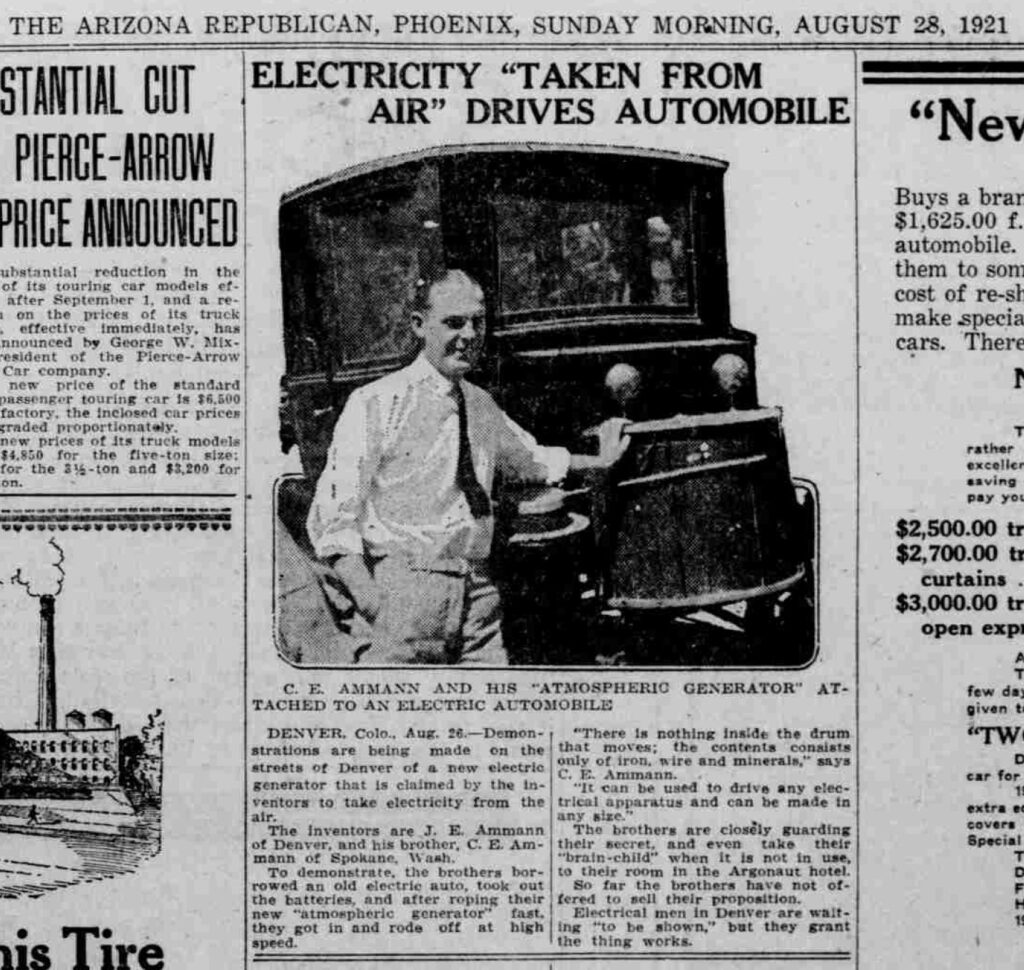
Let’s start with a couple articles from the early 1900’s. I left remnants of the ads on either side in order to capture the source and date at the top. Also, it’s an interesting synchronicity that this so-called free energy running automobile article is next to an add discussing the Pierce-Arrow, which is supposed to be the car that Tesla drove around with some wireless free energy as well. Although, most of what is claimed about the Tesla Pierce-Arrow story is complete fraud and misinformation, it is interesting. Another interesting connection, at least for me, is the reference to Spokane, Washington since I live here.
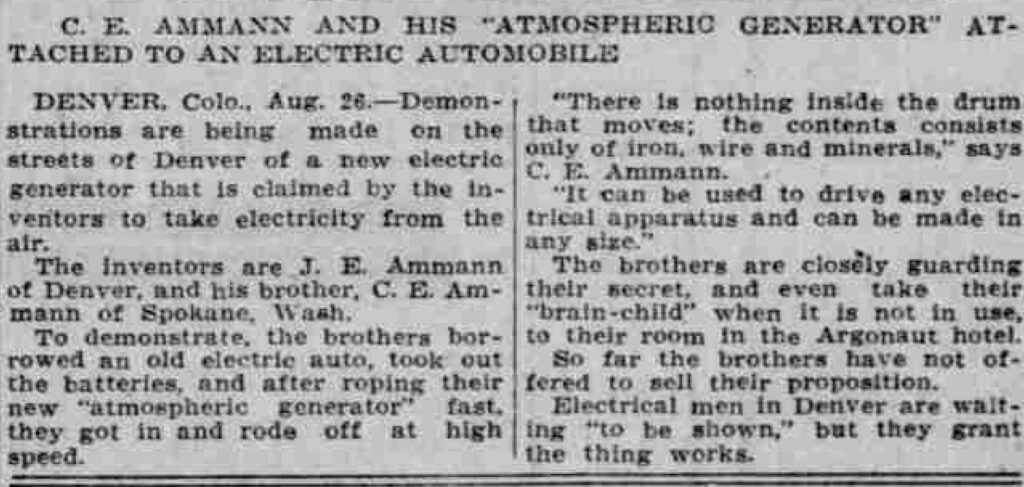
For easier reading, here’s a zoomed in text image:
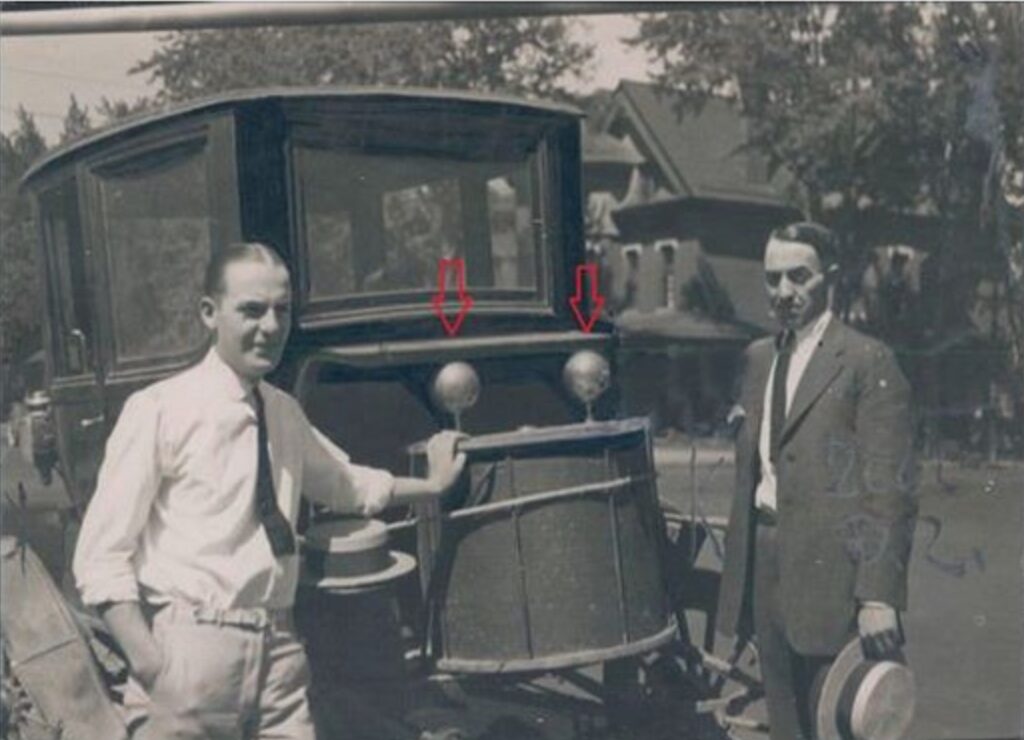
Here is a close up of the Ammann “Atmospheric Generator” literally roped to the front of the car as mentioned in the article. The generator is supposed to be made of only iron, wire and minerals. This is repeated in various references. The red arrows pointing out the two metallic spheres was put on the picture by someone else.
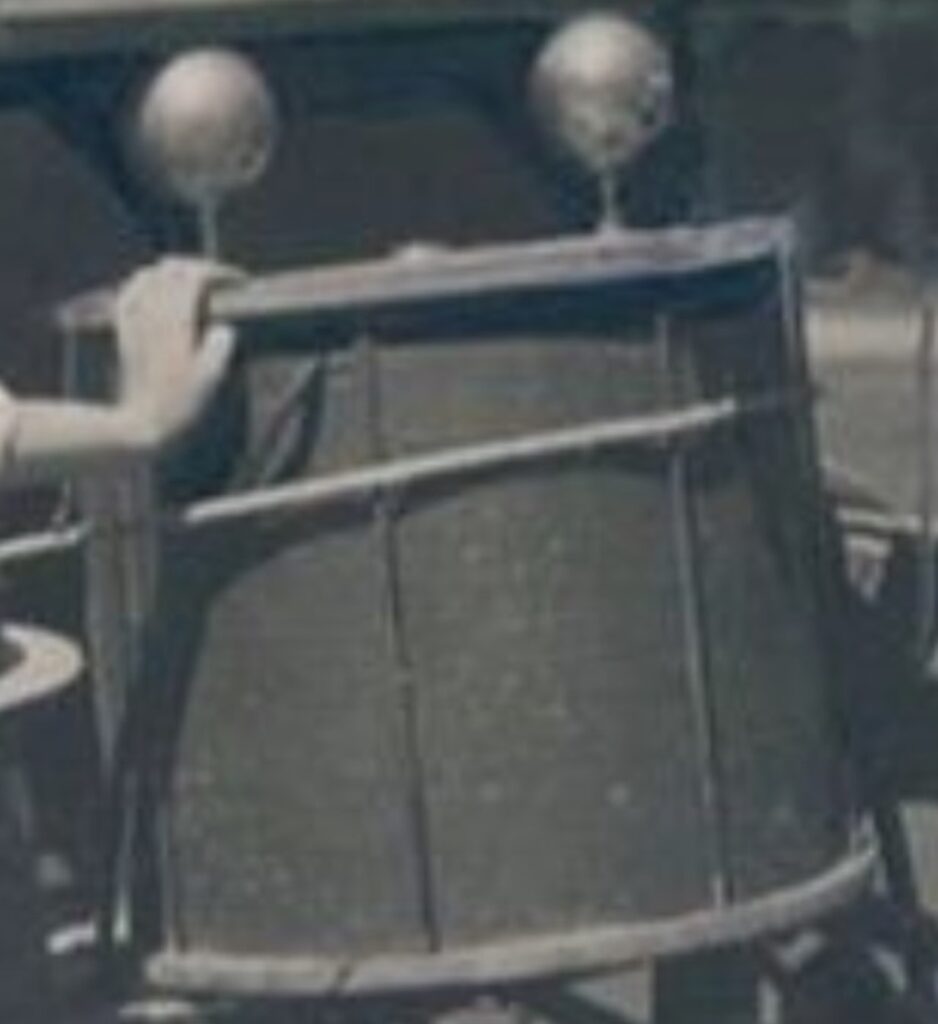
Here’s a closeup of the Ammann Atmospheric Generator, which doesn’t reveal anything spectacular:
With iron, wire and minerals as being the only details about this Atmospheric Generator, that’s not much to go on. Was it wirelessly picking up a transmission from elsewhere or was it some mineral solution that created some galvanic action between iron and wire making it a simple but apparently powerful battery? There are vertical rods around the perimeter of it which look like they are tying the top and bottom together so who knows. It could be anything.
Denver Man Invents Generator That Takes Electricity From Air & Propels Automobile
Believes He has Apparatus that will Revolutionize Power & Lighting & Gives it a Test on Streets of City
Has an invention been made that will revolutionize the electrical world? Will the apparatus conceived by a Denver man light buildings, run automobiles, battleships, power plants by the unlimited supply of electricity in the air? Denver electrical experts say “yes”, and the young inventor, C. Earl Ammann, Monday demonstrated his invention by attaching it to an old automobile and running it about the city.
An atmospheric generator is the name of Ammann’s apparatus. It is a compact, cylindrical object with two small brass spheres protruding from the top. Inside, Ammann says, is an arrangement of steel wires and minerals, so fixed as to draw the electricity from the air, condense it and utilize it for driving power.
The automobile which Ammann used for his demonstration Monday was the body and chassis of an electric vehicle. There are said to be no batteries in the car. It propelled itself with remarkable speed at the touch of the foot, climbed hills and glided through a maze of traffic under easy control.
Careful To Conceal His Invention ~
When asked by skeptical persons if he had a storage battery concealed inside of the power cylinder, Ammann said:
“As badly as I would like to show the inside of my invention, I can’t, for I have not yet obtained the patent rights. It would be exposing the result of seven years of work to open the cylinder. I leave for Washington this week to obtain the patent rights. When I return I will gladly show everything and I can only say, wait until then and time will tell.
“I have bucked every law of the textbooks to perfect the invention. It appears on the order of the wireless telephone but it is decidedly different, except that the electricity is derived from the air. It will run anywhere except under water.
The automobile is only a simple test. The generator will light buildings, do away with steam turbines, and, in fact, propel any kind of engine motor”.
J. N. Davis, the proprietor of the Davis Electric Garage company, at 921 East 14th Avenue, and one of the oldest electrical men in Denver, made a thorough study of the generator.
Electrical Man Has Faith In It ~
“I believe that Mr. Ammann has at least made the invention which will revolutionize power”, Mr. Davis said. “Of course, we don’t know what is inside of the generator and the inventor would be foolish to show us. We have long known that certain minerals exist, which if properly arranged together, would furnish power. That, in substance, according to the blueprints of the invention, is the basis of the whole thing.
“If the generator has been perfected to the extent that it will propel an automobile, the rest of its work is assured. It will be the greatest invention of the age. The electricity obtained from the air, first passing through the generator, would be available for any use”. So impressed was Mr. Davis that he offered the use of his building for Mr. Ammann’s headquarters. Ammann, who is but 28 years old, came to Denver from Spokane, Washington. He is an electrical engineer and lives at the Argonaut Hotel.
Here’s another article by someone that was in Spokane and had the technology demonstrated and partially explained to him – also available at the same Rex Research link above:
Fate Magazine, October 1956, pp. 123-125; “Report from the Readers”
Mysterious Invention
“The Hubbard Energy Transformer” brought back to me exciting memories of another inventor. In 1918, while doing painting and decorating, I was hired to paper several bedrooms in a large two-story house. While at this work I went down to the back porch to pick up some materials. I happened to glance at the light meter and saw it was not moving.
I opened the fuse box and saw the main power fuses had been removed. It took only a minute to make sure the line had not been taped beyond the meter.
The only member of the family at home at the time was a young man in his early twenties [C. Earl Ammann]. I asked him, “Earl, where do you get your juice? I noticed it does not come from the power lines”.
“Come along and I’ll show you”, he said. He led me up to the attic. He placed some steel bars on a work table and picked up a coil which looked like a loose coupler. After placing the coils on the steel rods he touched the opposite terminal. The bell rang with great force, and there was quite a spark, too.
I picked up the coils to make sure there was no contact with other appliances. I could see right through them. There was no battery inside. The bell rang just as vigorously. The wire was iron.
In the basement Earl had what he called an Activator Transformer, the size of two fists, which had to be within 10 miles of the radius of the generator coils. The activator was not in contact with any visible wires or appliances. It was activated by the electric currents which surge around the earth and activate the compass needle. By cutting into these currents, earl said, we can obtain unlimited power.
A year later Earl demonstrated his Cosmo Electric Generator in Denver. He had placed two copper spheres on the front fenders of his car in pace of the headlights. From these copper spheres he obtained enough power to drive that old jalopy all over Denver as reported in the Denver Post at the time.
While Earl was demonstrating his invention all over the streets of Denver, the power had been cut off in the foothills. In spite of this, when he went to Washington DC shortly afterward to try to obtain a patent on his Cosmo Electric Generator, he found that charges had been filed against him claiming he had a device to steal power from the power lines.
K. H. Isselstein, Spokane, WA
So the “Activator Transformer” with the the spheres sounds like the “Atmospheric Generator”, which is strapped to the front of the car. It supposedly taps into Earth Currents or the Earth’s Magnetic Field. But why does it have to be within 10 miles of the generator coils or Cosmo Electric Generator if it uses Earth currents?
Isselstein who wrote that article in the 50’s is from Spokane so was that demo also in Spokane or in Denver?
I haven’t been able to find a reference online to anything regarding one of the Ammann brothers getting busted with claims that has stealing power from the electric lines.
C.E. Ammann was heavily invested in real estate and appears to be part of a prominent family in Spokane back then. This link shows a list of properties he was involved in: https://fallsgazette.com/search?search=ammann
Spokane was originally called Spokan Falls (Spokane without the E at the end) but that gazette shows it as Spokane Falls.
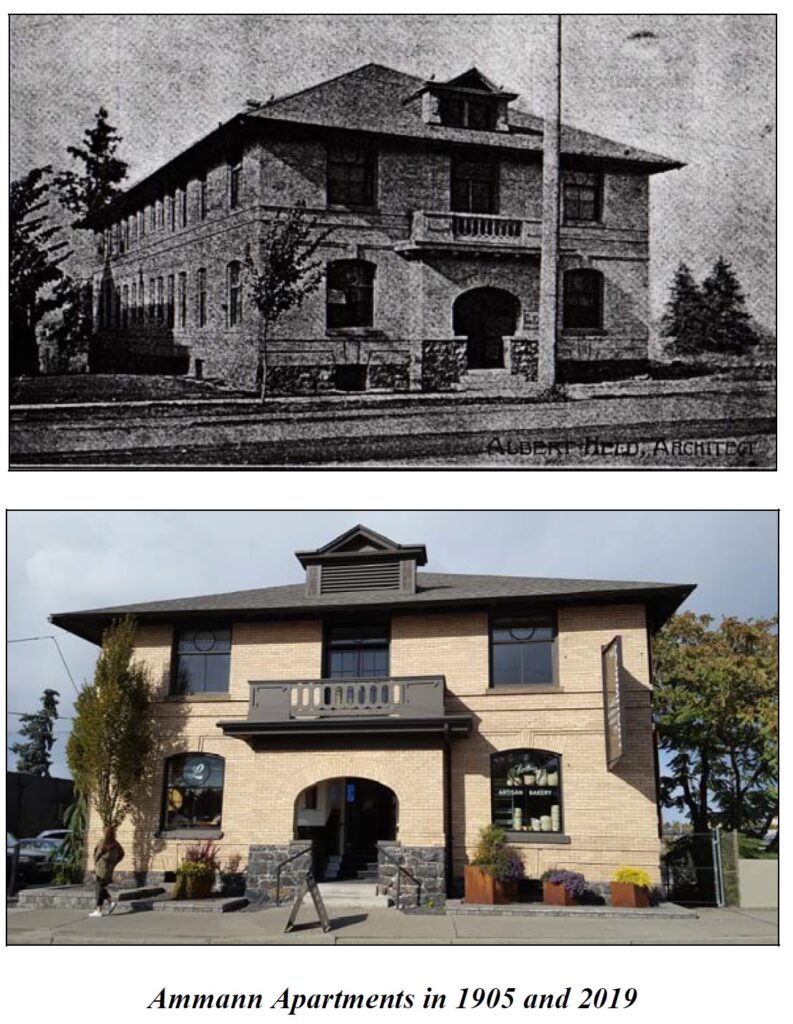
The address is 1516 West Riverside Avenue and it is the “Ammann Apartments” – I know that address because it is just down the street from where my friend Victor lived. I saw a picture and it didn’t quite hit me even though it looked a bit familiar…
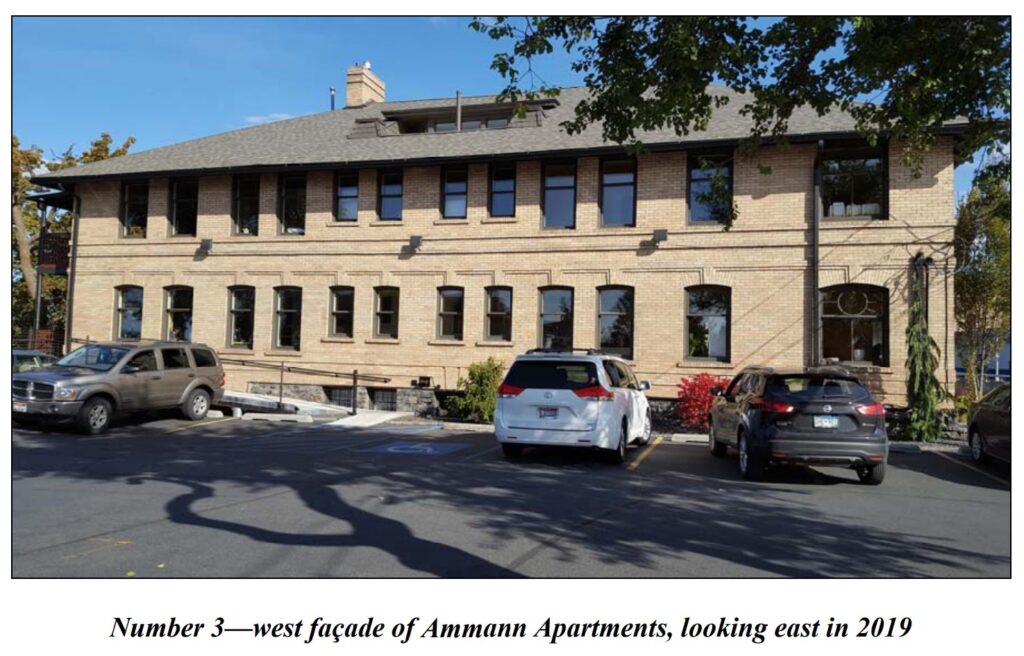
But when I saw this side picture of the building…
From about 2014 to 2020, Phil was the videographer for all our ESTC conferences – a whole 7 years. After each conference, we’d take a 1-2 week break and then we’d get together from around 10am to 4pm or so every day until we were done going through every presentation for the final edits. It was a long, tedious task because I had to re-watch every second of every video, every conference for all those years. All the hours spent with Phil was well worth it and is what made the final productions possible. And… every minute of all that time was on the bottom floor of the AMMANN APARTMENTS building, which was originally built by the Ammann family, including C.E. Ammann, the inventor of the “Cosmo Electric Generator” and “Atmospheric Generator” that powered the electric car with Earth Currents – a “Free Energy” technology, right here in Spokane, Washington and the leading conference in the world on this very topic had most of it’s videos edited in C.E. Ammann’s building!
A bit of the family history from the historical register pdf:
Ammann Family & Ammann Apartments After her husband Arnold Ammann’s death in 1886 in Springfield, Illinois, Caroline Ammann and her children Henry, Louise, Hermann, and Charles came to Spokane four years later in 1890. Charles worked as a real estate agent with his firm Ammann & Graves, buying, selling, and investing in land in Greenacres and the Spokane Valley. In addition, he worked at different times as a telegraph operator for the Northern Pacific Railroad and owned a mercantile store. He became wealthy and eventually moved to Seattle. His brother Henry was president of the Car Annunciator Company in Spokane, and worked for many years as secretary/treasurer of the Spokane Toilet Supply Company.
In August 1903, Caroline Ammann purchased Lot 17 on Block 2 at 1516 W. Riverside Avenue in Browne’s Addition for $1,500. She hired Spokane architect Albert Held to design and build a multi-story apartment building with apartments that offered four rooms, a kitchenette, and a private bathroom. By the time work on the property had begun, Caroline’s sons Henry and Charles, and her daughter Louise and her son-in-law W. J. C. Wakefield, had formed the Equity Investment Company, and in 1904, purchased the Ammann Apartments for $10,000. The March 25, 1904 edition of the Spokesman Review newspaper made the following announcement:
TO HOLD REAL ESTATE W. J. C. Wakefield, L. A. Wakefield, H. A. Ammann, and C. E. Ammann have incorporated the Trust Investment Company with a capital stock of $10,000. The new company will do a real estate business, which will consist principally of holding family property as all the incorporators are related to one another. One of the company’s chief holdings will be the new two-story pressed brick apartment house being constructed on Riverside Avenue.
The building was named the Ammann Apartments and was open for business by September. An advertisement in the Spokesman-Review on September 6, 1904 reported:
FOR RENT—APARTMENTS Beautiful, modern four-room apartments. Rents $40-$45. On leases only at 1516 W. Riverside Avenue. The Washington Trust Company agents.
One year later, a November 1905 advertisement in the Spokane Daily Chronicle newspaper ran a description of an apartment within the property as a “strictly modern four-room apartment, close in, with hot water heat in the Ammann Apartments, 1516 W. Riverside, $35.”
After 23 years, the up-scale Ammann Apartments were still being actively advertised for lease in the newspaper:
AMMANN APARTMENTS W. 1516 Riverside Avenue Four-room apartment with glass-enclosed balcony. Located near library; outside rooms; papered walls; enameled woodwork; Elecure-Keid refrigerators; laundry room and locker space in basement. $55.
The Ammann family owned and operated the Ammann Apartments for 27 years from 1904 to 1931, renting apartments to hundreds of people over the ensuing decades.
Well, it’s not often that you chase a mystery and find out that you have spent many hours in a building owned by the very inventor of a “free energy” technology from the early 1900’s!
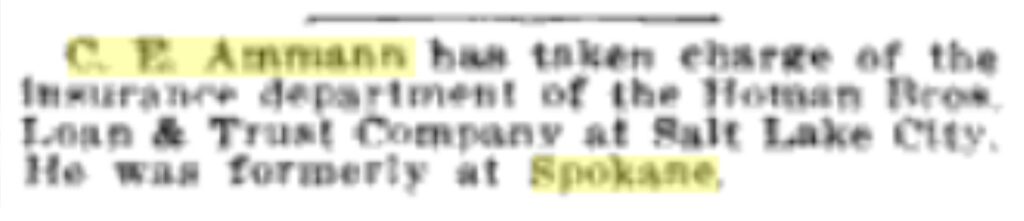
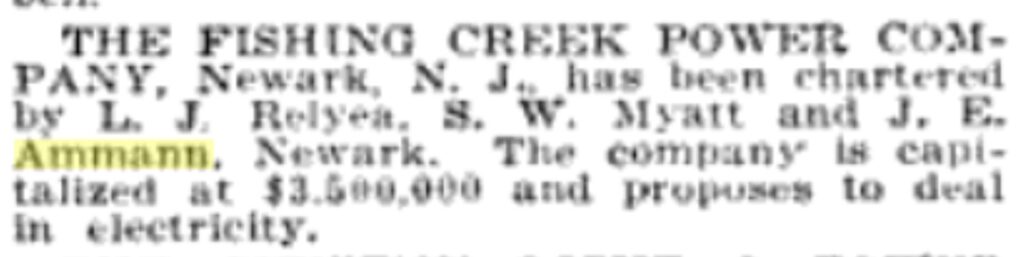
I’ll conclude with a few historical references to the Ammann’s, company names related to electric power, etc.
The National Underwriter: The National Newspaper of Fire and Casualty Insurance, Volume 19, Part 1
Electrical World, Volume 80
Poor’s Cumulative Service
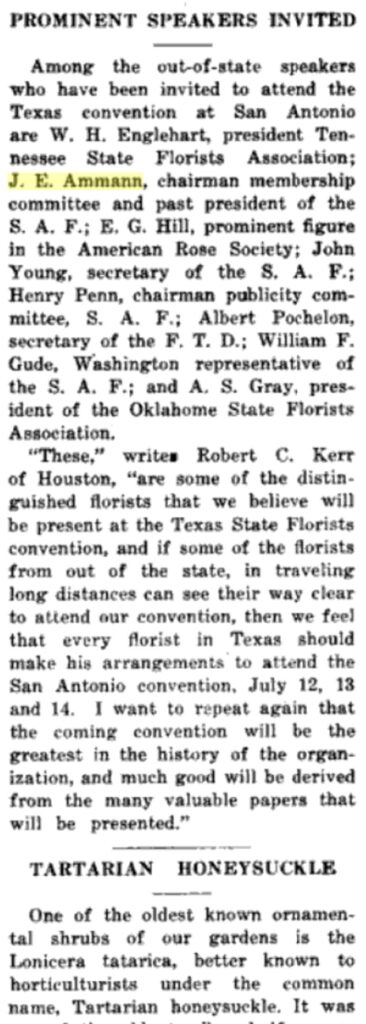
I have no idea if J.E. Ammann is related, but on my search, I came across this – it relates to flowers, but is very interesting because right below the article about prominent speakers, which includes J.E. Ammann, the title of the next article is Tartarian Honeysuckle! lol
Many references online to Ammann and pointing to the spheres on the generator on the car all claim some relationship to Tartaria, the ancient empire between Russian and Mongolia, Tartaria was a references to the general area. And these spheres – well, so many claim the spires on buildings with or without spheres are all related to wireless electricity that the “mud flood” covered up. It’s good entertainment, but I haven’t seen anything convincing other than the fact that all areas of the world have been building up on ancient ruins over and over and yes, there was the vast region in Asia that was referred to as Tartaria, but the claims about wireless electricity, etc. aren’t backed by much other than imagination. However, the chances that there’s a Tartarian on the same page as an Ammann during my search, which came from the early 20’s independent of modern day hysteria is very, very interesting and entertaining!
I hope you enjoyed that as much as I did! lol The Ammann Atmospheric Generator is an interesting bullet point of free energy history and comes out of the same era as many others who were pursuing earth current generators. If any of this leads you to find any leads, please do let me know! If I have any further leads that guide me to something that we don’t already know, I’ll be sure to post it here and tell you all about it. Until then, happy synchronicities!
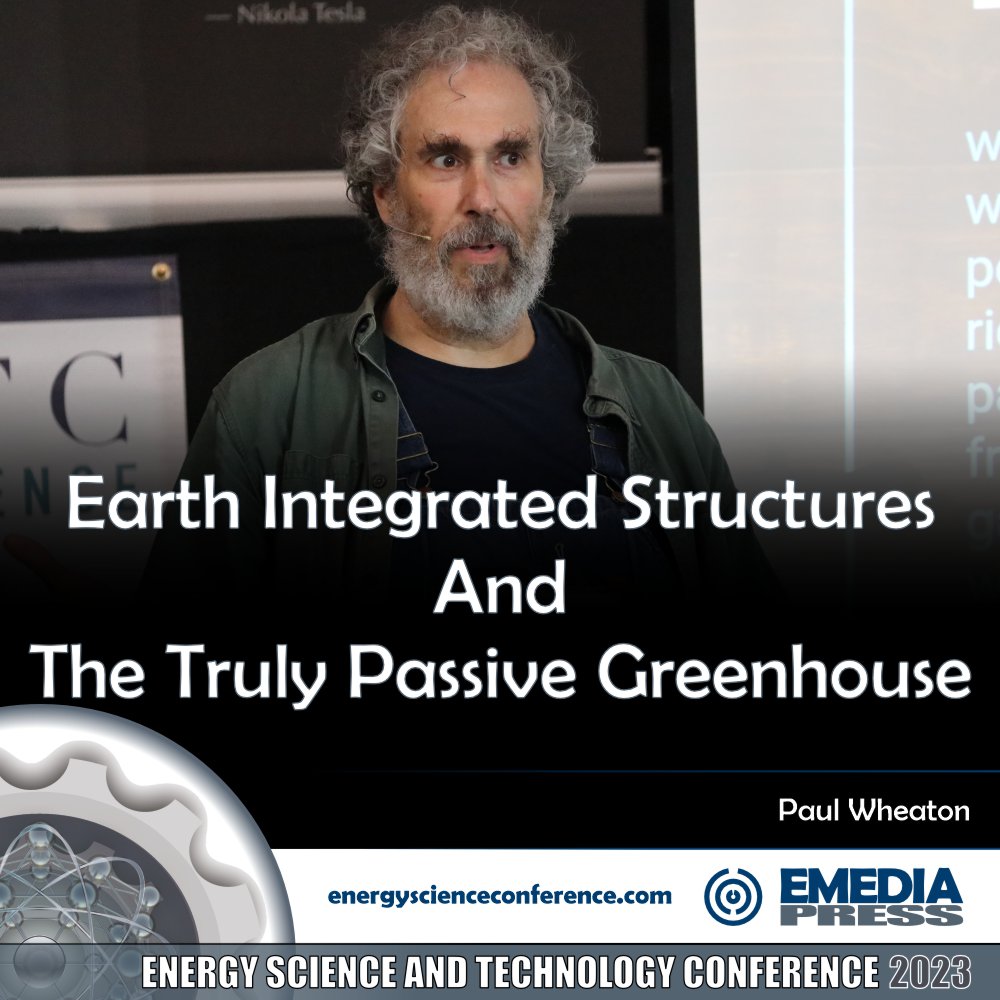
Hear about the greenhouse that uses zero electricity (not even a fan!) that stays warm throughout the Montana winter. Learn techniques to create your own, using local materials with zero cement, or other toxic gick. Explore the fascinating aspects of earth integrated structures and hear about Paul’s Wofati design which highlights rustic passive house design creating a comfortable, solid and charming home that is quick, easy and cheap to build.
GO HERE FOR MORE PERMACULTURE INFORMATION BY PAUL WHEATON: PERMIES
Earth Integrated Structures And The Truly Passive Greenhouse
GO HERE FOR MORE PERMACULTURE INFORMATION BY PAUL WHEATON: PERMIES
Hear about the greenhouse that uses zero electricity (not even a fan!) that stays warm throughout the Montana winter. Learn techniques to create your own, using local materials with zero cement, or other toxic gick. Explore the fasci…
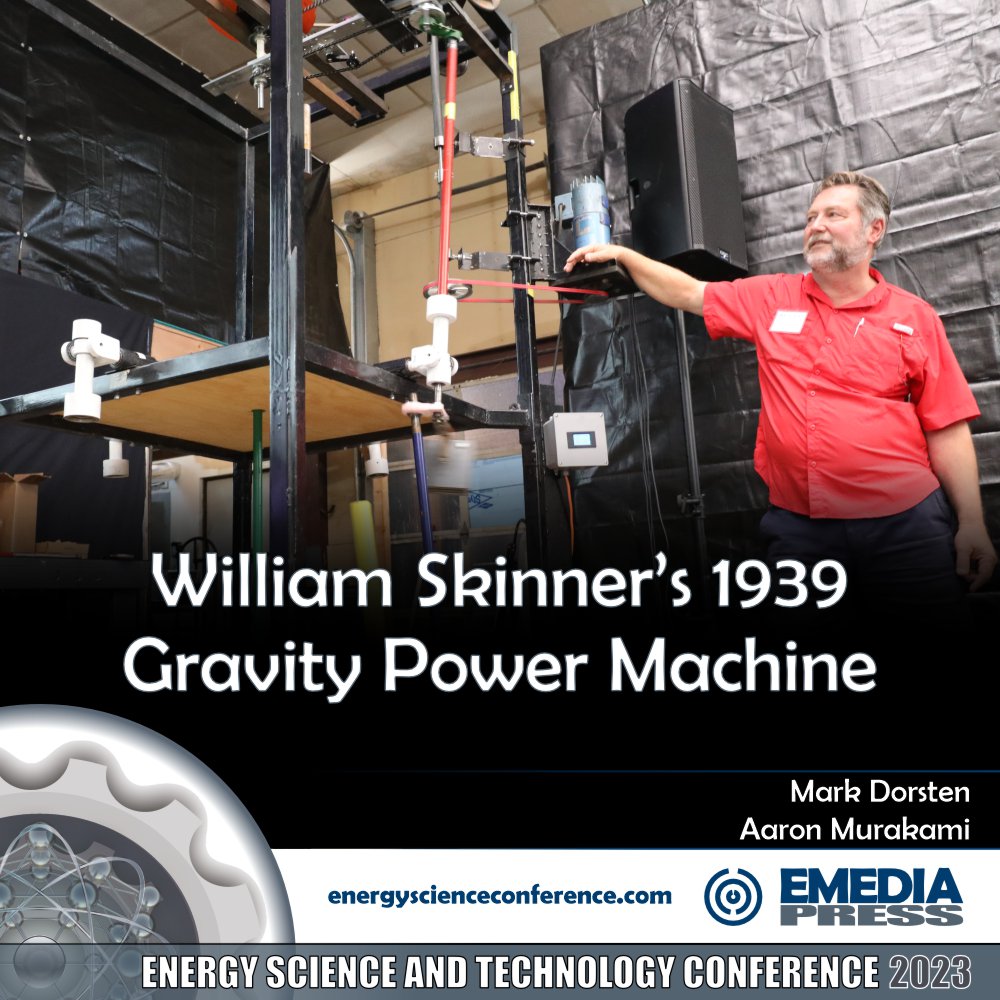
Over 80 years ago, William Skinner built a machine that uses gravity as a source of potential to amplify the input into his machine at a claimed increase of 1200%.
From the video evidence, this appears to be greatly understated. It is commonly thought that gravity is static and can do no work, but understanding the true nature of the dynamic properties of gravity, gravity is definitely a source of potential that can be used.
This machine has been discussed for many years on Energetic Forum and elsewhere. Aaron was the first to point out the obvious fact that Skinner’s input mechanism was of an elliptical nature but virtually every replication attempt posted online by independent builders have a circular input mechanism. Even the old news releases announcing Skinner’s machine clearly states that the “eccentrics”, which are the elliptical input mechanisms, are part of the secret.
Mark and Aaron are the only ones that appear to be attempting a replication using this eccentric input method rather than the circular input that has failed everyone else. The full scale model completely built by Mark that will be displayed is still under construction without any claims given.
This presentation aims to clearly show the evidence of Skinner’s eccentric input from the original 1939 video, which Aaron has pointed out multiple times in the past on YouTube and in Energetic Forum but has remained wholly ignored by the builders as well as pointing out once again what the original news releases describe, which matches what is obvious in the video.
William Skinner’s 1939 Gravity Power Machine
Over 80 years ago, William Skinner built a machine that uses gravity as a source of potential to amplify the input into his machine at a claimed increase of 1200%. From the video evidence, this appears to be greatly understated. It is commonly thought that gravity is static and can do no work, but understanding the true nature of the dynamic properties of gravity, gravity is definitely a source…